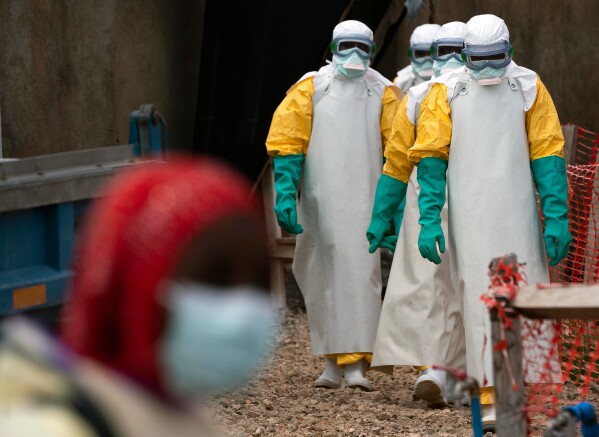
Health authorities have reported a new Ebola outbreak in Congo, Central Africa. The outbreak includes over 300 suspected cases and at least 88 deaths. Neighboring Uganda also reports cases. The World Health Organization (WHO) has declared the outbreak a public health emergency of international concern.
Origins and Past Outbreaks
Ebola, a severe and often fatal disease, was first identified in 1976. Initial outbreaks occurred in what is now South Sudan and Congo. All major Ebola outbreaks have been in sub-Saharan Africa, where the viruses originate. These outbreaks have been especially severe in West and Central Africa.
Causes and Transmission
Ebola disease results from different viruses. WHO identifies three major ones: Ebola virus, Sudan virus, and Bundibugyo virus. The current outbreak is due to the Bundibugyo virus, a rare strain with only two previous outbreaks.
Fruit bats are considered natural hosts of Ebola viruses. Apes and monkeys can also be infected. Transmission to humans occurs through bodily fluids like blood, feces, or vomit. Contaminated surfaces can spread the virus as well.
Symptoms and Fatality Rates
Symptoms emerge two days to three weeks post-exposure. Early signs include flu-like symptoms such as fever, aches, and sore throat. Later, patients might face gastrointestinal issues, rashes, seizures, and bleeding.
The average fatality rate is around 50%. Rates have varied from 25% to 90% in past outbreaks. Vaccines and treatments exist for the Ebola virus, but not for other strains like Bundibugyo.
Notable Ebola Outbreaks
From 2013-2016, the largest outbreak occurred in West Africa. It resulted in over 28,000 cases and more than 11,000 deaths across Guinea, Liberia, and Sierra Leone. A few cases also reached the U.S., the U.K., Italy, and Spain due to travelers and health workers.
Researchers believe this outbreak began with a child contacting infected bats in Guinea. Another significant outbreak took place from 2018-2020 in Congo’s North Kivu, South Kivu, and Ituri provinces, with cases spreading to Uganda.
Outbreaks in Uganda and Congo have been frequent. The first significant outbreak of the Bundibugyo strain occurred in Uganda in 2007-2008, with 131 cases and 42 deaths. No specific treatment or vaccine exists for this strain.
The Initial Outbreaks of 1976
The first recognized outbreak occurred in 1976, in Sudan and now South Sudan. Scientists suspect bats in warehouses were involved, although unconfirmed. It resulted in 284 cases and 151 deaths.
Another outbreak the same year in northern Congo, then Zaire, had 280 deaths. It led to the initial identification of the Ebola virus. The infection spread largely due to contact in hospitals.
A British lab technician became the first known case outside Africa in 1976, recovering after an accidental needle prick while studying samples.
Leave a Reply