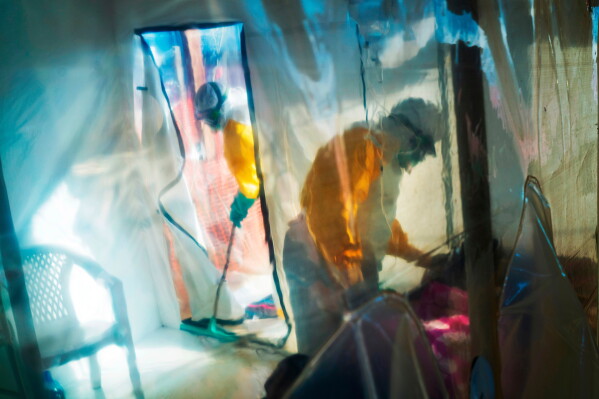
The World Health Organization (WHO) announced on Sunday that the Ebola outbreak in the Democratic Republic of Congo and neighboring Uganda has been declared a public health emergency of international concern. Over 300 suspected cases and 88 deaths have been recorded.
The WHO clarified that the outbreak does not meet the criteria for a pandemic like COVID-19. The organization advised against closing international borders. They reported a confirmed laboratory case in the Congolese capital, Kinshasa, located about 1,000 kilometers from the outbreak’s epicenter in Ituri province, suggesting possible broader spread.
The government of Goma, the largest city in eastern Congo, confirmed its first case of Ebola. The infected individual traveled from Ituri and is now isolated. Goma witnessed a rebel offensive in early 2025, with ongoing conflict displacing hundreds of thousands.
The WHO’s emergency declaration aims to prompt donor agencies and countries to take action due to the serious nature of the event, potential international spread, and need for coordinated response.
A team of 35 WHO experts and officials from the Congolese Health Ministry arrived in Bunia, Ituri’s capital, with seven tons of emergency medical supplies.
The current outbreak is caused by the Bundibugyo virus, a rare Ebola variant with no approved treatments or vaccines. This is only the third detection of the Bundibugyo virus after previous outbreaks in Uganda and Congo.
Dr. Richard Kitenge, operations director at the Centre des Opérations d’Urgence de Santé Publique in Congo, highlighted Congo’s experience in managing epidemics, noting they have dealt with others such as the Zaire virus without treatment.
Challenges in Tracking the Outbreak
Violent conflicts and population movements due to mining pose significant challenges to tracking and containing the outbreak. Dr. Jean Kaseya from Africa CDC emphasized the impact of active cases in Mongwalu on containment efforts.
CDC Africa reported 336 suspected cases and 87 deaths in Congo. The outbreak’s true scale and geographic spread remain uncertain, with limited understanding of epidemiological links.
Two cases in Uganda involved individuals who had traveled from Congo. The high percentage of positive samples and the spread of the virus suggest a possibly larger outbreak.
U.S. health officials describe the risk to Americans as low. The CDC is coordinating with other health officials to manage the outbreak and prevent further spread of Ebola. They issued travel recommendations and are implementing measures at entry ports to identify symptoms.
The outbreak went undetected for months, allowing time for significant spread. The earliest known case was a 59-year-old man who developed symptoms in April and died later that month.
The CDC Africa highlighted a delayed response, with social media networks alerting health authorities on May 5, acknowledging 50 deaths by then. At least four healthcare workers have died after showing Ebola symptoms.
Leave a Reply