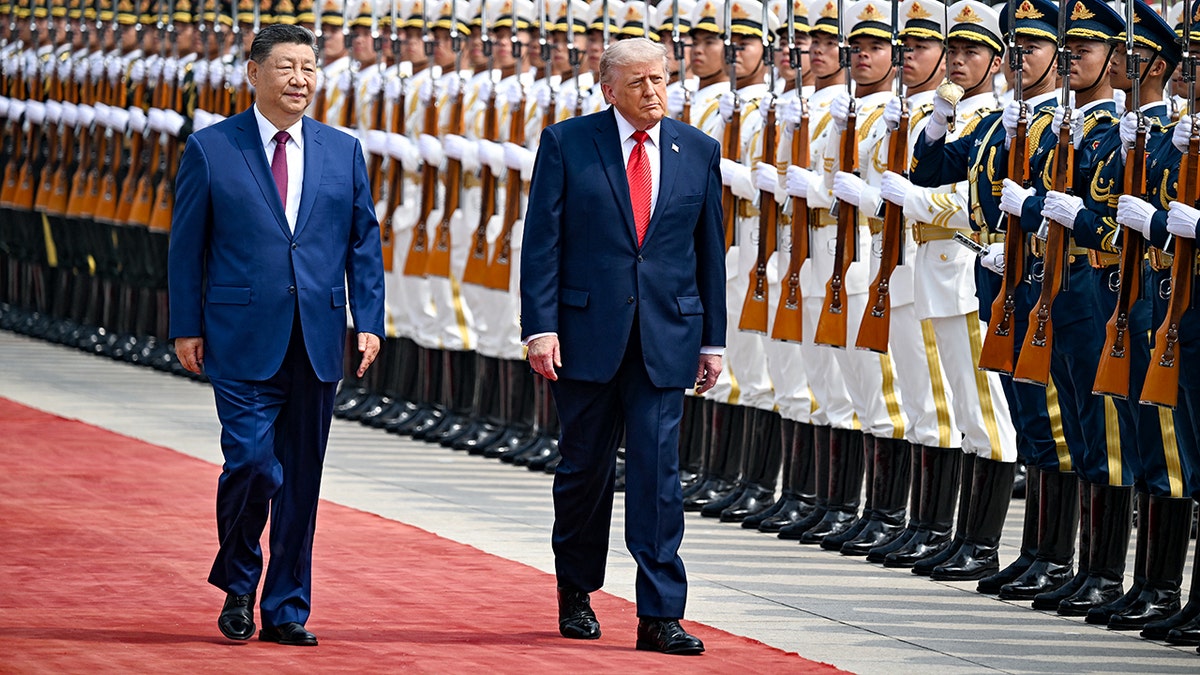
President Donald Trump returned from a summit with Chinese President Xi Jinping, reporting improved trade relations. However, the meeting did not address a critical issue in U.S.-China relations: Taiwan.
Former NBA player Enes Kanter Freedom emphasized Taiwan’s importance in the global technology race. In an interview with Fox News Digital, he stated, “If you want to understand the future of AI dominance, economic power and national security, you have to understand Taiwan.” Freedom, known for his criticism of the Chinese Communist Party, highlighted Taiwan’s role in the ongoing economic and national security competition between the U.S. and China.
Freedom remarked, “Trump has always understood that communist China is America’s biggest long-term geopolitical challenge.” He believes that maintaining stability in the Taiwan Strait requires strong American leadership and a credible deterrent.
Taiwan’s ongoing request for U.S. weapons aims to strengthen its defenses against potential Chinese aggression. The decision on new arms sales is still pending, with no breakthrough in talks during the summit. A senior White House official noted that Trump approved $11.1 billion in arms sales to Taiwan in December 2025, aligning with decades-long U.S. policy.
During Trump’s first term, he authorized more arms sales to Taiwan than any previous president. In his second term, he approved more arms sales in the first year than were approved under President Biden’s entire tenure.
Trump’s visit to China included meetings with top American tech CEOs, underscoring the economic and geopolitical rivalry with China over artificial intelligence.
Taiwan President Lai Ching-te reiterated the significance of U.S. arms purchases in a Facebook post, calling them “the most vital deterrent” of regional conflict. The Taiwan Relations Act underscores the U.S. security commitment to Taiwan, having served as a deterrent against regional instability for decades.
Taiwan plays a crucial role in America’s economy, military readiness, and AI developments. Freedom emphasized the mutual need between the U.S. and Taiwan, stating, “America needs Taiwan, and Taiwan needs America.” He highlighted Taiwan’s semiconductor industry as a backbone of global technology supply chains.
Major U.S. chip designers, such as Apple and Nvidia, rely on Taiwan’s semiconductor capabilities. According to the U.S. International Trade Administration, Taiwan Semiconductor Manufacturing Co dominates the industry, ensuring Taiwan’s pivotal role in semiconductor manufacturing.
China recently intensified military activities around Taiwan, increasing air and naval operations. The Chinese Ministry of Foreign Affairs insists that “Taiwan independence” and peace across the Taiwan Strait cannot coexist.
Freedom, planning a visit to Taiwan in October, aims to promote basketball and capture the island’s democratic and free society. He seeks to raise awareness about China’s actions against Uyghurs, Hong Kongers, Tibetans, Falun Gong practitioners, and the harassment of Taiwanese people.
Leave a Reply