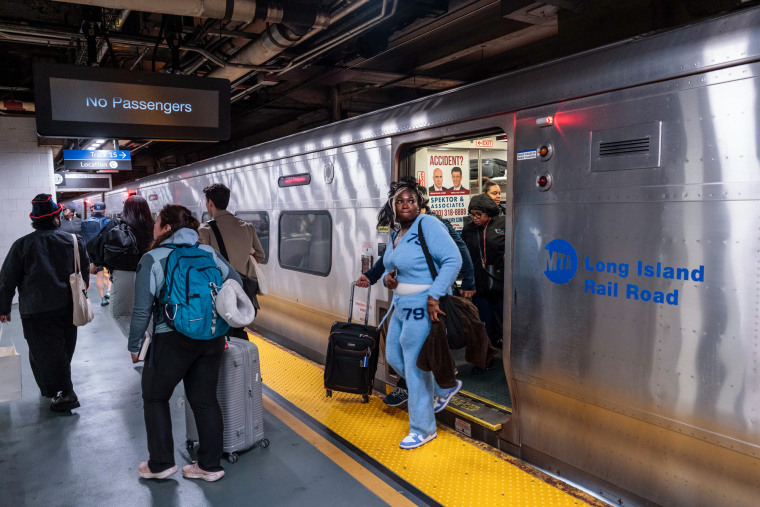
New York officials have advised commuters to work from home following a strike by Long Island Rail Road (LIRR) workers. This strike, the first in approximately 30 years, has significantly affected travel for hundreds of thousands of individuals. Governor Kathy Hochul announced preparations for emergency transit alternatives, such as shuttle buses from Long Island to Queens and increased subway services, after negotiations between the MTA and rail unions fell apart over the weekend. The strike commenced on Saturday.
Governor Hochul stressed the difficulty of replacing LIRR services entirely, stating, “It’s impossible to fully replace LIRR service.” She was speaking at a news conference on Sunday.
The strike has interrupted operations on the busiest commuter rail system in the nation, serving numerous riders traveling between Long Island and New York City. Negotiations resumed Sunday evening between the union coalition and MTA and LIRR management.
New York City Mayor Zohran Mamdani confirmed on X that LIRR services remain suspended due to ongoing negotiations, while preparations for travel disruptions are underway. Shuttle buses specifically for essential workers began services around 4:30 a.m. Monday from six locations across Nassau and Suffolk counties to subway connections in Queens. Commuters who can work remotely have been repeatedly urged to do so during the strike.
Union members showed determination at a picket line outside Penn Station in Manhattan on Sunday. Eric Martin, a locomotive engineer with 24 years of union membership, emphasized their goal to maintain “a fair wage for ourselves, for our family, and our friends.” He expressed confidence in reaching a resolution, stating, “If we have to stand out here two weeks, two months, we will do what is necessary to make it happen.”
Jim Louis, the national vice president of the Brotherhood of Locomotive Engineers and Trainmen, remained hopeful, asserting, “Our coalitions — we have five unions here — they are very strong.” He highlighted the need for the MTA to understand the union’s call for maintaining their standard of living.
Michael Sanchez, an assistant national representative with the Transportation Communications Union (TCU), reported approximately 100 people striking outside Penn Station, alongside about 2,000 others picketing across LIRR properties. Addressing the affected commuters, he acknowledged the essential service they provide and the necessity of fair wages to maintain operational quality.
MTA officials have placed responsibility on union leadership for walking away from negotiations, with MTA CEO Janno Lieber stating, “They walked out and they went on strike.” The coalition of unions, representing about 3,500 LIRR workers, attributed the shutdown to the MTA’s refusal to agree to proposed wage increases after prolonged periods without raises amid escalating living costs.
In a union statement on Sunday, it was noted that the gap before breakdown in talks was less than 1 percentage point, asserting the strike was “completely avoidable.” Brian Bryant, IAM Union International President, stated, “LIRR workers want to be doing what they’ve always done — serving the riding public and keeping LIRR moving safely and efficiently.” Bryant cited recommendations from two presidential emergency boards supporting stronger wage increases.
Governor Hochul defended the MTA’s stance, expressing concern that agreeing to union demands could lead to significantly increased fares and higher taxes. “New York is a pro-labor state,” Hochul said, recognizing the need for fair wages but opposing agreements prompting fare hikes up to 8% and increased tax burdens for Long Islanders.
Leave a Reply