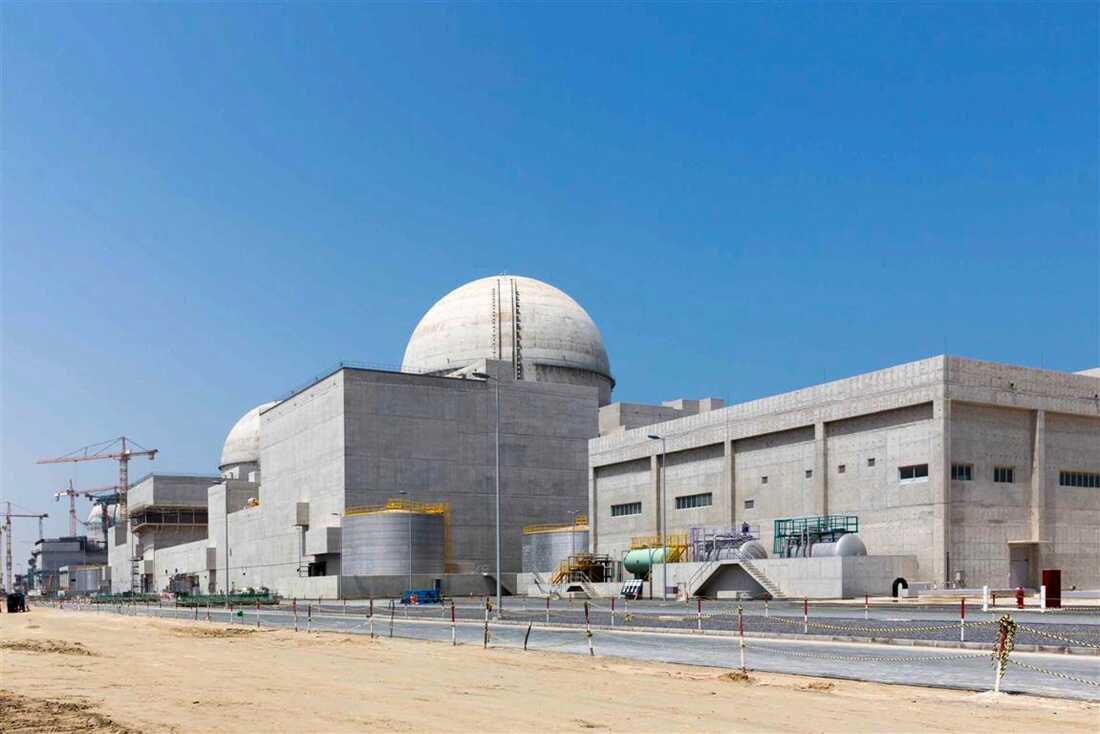
Dubai, United Arab Emirates — A drone attack on the edge of the United Arab Emirates’ only nuclear power plant on Sunday ignited a fire. Authorities labeled the event an ‘unprovoked terrorist attack,’ despite not assigning blame. This incident underscores the risk of renewed conflict as both the United States and Iran hint at preparedness for confrontation.
No injuries or radiological release were reported. The UAE, which maintains air defenses and personnel from Israel, recently accused Iran of initiating drone and missile strikes. The situation over the Strait of Hormuz, a crucial waterway controlled by Iran, remains tense under a U.S. naval blockade.
‘For Iran, the clock is ticking, and they better get moving, fast, or there won’t be anything left of them,’ U.S. President Donald Trump stated online following discussions with Israel’s Prime Minister Benjamin Netanyahu. Their coordinated attack on Iran marked the start of the conflict on February 28. Though Trump frequently sets deadlines for Tehran, he often retracts them later.
Mohsen Rezaei, a military advisor to Iran’s supreme leader, emphasized on state television that Iranian forces remain ready for action while diplomatic channels continue. Despite this, the ceasefire appears unstable as efforts towards lasting peace struggle. Tensions have escalated between Israel and the Hezbollah militant group in Lebanon, despite nominal ceasefire agreements.
Following the attack, the UAE Defense Ministry confirmed three drones entering from the western border with Saudi Arabia, intercepting two of them. An investigation is underway to identify the perpetrators. Iran and allied Shiite militias in Iraq have a history of drone attacks against Gulf Arab states.
‘Whether carried out by the principal actor or through one of its proxies, this represents a dangerous escalation,’ stated Anwar Gargash, diplomatic advisor to the UAE president, via social media.
Saudi Arabia condemned the assault and reported intercepting three drones entering from Iraq. The Barakah nuclear plant, a $20 billion project developed with South Korea’s assistance, became operational in 2020. It supplies a quarter of UAE’s energy needs.
According to the UAE’s nuclear regulator, the recent fire did not impact plant safety, with all units functioning normally. The United Nations’ International Atomic Energy Agency noted that the fire affected an electrical generator, with one reactor relying on emergency diesel generators.
This marks the first assault on the four-reactor Barakah plant during the current conflict. Previously, Yemen’s Iran-backed Houthi rebels claimed they targeted the plant during its construction phase in 2017, which Abu Dhabi denied.
The UAE’s Distinct Nuclear Program
The UAE executed a stringent ‘123 agreement’ with the U.S., ensuring it would not enrich uranium or reprocess spent fuel domestically. The uranium is sourced internationally, distinctly different from Iran’s nuclear program that has fueled prolonged tensions with the U.S. and Israel.
Iran advocates that its nuclear activities are peaceful, although its uranium has neared weapons-grade levels, sparking suspicions of military endeavors until at least 2003. Tehran has occasionally restricted U.N. inspectors from accessing sites, particularly since last year’s 12-day war with Israel.
Israel is suspected of being the region’s sole nuclear-armed nation, but it remains non-committal regarding its atomic weapons status. Iran targeted the vicinity of Israel’s Dimona nuclear center during warfare.
Nuclear facilities increasingly become targets during conflicts, witnessed during Russia’s expansive invasion of Ukraine in 2022. Throughout the Iran conflict, Tehran recurrently claimed its Bushehr plant suffered assaults, despite lacking evidence of damage to its Russian-managed reactor or any radiological incidents.
Ceasefire Tensions Cultivate
Two individuals with inside information disclosed that Israel and the U.S. coordinate strategies for potentially resuming attacks. These sources, including an Israeli military officer, requested anonymity due to confidentiality.
Prime Minister Netanyahu affirmed to his Cabinet on Sunday, ‘Our eyes are also open’ on Iran, assuring readiness for all scenarios.
On Iranian state TV, hosts from two networks appeared armed during live transmissions. Hossein Hosseini, after basic gun training from a Revolutionary Guard member, symbolically aimed at the UAE flag. Meanwhile, Mobina Nasiri declared her willingness to die for Iran, brandishing a weapon reportedly sent from Tehran’s Vanak Square.
Leave a Reply