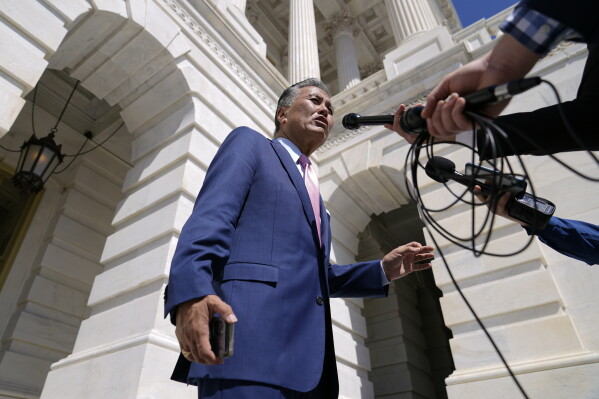
On the Fourth of July, Congressman Mark Takano returned to Southern California to unsettling stories from his constituents. Immigration patrols were active, and one person mentioned carrying a passport for proof of legal presence in the country.
Representative Takano has personal ties to historical events similar to these current happenings. Both his American-born parents were imprisoned as children during World War II, when Japanese Americans faced forced relocation. He observes parallels between those events and current immigration actions.
“There’s a similarity,” he stated, recalling how his young parents were labeled as threats to national security and detained. “Similar arguments are made now about immigrants posing dangers.”
Current Immigration Policies Under Scrutiny
President Donald Trump pledged to execute the largest deportation operation in U.S. history. Citizens are witnessing the mass detention and deportation of thousands, especially after recent protests in Minneapolis where citizens opposed these actions.
The Department of Homeland Security, now under Secretary Markwayne Mullin, aims to shift its strategy. Although there is pressure from conservative factions and Republican supporters, Trump continues to push for the deportation of a million individuals annually.
Takano draws from his family’s experience and history’s eventual apology to Japanese Americans to critique the current administration’s methods.
“That era is seen as shameful, with leaders failing the Constitution and American people,” he asserted.
Personal History Motivates Political Action
Before his Congressional career, Takano taught high school history. Raised in Southern California, he learned about his family’s past experiences. His grandfather, Isao Takano, immigrated from Hiroshima and began a business in Washington state with his wife, Kazue Takahashi.
Following the Pearl Harbor attack, they became part of the 120,000 Japanese ancestry individuals forced into camps. His father and mother, both toddlers at the time, experienced this traumatic relocation.
“Americans in the future will question the actions of our government today,” Takano remarked about recent detention centers.
Lessons from the Past Inform Current Debate
Takano’s father once showed him their family’s former land and recounted stories of relatives who served in the military during the war. Some, like his great uncle, died in service.
In 1988, the Civil Liberties Act was enacted, offering apologies and compensation to detained Japanese Americans. This historical event is seen as a pathway for potential redress amid recent immigration law enforcement concerns.
Takano is hopeful about the country’s capacity to learn from past errors. He is involved in ongoing talks for compensation for those adversely affected by Trump’s immigration operations.
“We have the chance to emerge stronger from this period of mistakes,” he concluded.
Leave a Reply