President Donald Trump is advocating for a toll-free Strait of Hormuz, in direct opposition to Iran’s claims of establishing a ‘controlled maritime zone’ that may include tolls. The United States exercises significant control through a strategic blockade while implementing economic sanctions. Diplomatic negotiations with Gulf allies aim to intensify pressure on Iran’s nuclear ambitions and regional activities.
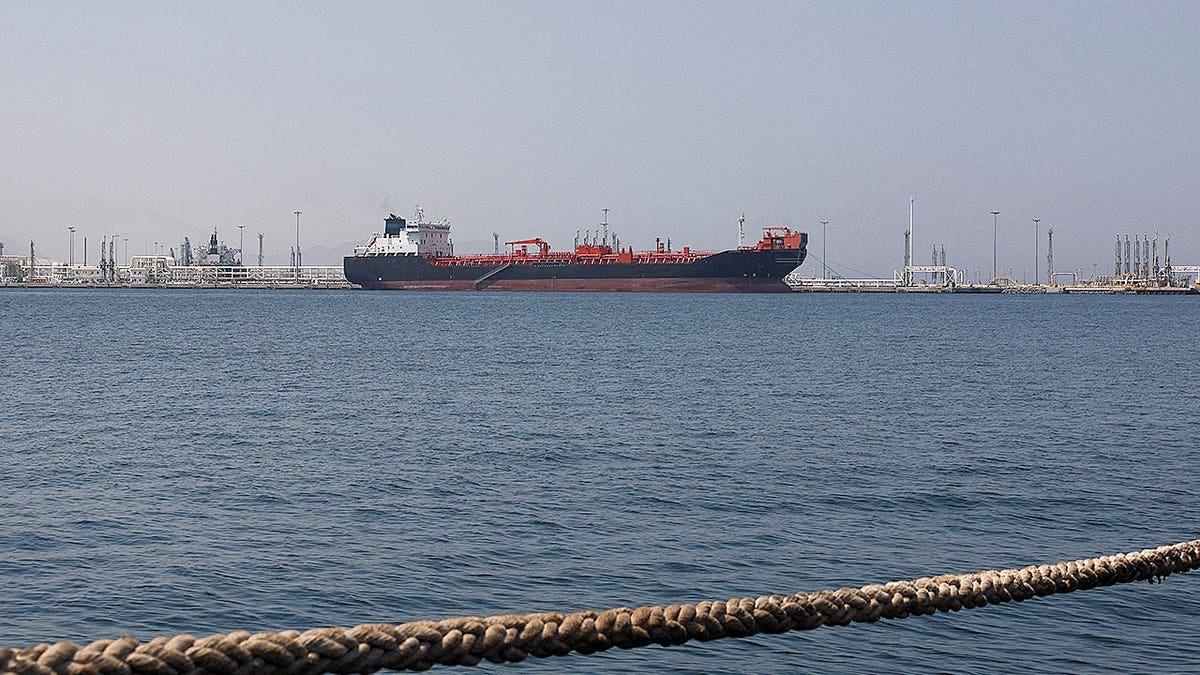
The maritime industry is experiencing disruptions due to collapsed tracking transmissions near the UAE’s primary oil port. These events preceded Trump’s announcement regarding progress on a bilateral peace agreement with Iran. Windward AI, a maritime intelligence firm, identified a blackout in Automatic Identification System (AIS) signals around Fujairah. They suspect increased electronic warfare, jamming, deliberate AIS shutdowns, and cyber interference contributed to the activity.
“Fujairah goes dark: AIS transmissions collapse after Iran’s PGSA announcement,” Windward stated in a report shared online. “Vessels remain in the area, loading less cargo, with several having ceased visible operations,” the firm added.
Shipping operations in the Gulf region slowed down due to increased tensions related to the U.S.-Israel conflict with Iran. As President Trump announced substantial progress in the Iran deal, Fujairah moved 1.35 million barrels of crude via a tanker directed to South Korea.
The movement of this cargo signals a potential resumption of shipments post-announcement. Windward reported that the ceasefire posture and blockade footprint are being established amidst ongoing tensions.
Before the crude transfer, Trump stated that the United States and Iran had mostly finalized a memorandum of understanding for a peace agreement. He posted an AI-generated visual depicting the destruction of IRGC fast boats in the strait.
Iran asserted control over the strategic Strait of Hormuz despite future agreements. Their official spokesperson, Ibrahim Al-Fiqar, stated, “We reaffirm that the Strait of Hormuz will remain under full Iranian administration and sovereignty, even in the event of reaching any future agreement.” The authorities to determine transit routes and maritime licenses are claimed as Iran’s sovereign rights.
The Islamic Revolutionary Guard Corps Navy supervises the newly launched Persian Gulf Strait Authority (PGSA), which acts as a regulator requiring vessels to provide cargo, insurance, and crew details for passage through the strait.
Regional analysts highlight Iran’s territorial claims, which extend beyond Oman’s and the UAE’s waters. Alex Vatanka, director of the Iran Program at the Middle East Institute, suggested that the IRGC Navy uses an asymmetric approach.
Their strategies involve fast boats, drones, radar tracking, coastal missiles, and selective intimidation instead of continuous physical interdiction. Iran desires Gulf states and major importers to gradually accept its oversight over Hormuz.
The PGSA emerges as a significant economic tool in the backdrop of nuclear-related negotiations. It is now used as leverage in global oil and shipping markets according to Vatanka. “Hormuz is Iran’s main non-nuclear leverage tool,” Vatanka noted, explaining the PGSA’s role in exerting pressure on rivals, supportive allies, and normalizing IRGC oversight of crucial energy routes.
According to Vatanka, noncompliant ships could face delays, harassment, drone surveillance, IRGC interception, or safe passage denial as mechanisms to ensure compliance without completely shutting the strait.
Emma Bussey is a breaking news writer for Fox News Digital. Previously, she contributed to The Telegraph’s U.S. overnight team across multiple desks including foreign, politics, news, sport, and culture.
Leave a Reply