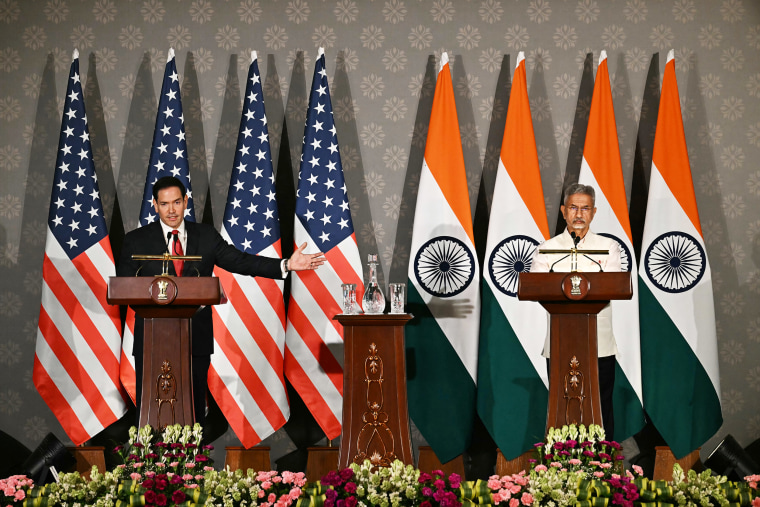
The summer heat in New Delhi is intense, reaching over 100 degrees Fahrenheit. It presented a challenge for Secretary of State Marco Rubio during his recent visit to India. Over the course of four days, Rubio met with Indian Prime Minister Narendra Modi and the foreign ministers of India, Australia, and Japan. He also toured the Taj Mahal, drawing concern from social media users about the extreme temperatures.
“I wanted to keep this brief because it’s hot. It’s hot,” Rubio commented humorously at the opening of the U.S. Embassy’s new building in New Delhi, noting the contrast with Miami’s humid heat.
The timing of Rubio’s visit coincided with important discussions for the Quad, also known as the Indo-Pacific alliance. U.S.-India relations have been tense due to tariffs on Indian exports imposed by the Trump administration. Despite achieving an interim trade agreement, there are ongoing conflicts, particularly concerning energy matters.
Rubio deemed his conversations with Quad counterparts productive, announcing advances in areas like maritime surveillance and infrastructure. Over 60% of global maritime trade traverses the Indo-Pacific, highlighting the region’s significance.
China responded critically, with Foreign Ministry spokesperson Mao Ning expressing disapproval of exclusive alliances and advising against undermining mutual trust.
In Jaipur, Rubio and his wife Jeanette experienced even higher temperatures while viewing the Amber Fort, a site prized for its historical architecture.
The couple also visited Mother Teresa’s resting place in Kolkata and posed for photos at the Taj Mahal. Social media comments noted the “hellishly hot” conditions and humorously suggested praise for the visit scheduler.
India faces significant challenges due to rising fuel prices, impacted by Iran’s shutdown of the Strait of Hormuz, reducing oil imports from the Gulf.
Rubio addressed the conflict with Iran, advocating for reopening the Strait to foster a potential agreement between Washington and Tehran.
Despite the heat, Rubio expressed appreciation for India’s potential, remarking on the significant bilateral opportunities at a New Delhi event marking America’s upcoming 250th independence anniversary.
Both nations signed a critical minerals and rare earth supply chain pact, focusing on mining, processing, and recycling collaborations. Rubio emphasized the importance of diversifying sources to prevent monopolies, implicitly referencing China.
The Quad’s joint statement opposed destabilizing actions in the region and expressed concern over militarization, especially in the South China Sea.
Rubio’s tour continued to Armenia, where discussions involved energy diversification away from Russia.
Leave a Reply