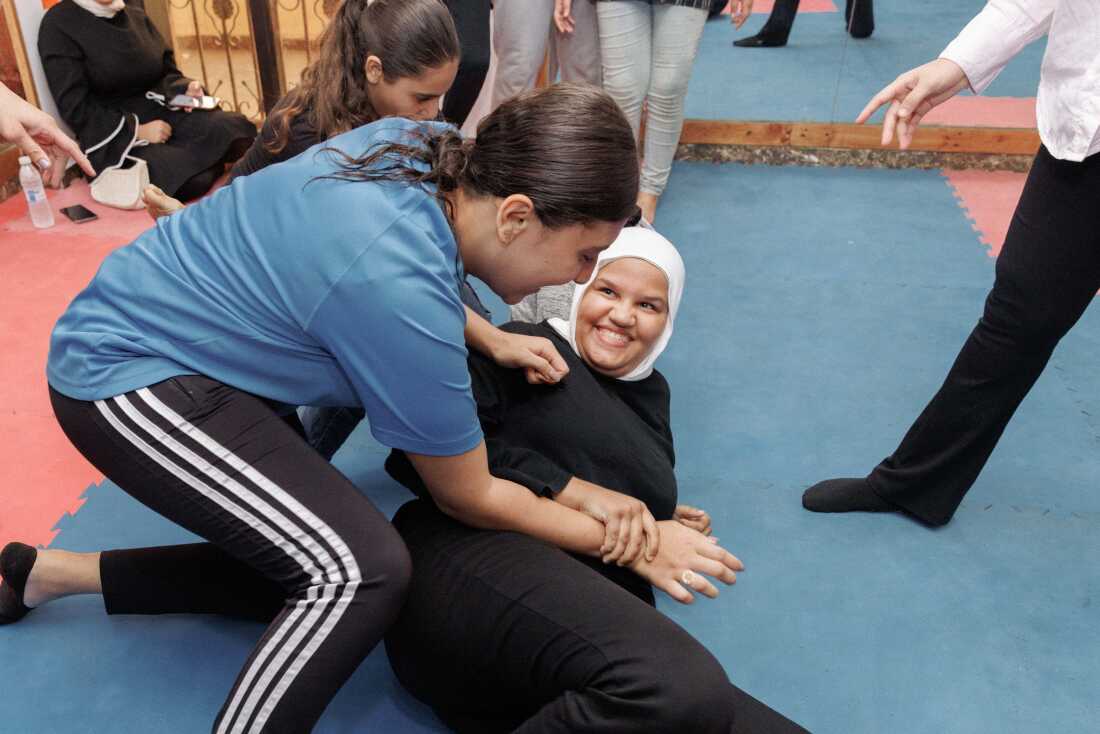
In the Burj al-Barajneh refugee camp in South Beirut, young Palestinian girls are learning Brazilian jiu jitsu in a makeshift gym. This martial arts training emphasizes more than self-defense; it challenges traditional perceptions of how girls and women should behave.
The class concludes a two-month course, echoing with yells and the movement of students mastering techniques under coach Mirella Atallah. Atallah, a former world jiu jitsu champion, trains women and marginalized communities globally, particularly in areas where discussing gender-based violence is often avoided.
Atallah prefers to view the class as public space empowerment. Aisha Saqqa, an 18-year-old business management student, shares that the training altered not only her physical abilities but also her mental health. Mirella instructed them to act differently, emphasizing the importance of awareness and confident communication.
“For me it’s important to call it women’s empowerment in public spaces,”Atallah emphasizes.
This instruction goes beyond physical techniques, encouraging students to use their voices and maintain confidence in public spaces, which can be challenging for those raised to remain silent.
The background of these students is often challenging. Many were born in Lebanon’s Palestinian refugee camps where hardships are magnified by ongoing economic and social problems. Malak, a teenager from the camp, aspires to become a beauty specialist despite these difficulties.
Atallah herself overcame adversity, growing up in a financially struggling Lebanese family. Her journey led her from Lebanon to Kuwait and ultimately to Canada, overcoming personal and physical challenges along the way.
She attributes her transformation to jiu jitsu, which provided her with newfound strength and a voice. Atallah is now a black belt in Brazilian jiu jitsu, having overcome significant obstacles to achieve this milestone.
Atallah’s goal is to create supportive communities among her students. The social situation in Lebanon, especially for women in refugee camps, often consists of grinding poverty and the constant threat of harassment.
Ola, a participant, encourages her daughter Hadeel in the training to build strength, independence, and confidence; attributes not commonly encouraged in their community.
Atallah collaborates with non-governmental organizations to provide free lessons to migrant workers, refugees, and members of the LGBT community. She has taught about 1,500 women and girls globally, from ages 12 to 83, in countries such as Syria and Pakistan.
In the training sessions, Atallah prompts participants to think about what they would change in their community. This discussion empowers students to consider possibilities beyond their current environment.
By encouraging these reflections, Atallah aims to spark change, creating ripples of transformation through the power of shared knowledge and community support.
Leave a Reply