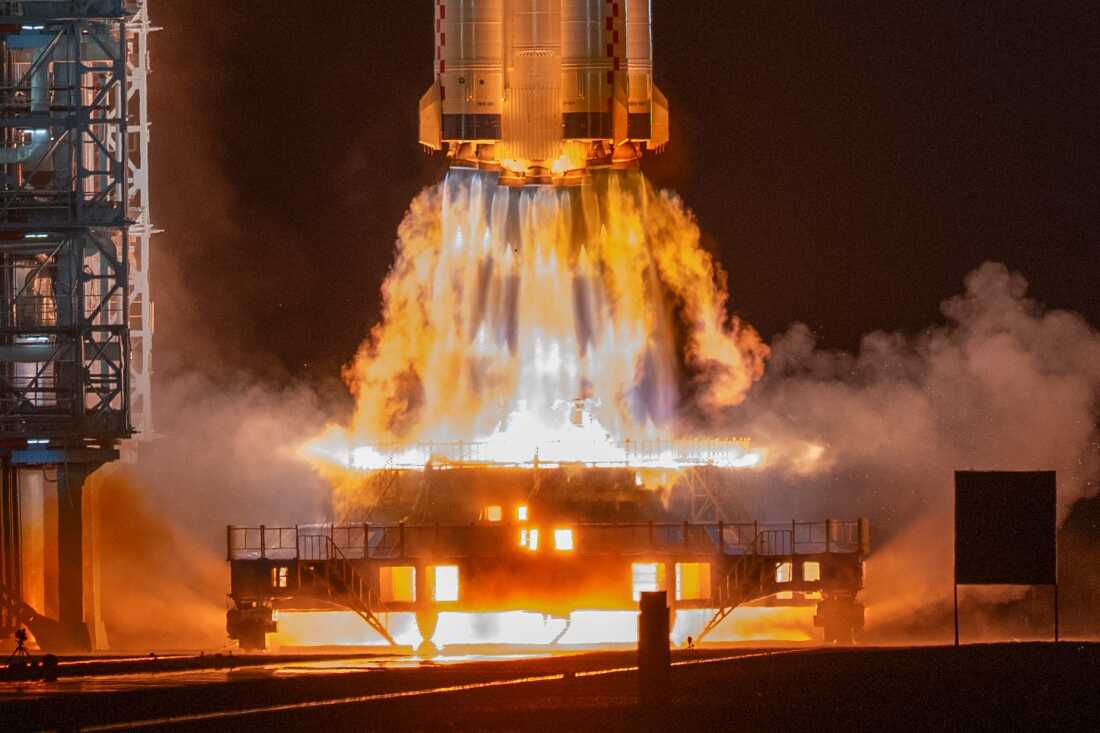
JIUQUAN, China — On Sunday, May 24, 2026, China successfully launched the Shenzhou 23 spacecraft from the Jiuquan Satellite Launch Center in northwestern China. The mission includes three astronauts headed toward China’s Tiangong space station, marking another step in the country’s ambitious space program.
The crew consists of Zhu Yangzhu, Zhang Zhiyuan, and Lai Ka-ying, known in the Mandarin transliteration as Li Jiaying. Lai is notable for being the first astronaut from Hong Kong to participate in a space mission, bringing with her expertise in computer forensics.
The mission is significant as one astronaut is set to remain in space for a year. This lengthy duration is designed to test the boundaries of human adaptability in extended spaceflight settings. The astronauts will be conducting numerous scientific and application projects during their stay.
An in-orbit rotation will occur with the crew of Shenzhou 21, who have been at the Tiangong space station for over 200 days. This routine rotation demonstrates the ongoing capability and coordination of China’s growing space operations.
China anticipates its first crewed lunar landing by 2030. With its exclusion from the International Space Station over U.S. concerns about national security, China has independently advanced its space station initiatives. The Tiangong space station, translating to ‘Heavenly Palace,’ first accommodated astronauts in 2021.
In 2025, the Shenzhou program executed an emergency mission, safely retrieving astronauts from the space station after experiencing a spacecraft malfunction. As China competes on a global scale with NASA’s plans to land astronauts on the moon by 2028, its space missions symbolize strategic technological progress.
Leave a Reply