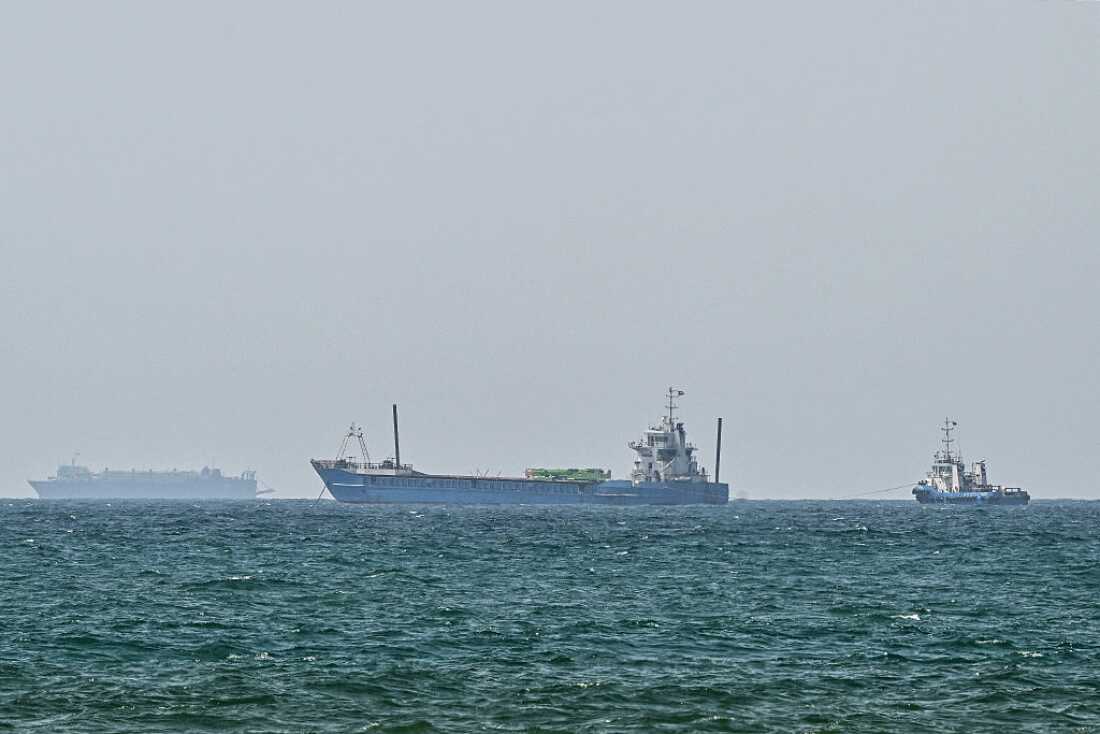
Vessels are stationed off Sharjah’s coast in the United Arab Emirates on May 21, 2026. Discussions around ending the war in Iran are ongoing. President Trump and members of his administration are managing public expectations as key disagreements persist.
President Trump announced that a memorandum of understanding to reopen the Strait of Hormuz is underway. However, he cautioned on social media that the U.S. would not hasten any agreement. He emphasized the necessity of a fair deal, dismissing critics as uninformed.
During a visit to New Delhi, U.S. Secretary of State Marco Rubio expressed commitment to diplomatic efforts. Rubio stated that alternatives would be considered only if diplomacy fails. Iranian officials have yet to officially respond, but semi-official channels indicate disagreements on some issues could hinder progress.
Reports from the Tasnim news agency, which has ties to Iran’s Revolutionary Guard Corps, accuse the U.S. of hindering the release of frozen Iranian assets in return for easing transit restrictions through the Strait of Hormuz. The proposed agreement requires Iran to restore shipping to pre-war levels within 30 days and for the U.S. to lift its blockade within the same timeframe. Another agency, ISNA, suggests Iran seeks joint administration of the strait with Oman, adhering to the U.N. law of the sea.
The conflict began on February 28, when the U.S. and Israel attacked Iran, spreading the war to U.S. allies in the Gulf. Iran retaliated by targeting U.S. bases and energy assets in Saudi Arabia and UAE. A ceasefire was achieved in April. Thousands of Iranians have died following strikes by the U.S. and Israel.
While the focus was initially on regime change and nuclear threat perceptions concerning Iran, discussions are now on reopening the Strait of Hormuz. Restrictions have led to global oil price increases and impacted the availability of various goods worldwide.
On May 25, 2026, Rubio, speaking in New Delhi, mentioned ongoing discussions in India, describing the proposed agreement as stable concerning the reopening of the strait. Nuclear negotiations remain a key part, with hopes of resolution remaining cautious.
The U.S. is pressuring Iran to ship highly enriched uranium out for safekeeping. Iran views this as a sovereignty issue, asserting its nuclear ambitions are peaceful. Senior Iranian officials have outlined demands like ending conflicts, accessing frozen assets, lifting the naval blockade, and oil trade freedom.
A 60-day discussion on nuclear matters, contingent on lifting sanctions and releasing Iranian assets, follows an initial 30-day agreement. Trump indicated the U.S. naval blockade would persist until a formally signed deal.
Iran’s parliament, through spokesman Ebrahim Rezaei, signaled defiance against threats, urging genuine negotiations for price stabilization rather than U.S. posturing.
Israel opposes halting the war in Lebanon, despite ceasefires. Continued hostilities have resulted in significant casualties. Lebanon reports over 3,200 deaths from Israeli attacks, while Israel cites 22 military and several civilian losses due to Hezbollah actions.
Leave a Reply