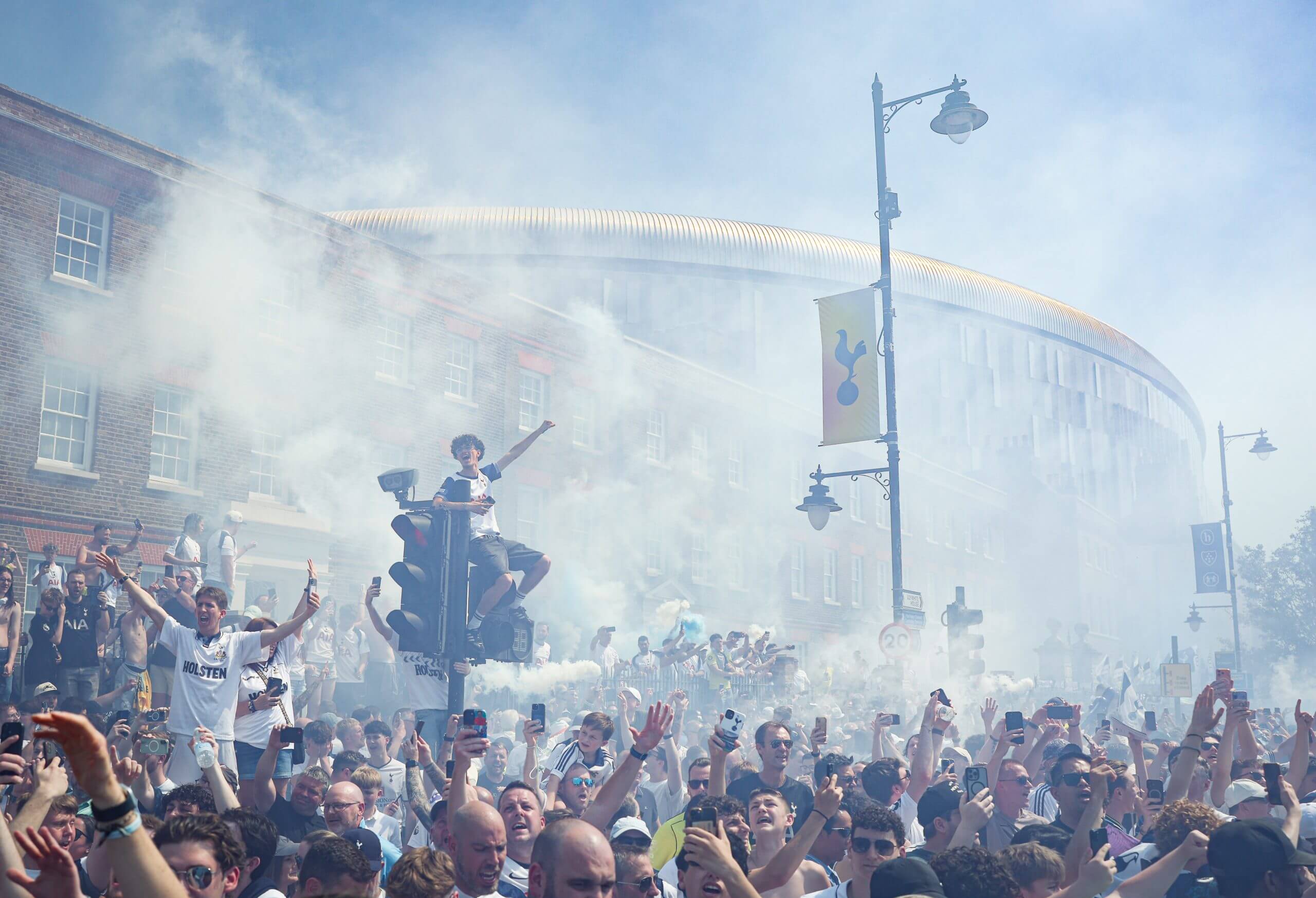
The atmosphere at the Tottenham Hotspur Stadium on Sunday brought back memories of the previous year. Although there was no victory parade, thousands of passionate Spurs fans crowded the streets in the early afternoon. They brought banners, inhaled blue and white smoke, and lifted children onto their shoulders, determined to give the team an enthusiastic welcome.
Despite the absence of a trophy, fans remained in the stands, cheering and singing long after the final whistle. The players, staff, and manager alike were deeply moved by the display of support. This atmosphere had not been matched often since the stadium’s opening in 2019.
Roberto De Zerbi’s Impact
The loudest cheers were reserved for manager Roberto De Zerbi. Overwhelmed by the support from the fans, De Zerbi stood before a sea of emotion. Known as the face of Tottenham’s revival, he was vital in avoiding relegation. Under his guidance, Spurs secured 11 points from their last six matches despite challenges like low confidence and injuries.
De Zerbi’s optimism and leadership brought the club back together, allowing them to look towards the future. He described this achievement as his proudest moment in management. The collective sense of relief was palpable, with fears of relegation now behind them.
The Season’s Challenges
Despite avoiding the drop, the season was a disaster by Spurs’ standards. They endured a relegation fight in May, a situation far removed from their recent successes, including a Europa League victory last year. The club’s stability felt shaken, revealing the effects of poor management and change.
Thomas Frank’s appointment marked the start of the season with a focus on pragmatism over postecoglou’s style. This shift failed to deliver, with the team winning only seven out of 26 league matches under Frank.
Structural Changes at Spurs
Significant off-field changes also occurred. The Lewis family, concerned about underperformance, appointed Vinai Venkatesham as the first CEO since ENIC took control. The club aimed to modernize governance by replacing former chairman Daniel Levy.
This move, while groundbreaking, destabilized the club. Levy’s departure ended almost 25 years of leadership. Venkatesham’s role in spearheading the transformation included forming a new Executive Leadership Team and appointing two sporting directors.
Reactions to Challenges and Performances
Frank’s tenure was marked by negative fan reactions and a perceived lack of respect from players. His approach did not resonate, leading to a series of poor performances and dissatisfaction among all involved.
Despite early unity attempts in management, dissatisfaction grew due to lack of positive leadership. Criticism of Frank’s tactics and a disconnect between players and management intensified.
The Turnaround Begins
Roberto De Zerbi’s return marked a turning point. Spurs finally found the leadership needed to escape their decline. De Zerbi brought unity, optimism, and a renewed identity to the team. He led the club through collective effort, encouraging resilience and belief.
Under his management, the team found cohesion, securing crucial wins. This leadership not only secured Premier League status for the next season but also laid the groundwork for future stability.
In conclusion, De Zerbi’s influence was indispensable. The focus remains on ensuring these lessons are used to prevent future disruptions. Tottenham must prepare for new challenges without losing sight of the lessons learned this season.
Leave a Reply