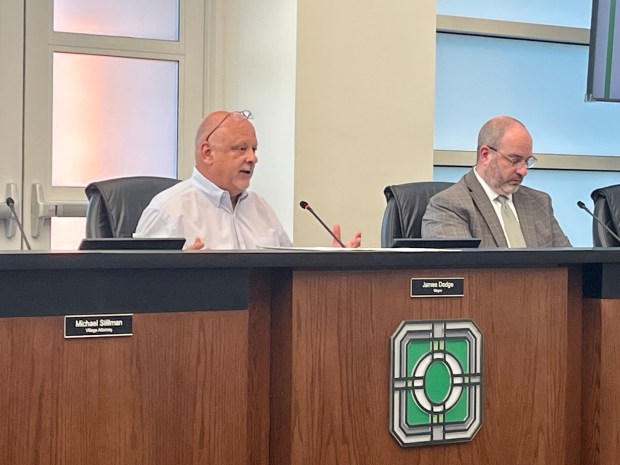
The Orland Park Village Board, with guidance from a consultant, examined new development opportunities in four key areas as part of a comprehensive plan review. The board focused on the Old Orland Historic District, Gateway to LaGrange District, Harlem Avenue Corridor, and I-80 Employment Corridor. They aim to connect these areas to create a new downtown hub.
Mayor Jim Dodge expressed optimism, stating, “It’ll take 20 years, but it’s Orland’s destiny.” Urban planning firm Houseal Levigne will gather input from the board and community, including businesses and residents, during meetings and through surveys. The goal is to finalize the plan by next summer.
Board members identified three challenges for each area, discussed them, and prioritized the most critical issues. Mayor Dodge highlighted the importance of documenting various ideas, noting, “It was funny — not everybody had voted for what they originally said.”
In the Old Orland Historic District, which extends from 143rd Street to 144th Place and from West Avenue to Beacon Avenue, board members agreed on priorities like updating existing properties while balancing historical preservation and development. The area’s central location and unique character were seen as strengths.
Orland Park Mayor Jim Dodge discussed challenges in improving the Old Orland Historic District during the meeting, emphasizing its charm due to older structures. Board member Cynthia Katsenes also highlighted this distinctiveness, saying, “It has a charm that’s lacking in other subdivisions, because of the age of the structures.”
The I-80 Employment and Harlem Avenue corridors were also discussed. Board member Michael Milani noted past unsuccessful efforts to attract corporate offices to the I-80 corridor. With more people working remotely, a new identity might be necessary. Katsenes and Milani debated the feasibility of a data center, considering its potential impact on nearby residential areas. Communities often oppose data centers due to high water and electricity use and noise pollution. Nevertheless, Milani suggested data centers might generate more tax revenue than warehouses, saying, “We have a lot of key areas where we could have one where no one would ever hear it.”
Although the changes are long-term, Dodge was eager for more feedback, especially concerning the downtown proposal. The plan, linked to a tax increment financing district, will be presented in a future board meeting. Dodge appreciated the collaborative process, saying it allowed the sharing of ideas among board members who reside in the community. He anticipates valuable feedback from residents.
Leave a Reply