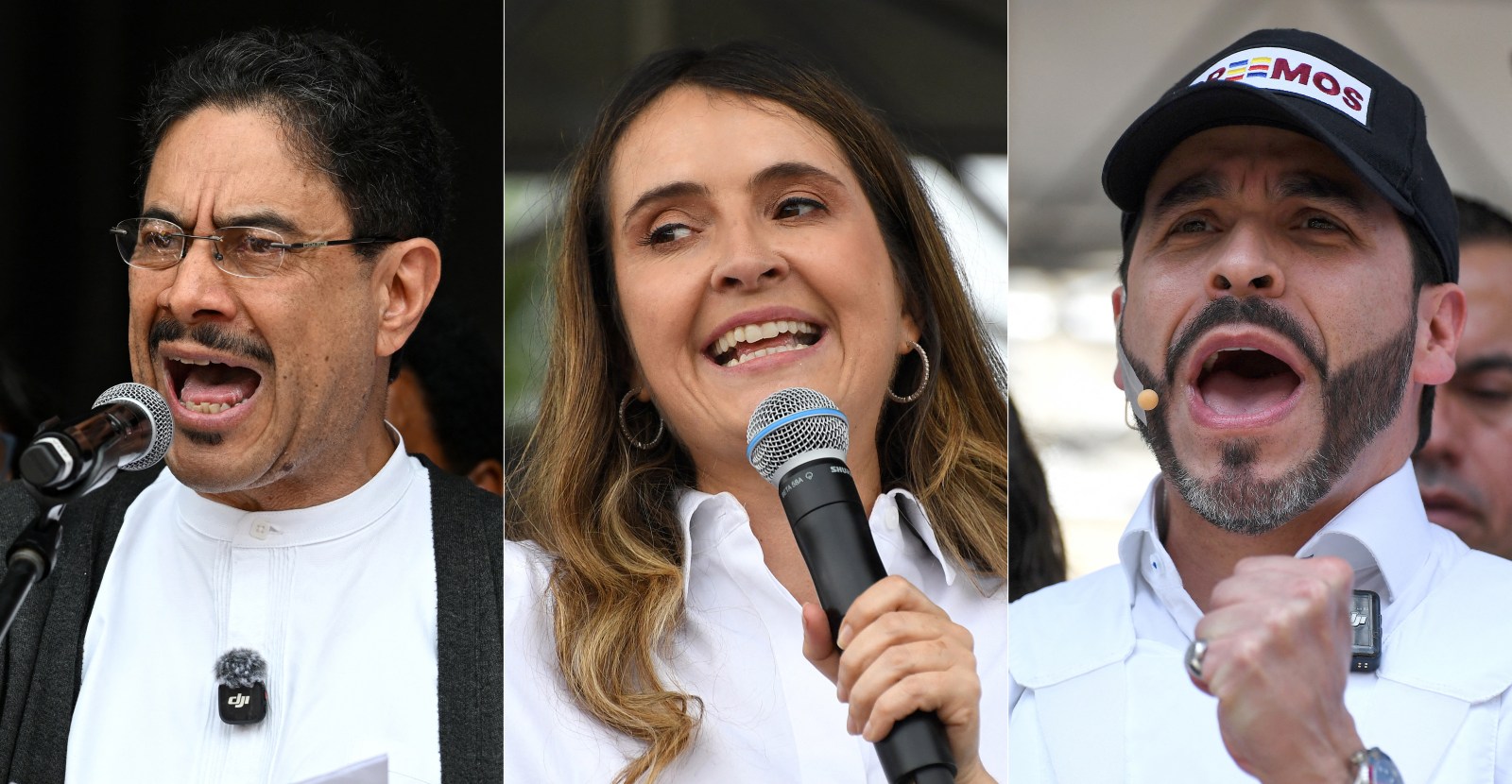
Colombia faces a critical election that could redefine its international relations and approach to domestic issues like drug trafficking. The election has become a close contest between two leading candidates: Ivan Cepeda, a left-wing senator and successor to President Gustavo Petro, and Abelardo De La Espriella, a hard-right newcomer shaking up Colombian politics. The possibility of a runoff in June remains high, with neither candidate expected to secure an outright majority.
Current Polls and Predictions
De La Espriella’s rise in the political landscape has been swift. He was polling at a mere 1.1% in March 2025. By early 2026, he was competing closely with Cepeda. A recent Invamer survey conducted from May 13-20 showed Cepeda leading with 44.6% support, trailed by De La Espriella at 31.6%. Paloma Valencia, once a strong conservative contender, has slipped to 14%. Other major polls from Guarumo and CNC suggest a likely runoff between Cepeda and De La Espriella.
Interestingly, prediction markets like Polymarket and Kalshi show De La Espriella as the favored winner. He holds around 59% odds of becoming president compared to roughly 40% for Cepeda. This mismatch highlights a key dynamic: while Cepeda leads in the initial round, analysts believe De La Espriella could consolidate right-wing votes in a runoff.
Significance of the Election
The outcome holds substantial implications for the U.S.-Colombia relationship. Over two decades, cooperation on security and anti-narcotics efforts has defined the bilateral relationship. Relations have strained under Petro, with disagreements on drug policy and regional diplomacy.
“The United States operates a giant embassy in Bogotá and has traditionally enjoyed close cooperation on security,” Benjamin Gedan from Johns Hopkins University noted.
A De La Espriella victory could revitalize relations with the U.S. administration under President Donald Trump. Cepeda’s win might extend current tensions, as he plans to follow Petro’s foreign policy approach.
Ivan Cepeda: Continuing Petro’s Legacy
Cepeda, 56, is an established figure in Colombian politics and part of Petro’s Historic Pact coalition. He promotes the continuity of Petro’s policies, focusing on social programs, environmental initiatives, and peace talks.
“Cepeda, more disciplined and dogmatic than Petro, would largely represent policy continuity,” Michael Shifter of the Inter-American Dialogue remarked.
Upon these assurances, Cepeda faces criticism. Many Colombians are frustrated by security issues, record coca production, and economic stagnation. His defense of Petro’s “Paz Total” policy, aimed at peace negotiations with various armed groups, faces scrutiny for ineffectiveness.
Abelardo De La Espriella: The Anti-Establishment Voice
De La Espriella, a corporate lawyer turned political candidate, positions himself as an anti-establishment figure. His campaign slogan, “The Tiger,” reflects his law-and-order focus, advocating a strong stance against crime and left-wing movements.
“His campaign is built more around emotion than detailed policy proposals,” Shifter added.
His legal work, including representing Alex Saab, accused of money laundering for the Venezuelan government, has drawn criticism. He defends his professional duties, emphasizing lawyers’ obligations to clients regardless of allegations.
Paloma Valencia’s Decline
Paloma Valencia entered the race backed by former President Álvaro Uribe, but her support dwindled as De La Espriella secured anti-Petro voters. Once a three-way contest, the race has narrowed, with Valencia trailing significantly despite her political background.
The Runoff Possibility
Most polls hint at a forthcoming showdown between Cepeda and De La Espriella. Invamer projects Cepeda leading the runoff by 7 points, with a significant portion of the electorate undecided. Voters face a clear dichotomy: extend Petro-era policies with Cepeda or shift to De La Espriella’s right-wing stance.
Impact of Petro’s Presidency
This election serves as a judgment on Petro’s leadership. Supporters celebrate achievements like reducing unemployment and expanding worker benefits. Critics point to security issues and burgeoning coca production as major setbacks.
“Petro’s insistence on deeply flawed negotiations with criminal groups has escalated coca and cocaine production,” former U.S. Ambassador Kevin Whitaker commented.
Four years after Petro’s historical win, Colombians will decide whether to pursue his political vision or explore a different path.
Leave a Reply