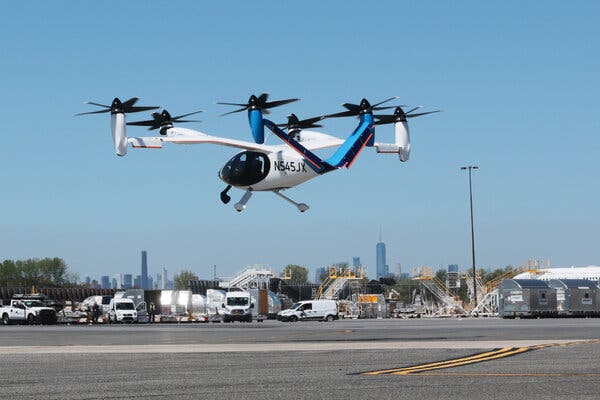
Under a clear blue sky, a new electric aircraft zipped from Kennedy International Airport to Manhattan, completing the journey in approximately ten minutes. In contrast, the same trip by car could easily take an hour or more. This flight showcases the aircraft made by Joby Aviation, which combines features of both helicopters and airplanes, highlighting how these new models might soon operate in urban environments.
The flight was part of a federal initiative aimed at accelerating the adoption of air taxis, a concept that envisions replacing traditional helicopters and potentially automobiles for specific applications. Industry representatives and some experts believe that air taxis could redefine transport in cities, promising quicker and more efficient travel.
Despite the enthusiasm, some experts remain cautious. They argue that these aircraft might ultimately prove more costly than helicopters and could have constrained applications. Although the industry has long touted its potential for transforming urban travel, no company has yet received federal approval to offer regular passenger or cargo services in the United States.
Laurie Garrow, an engineering professor specializing in aviation at the Georgia Institute of Technology, suggests that while widespread use of flying cars isn’t imminent, we could see these aircraft serving niche markets within the next two to five years.
The Trump administration demonstrated strong support for this transformation by establishing a program to foster collaboration between states, cities, and companies in bringing electric aircraft to market, aimed at passenger transport, cargo delivery, and medical operations.
In March, the Department of Transportation selected eight projects spanning 26 states, including the pilot-only demonstration by Joby in New York. These efforts underscore a commitment to exploring and developing this technology, though it remains in the nascent stages.
Leave a Reply