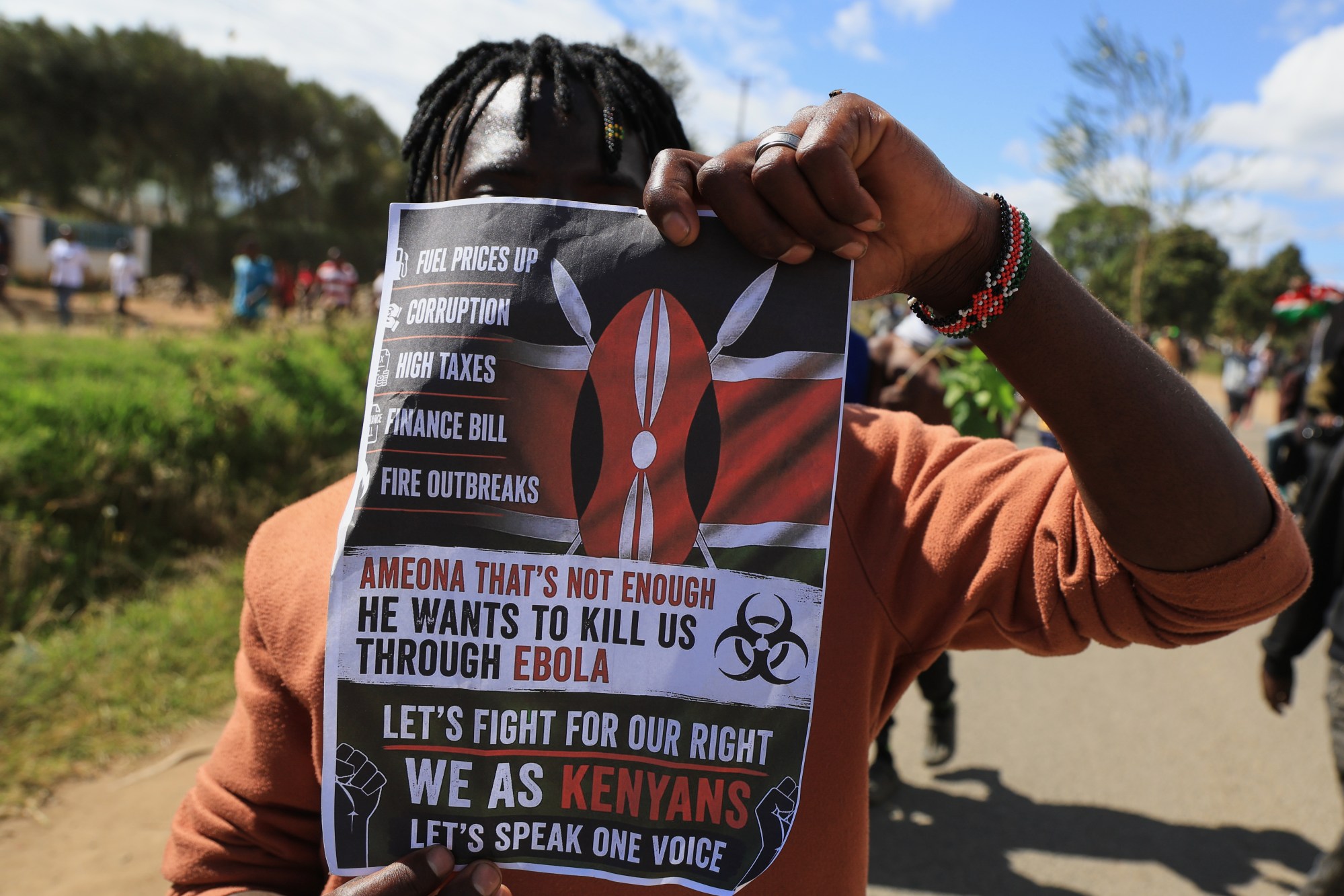
On June 1, 2026, in Nanyuki, Kenya, hundreds of youths protested against the planned establishment of an Ebola quarantine center at Laikipia Air Base. This proposal by the United States has sparked significant controversy. The protests occurred shortly after Kenya’s High Court temporarily halted the construction of the facility. This suspension also affects the arrival of any foreign patients until a legal case, initiated by the Law Society of Kenya and a constitutional watchdog, is heard.
The organizations argue that Kenya’s health infrastructure is not equipped to handle foreign Ebola patients. U.S. officials revealed that instead of repatriating Americans exposed to the virus overseas, plans were in place to quarantine them in Kenya. These officials, speaking anonymously, noted that the facility at Laikipia Air Base would have 50 quarantine beds ready by Friday.
During the protest, demonstrators gathered at the air base’s gates, voicing strong opposition through chants. Kenya’s Health Minister, Aden Duale, stated that the center would serve all nationalities. Meanwhile, U.S. Secretary of State Marco Rubio announced a commitment of $13.5 million to bolster Kenya’s Ebola preparedness.
Local leaders, such as Laikipia Governor Joshua Irungu, expressed concerns about potential exposure risks for locals employed at the air base. A resident, Malin Ndegwa, questioned why the facility hadn’t been proposed in countries like the Democratic Republic of Congo or Uganda, which are more directly impacted by Ebola. Kenya, he argued, should not host the facility, demanding its removal.
Although Kenya has not witnessed any Ebola cases, neighboring Uganda has reported nine infected individuals, leading to its border closure with Congo. The latest outbreak in Congo involves the Bundibugyo virus, a form of Ebola without an approved treatment or vaccine, confirming at least 282 cases and suggesting over 1,000 possible cases.
Leave a Reply