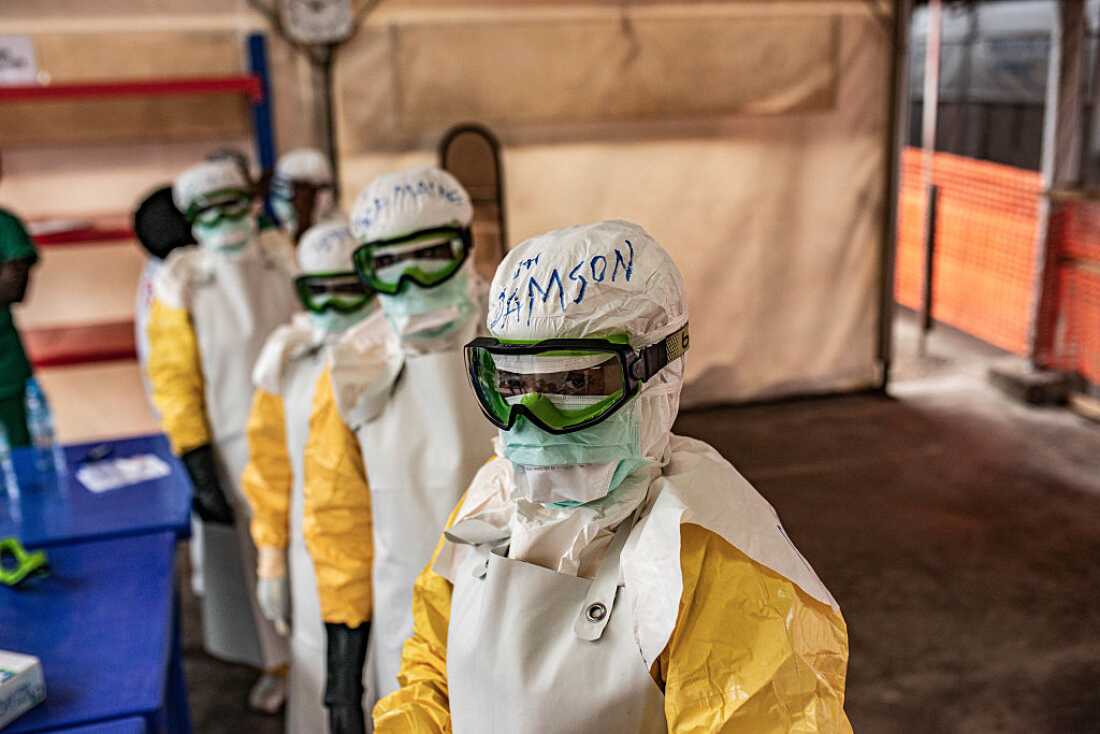
Health workers continue to operate in challenging conditions at an Ebola treatment center in Monigi, Democratic Republic of Congo, as of June 2, 2026. The recent Ebola outbreak in Africa could match the severity of the West African outbreak from a decade ago. At that time, the outbreak resulted in 28,000 cases.
The U.S. Centers for Disease Control and Prevention (CDC) suggests that the current outbreak may lead to 20,000 cases and over 4,000 deaths in the next three months alone. Both the Democratic Republic of Congo and Uganda are working to contain this large-scale outbreak. It has prompted the World Health Organization to declare an international health emergency.
CDC’s Projections and Recommendations
According to three CDC papers released recently, prompt public health measures are urgently needed. “If only 20% of cases enter isolation within two days of symptom onset, more than 20,000 cases are projected in two out of three of our scenarios,” said Jason Asher from the CDC’s Center for Forecasting and Outbreak Analytics.
If conditions remain uncontrolled, the outbreak could surpass previous records. CDC emphasizes that isolating exposed individuals is vital. With international efforts increasing, the outbreak’s severity could reduce significantly. Achieving a 70% isolation rate within two days could limit the outbreak to fewer than 10,000 cases with a 94% probability, Asher noted.
International Concerns and Responses
Jennifer Nuzzo from the Pandemic Center at Brown University stressed that the outbreak is on a dangerous path. Immediate action is essential to halt it at the source. One of the CDC reports noted that the risk to the U.S. remains low due to the lower transmissibility of Ebola compared to diseases like COVID-19.
Satish Pillai, the CDC Ebola response incident manager, remarked that U.S. citizens face minimal domestic risk. He assured there is no cause for concern or change in travel behavior except for travel to the Democratic Republic of Congo or Uganda.
In the Washington Post, Anthony Banbury, a former U.N. official, highlighted the need for a coordinated international response. He warned that without a significant change in the global response, the Ebola crisis in Africa may worsen more rapidly.
Leave a Reply