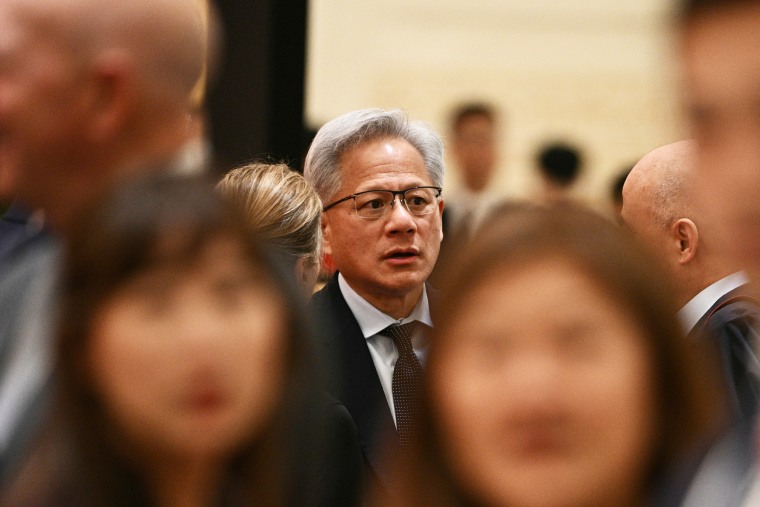
Nvidia CEO Jensen Huang has opted out of a Senate committee hearing invitation from Sen. Elizabeth Warren, D-Mass. The session, organized by the Senate Committee on Banking, Housing, and Urban Affairs, will scrutinize AI’s role in U.S. innovation, affordability, and technological supremacy.
Warren sought Huang’s attendance to discuss Nvidia’s operations in China and its strategy regarding export controls, which dictate the sale of U.S. AI technology overseas. Warren stated, “Nvidia is central to questions about AI, economic competition, and national security. If Mr. Huang has the time for events like a $1 million-a-head dinner at Mar-a-Lago or meetings with President Xi in China, he should find time for Congress.”
Nvidia stands as the most valuable company globally, with a market value exceeding $5 trillion. It creates advanced chips vital for current AI systems. Jensen Huang, seen at international summits, communicated his inability to attend through a letter to Warren, stating, “I am unable to attend but appreciate the Committee’s focus on these important issues. We are confident in the future and believe in the American system.” He invited committee members to visit Nvidia’s headquarters in Santa Clara to discuss AI technology and U.S. leadership.
Huang, part of President Trump’s Science and Technology Advisory Council, has promoted broader Nvidia chip sales worldwide. There is no recorded instance of Huang testifying before Congress. He previously stated, “We should ensure American companies have the best and the most. Yet, offering competitive chips to China is also vital.” Warren has criticized Huang’s initiatives, indicating they might “boost China’s military capabilities and undercut U.S. technological leadership.” Nvidia did not respond to requests for comment.
Recently, the Commerce Department addressed a loophole that might have allowed exports of potent AI chips contrary to American regulations. AI export controls continue to challenge policymakers. While some argue that overseas sales bolster U.S. innovation, others believe the high capability of AI chips demands strict regulation. Congress considers bills that would further limit chip sales and associated equipment to China and other rivals.
Thursday’s hearing will include experts from D.C. think tanks and advocacy groups on AI export controls. Expected participants are Mike Flynn from The Information Technology Industry Council, David Feith from the Hudson Institute, Will Rinehart from The American Enterprise Institute, and Dr. Sarah Myers West from the AI Now Institute.
Leave a Reply