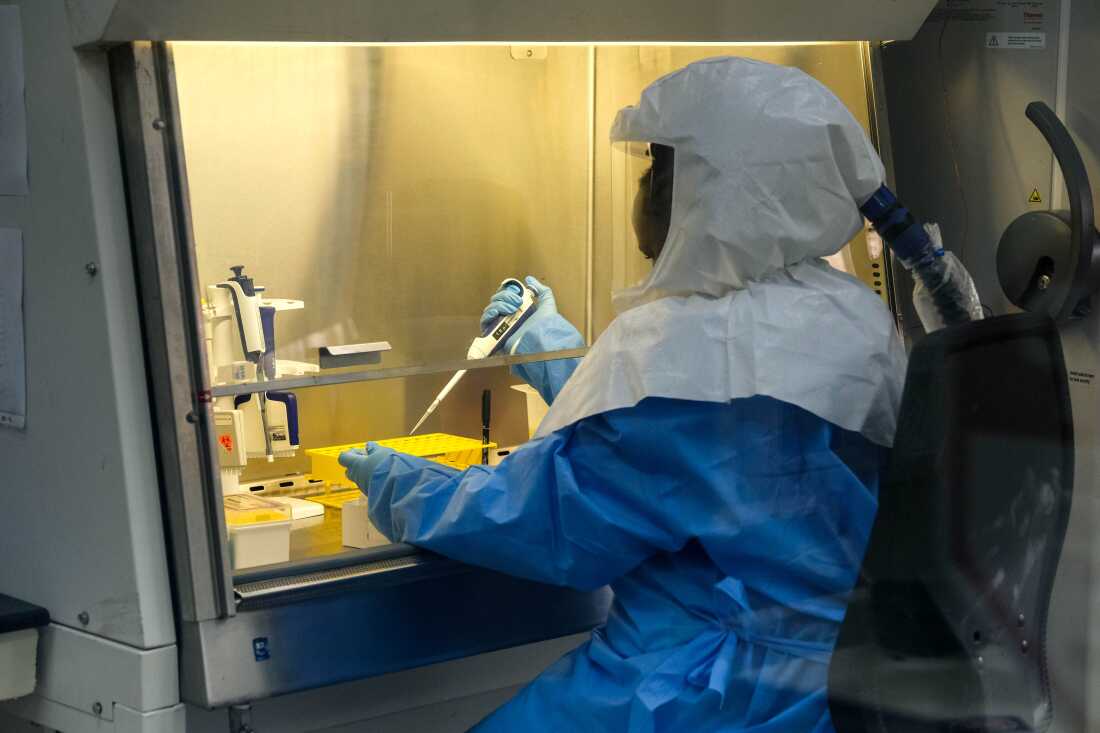
Sophia Mulei, a laboratory technologist, handles a control sample at the Uganda Virus Research Institute’s Viral Hemorrhagic Fever Laboratory in Entebbe. This laboratory is a key center for testing Ebola samples. In the Democratic Republic of Congo (DRC), health officials became concerned about potential Ebola cases in mid-April due to unexplained deaths in the northeastern region. Suspecting the deadly virus, officials collected samples and sent them to a lab in Bunia.
Ebola Testing and Delays
The lab processed the first samples on April 30, as explained by Jean-Jaques Muyembe, general director of INRB, DRC’s national biomedical research center. These samples were analyzed using GeneXpert, an automated machine for detecting viral DNA. Initially, results were negative. Even subsequent samples yielded the same negative indication.
Officials eventually forwarded samples to Kinshasa for more advanced testing. There, positive results for Ebola emerged. The issue was that GeneXpert couldn’t detect the specific rare Ebola species circulating at the time, significantly delaying the outbreak’s official recognition until mid-May. This delay allowed the outbreak, known as Ebola Bundibugyo, to expand into one of the largest seen, with suspected cases growing to over 1,100.
Caia Dominicus, a senior technical advisor at the International Pandemic Preparedness Secretariat, noted that the early response suffered from inadequate diagnostic tools. Without timely testing, isolating patients and halting the virus’s spread became challenging. The situation has since improved, but World Health Organization’s Abdirahman Mahamud warns that testing capacity remains insufficient to manage a possible outbreak reaching 20,000 cases by August.
Advancements and Limitations in Diagnostics
Improvements in testing capabilities are largely attributed to a device called RADI-One. This machine is capable of detecting Bundibugyo in patient samples with minimal training and fewer equipment requirements. Its user-friendliness allows deployment in smaller clinics close to the outbreak. Currently, seven labs and one mobile lab manage tests across northeastern DRC. Bunia’s larger labs can process more than 100 samples daily. A technician, speaking anonymously, confirmed that sample analysis now occurs within one to twelve hours.
Yap Boum of Africa CDC mentioned plans to obtain 50 RADI-One machines by late June. However, Dominicus expressed concerns over machine availability and the need for further equipment. WHO is negotiating with the manufacturer, KH Medical, in South Korea for more units, but these efforts will require time. Other tests are available but necessitate staff training.
Transporting samples remains a significant challenge. Some remote areas experience delays due to difficult terrain and ongoing conflict. Transport issues compound diagnostic challenges in the region.
Potential of Rapid Testing
Rapid tests, which operate similarly to those used during COVID, might ease current diagnostic difficulties. A simple pinprick blood test could offer results within minutes. Although rapid tests are less sensitive than lab-based methods, they could play a crucial role in curbing the outbreak. Rapid tests would allow faster isolation of positive cases.
Jean-Jaques Muyembe advocates for community-based rapid testing. Such tests could extend to deceased individuals since traditional burial practices in the DRC involve touching the body, posing a risk of transmission. Despite the demand, no official rapid test for Bundibugyo exists. Some tests designed for other Ebola species show potential in laboratory settings but need field validation.
Robert Garry of Tulane University believes developing a Bundibugyo-specific test could occur swiftly, suggesting existing technology is not complex. Ranu Dhillon, who advised during the 2014 Ebola outbreak, supports pursuing rapid tests, viewing them as potentially faster to implement than vaccines or therapeutics.
Scaling up both lab-based and rapid testing will require significant investment. Diagnostic tools often receive less funding compared to vaccines or therapeutics, although Dominicus emphasizes their critical role in informed decision-making. Underscoring the urgency, she asserts that adequate diagnostics could have prevented the outbreak from escalating.
Leave a Reply