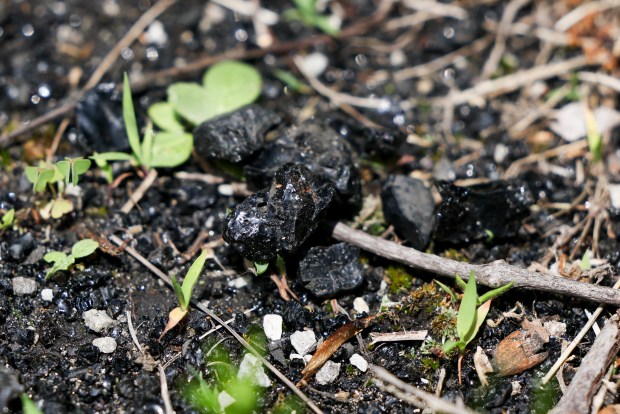
In Town of Pines, Indiana, Cathi Murray has discovered coal ash in her backyard, a constant reminder of the contamination in her community caused by the nearby Michigan City Generating Station. The plant’s owner, Northern Indiana Public Service Co., distributed excess coal ash throughout the area as fill material starting in the 1970s, impacting local health and environment. This ash contains heavy metals linked to cancer and neurological disorders, according to the National Institute of Health.
The coal ash disposal affected groundwater in Pines, a town with about 700 residents, leading to its designation as a Superfund site over 20 years ago. Despite ongoing struggles with pollution, the EPA plans to scale back coal ash regulations. Environmentalist Lisa Evans warns this could worsen conditions, especially near Lake Michigan and the Great Lakes, where numerous coal ash disposal sites exist.
The proposed changes by the Trump administration include delaying closure and cleanup requirements for active sites and relaxing restrictions on coal ash reuse. These changes could renew practices responsible for spreading coal ash in Pines. Additionally, the EPA wants to exempt older “legacy” coal ash sites, stopped before 2015, from cleanup requirements. In contrast, under the Biden administration, these loopholes were closed.
Near Michigan City, a seawall erected 77 years ago barely protects the lake from coal ash breach risks. Ashley Williams, of Just Transition Northwest Indiana, expresses concerns about the wall’s vulnerability during storms. Indiana law limits the state’s ability to enforce stricter coal ash closure standards than those set by the EPA.
In Illinois, former coal ash sites near Lake Michigan have leaked contaminants into groundwater for years. Although Illinois enacted stricter laws in 2019, legacy sites remain outside this regulatory framework. The rollback poses a threat, warns Earthjustice attorney Jenny Cassel, as the contamination at Waukegan Generating Station remains unaddressed for some areas.
Debra Shore, an ex-administrator at the EPA’s Midwest office, highlights inconsistent protections across Great Lakes states like Indiana and Illinois. She notes the 2024 EPA rule encouraging long-overdue cleanup efforts in the region, but current EPA proposals reverse progress, risking public health and safety.
Federal oversight of coal ash began in 2015 after the Tennessee spill, which dumped over a billion gallons of ash into waterways. Yet, many older sites eluded regulation. Indiana, with the highest number of coal ash sites, faces a “dubious distinction” with significant legacy sites unlined and vulnerable to flooding.
Trail Creek in Michigan City remains a point of concern with coal ash fills adjacent to key fishing areas. Williams, who moved there to advocate for clean energy, notes the EPA’s rollback could hinder progress made due to the 2024 rules. Environmentalists argue the agency’s past efforts to regulate coal ash are undone, negatively impacting planned cleanups.
Mayra Mendez of Waukegan has campaigned for awareness of her community’s environmental issues. NRG Energy’s closed Waukegan Generating Station still contains unregulated coal ash ponds. Legal actions have forced some cleanups, but proposed federal rule changes may leave others unregulated.
Environmental advocates express alarm over redefining “beneficial use” of coal ash, permitting practices that caused Pines’ contamination. Cathi Murray, aware of health risks, advocates through the community group PINES, pushing NIPSCO for arsenic level tests after the area’s designation as a Superfund site.
Last year, NIPSCO agreed to a settlement for cleanup funds to monitor groundwater contamination in Pines. Yet, environmentalists warn against relaxing coal ash regulations, citing damaging impacts. EPA officials continue considering public input, but environmentalists remain vigilant, knowing regulatory changes could take years to manifest fully.
Advocates plan to persist in their efforts even if federal rollbacks proceed.
Leave a Reply