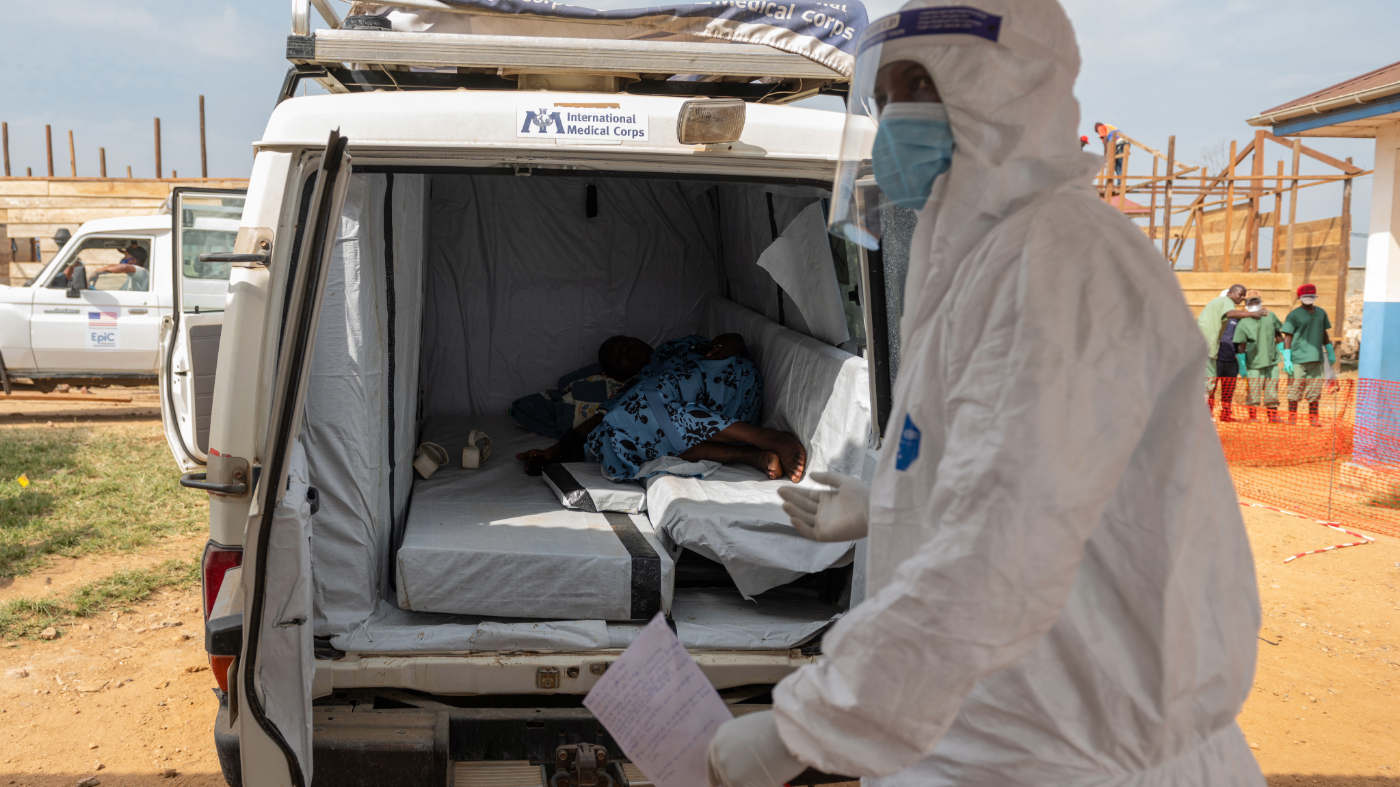
A paramedic stands by a suspected Ebola patient lying in an ambulance at a treatment center in Bunia, Congo. Ebola, a deadly infectious disease, is rapidly spreading throughout the Democratic Republic of the Congo and Uganda, with South Sudan now being at risk. As nations rush to address the outbreak, it is increasingly evident that the international community cannot rely on the U.S. for leadership in global public health emergencies.
The previous Ebola epidemic claimed over 11,000 lives in Africa about a decade ago, with the U.S. playing a significant role in combatting the disease then. However, this level of commitment seems absent now. Actions by the Trump administration have undermined U.S. public health agencies by removing experienced scientific personnel and essential resources, weakening America’s ability to mount an effective response to such crises.
The U.S. withdrawal from the World Health Organization has further hampered the nation’s ability to gather data and share information with allies. These practices were once crucial to U.S. global health policy. The reduction in U.S. engagement has made both the country and the world less safe. The U.S., once a leader in the fight against infectious diseases, now struggles to catch up with the current Ebola outbreak, which could mirror the devastation seen in the 2014 crisis.
The U.S. response to this crisis has led to confusion and uncertainty among Americans, coupled with a lack of accountability. Questions arise regarding the role of the State Department and the allocation of financial aid, with limited explanations on its use. With the U.S. Agency for International Development dismantled, oversight on the delivery of supplies and personnel raises concerns.
Preparation for the possibility of containment failure overseas needs addressing. The lack of clear communication about the response to this growing issue is troubling. A parade of temporary leaders at the Centers for Disease Control and Prevention further complicates the situation. President Trump’s dismissal of the previous head has resulted in additional uncertainty for Americans seeking science-based guidance.
Viruses do not respect international borders; they thrive when health agency budgets are cut and global health partnerships are disregarded. Control of the outbreak will be challenging if the disease spreads to overcrowded and unsanitary refugee camps in Sudan.
Contradictory positions from the Trump administration complicate infectious disease prevention. Voices that resisted COVID-19 health measures now support aggressive quarantine to address the Ebola crisis. Isolation and containment are now deemed necessary practices.
Secretary of State Marco Rubio’s statement on Ebola containment policies raises concerns, as American citizens exposed abroad face barriers to re-entering the country. America has state-of-the-art infectious disease facilities and trained personnel, yet citizens are directed to a makeshift hospital in Kenya instead of receiving care at home.
The U.S. previously invested substantially in disease readiness, collaborating with allies and respecting public health experts. These collective efforts aimed to prevent, contain, and manage outbreaks worldwide. However, today’s lack of commitment to leadership creates vulnerabilities. Congress must hold the administration accountable to ensure the nation’s ability to respond effectively to Ebola and other threats.
Lyndon Haviland, DrPH, MPH, is a distinguished scholar at the CUNY School of Public Health and Health Policy.
Leave a Reply