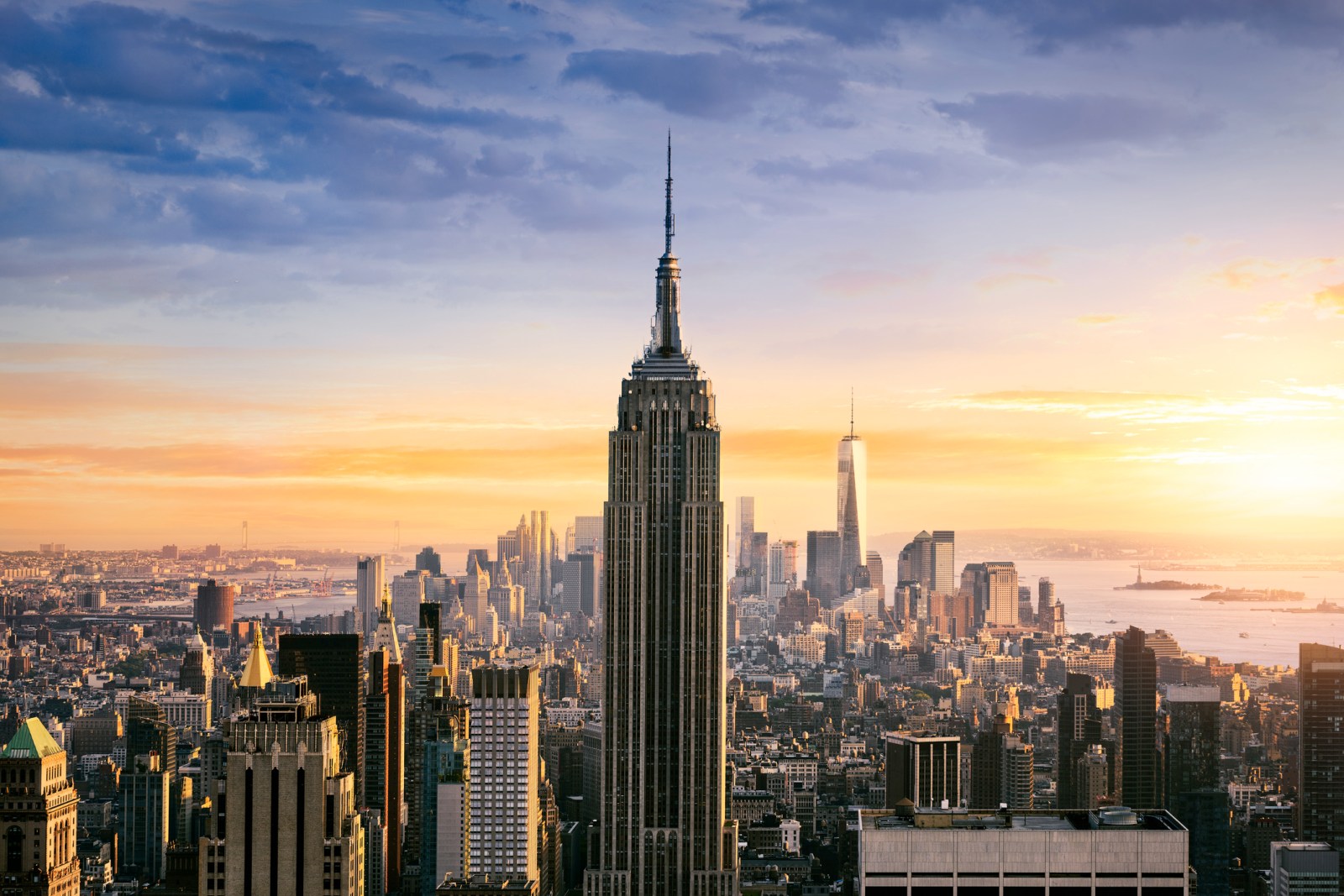
The Empire State Building stands as one of the most iconic landmarks in New York City today. Originally designed nearly a century ago, its distinctive spire was intended for a purpose that might surprise visitors: docking airships. This feature was envisioned as a mooring mast for dirigibles, allowing passengers to disembark directly into the skyscraper, high above Manhattan.
The Vision Behind the Design
In the late 1920s and early 1930s, there was a brief period when many believed that airships would become the future of long-distance travel. The architectural firm Shreve, Lamb and Harmon embraced this vision, designing the building with a sleek and modern mooring mast. The Skyscraper Museum describes this as “a 200-foot tall, modernistic metal tower, flanked by stylized wings and topped with a small octagonal room” designed for direct transfer from airship to structure. Travelers would theoretically arrive over Midtown Manhattan, transitioning straight into the heart of the city.
Challenges and Setbacks
Despite this ambitious vision, practical challenges quickly arose. Engineers found that the swirling winds around the skyscraper’s peak made docking an airship hazardous and impractical. In 1931, a privately owned dirigible managed to attach to the mast for only a few moments while contending with winds around 40 miles per hour. No other airship achieved such a feat, and the plan for a passenger terminal was swiftly abandoned.
Legacy of the Spire
The spire’s intended function never came to be, yet it played a critical role in cementing the Empire State Building’s legacy. By extending the building’s height, the spire allowed it to surpass the nearby Chrysler Building by approximately 200 feet. This secured its status as the world’s tallest skyscraper in 1931, a title it held for four decades until the World Trade Center’s construction.
The summit of the Empire State Building eventually found new purpose as an observation deck, offering breathtaking views of New York City. According to The Skyscraper Museum, the outdoor observation deck and the 102nd floor room afford unparalleled vistas—making the summit a symbol of being high above, yet centrally within, the city.
As interest in historic landmarks like the Empire State Building endures, they are often repurposed for modern uses, reflecting changing expectations in transportation and urban development.
Leave a Reply