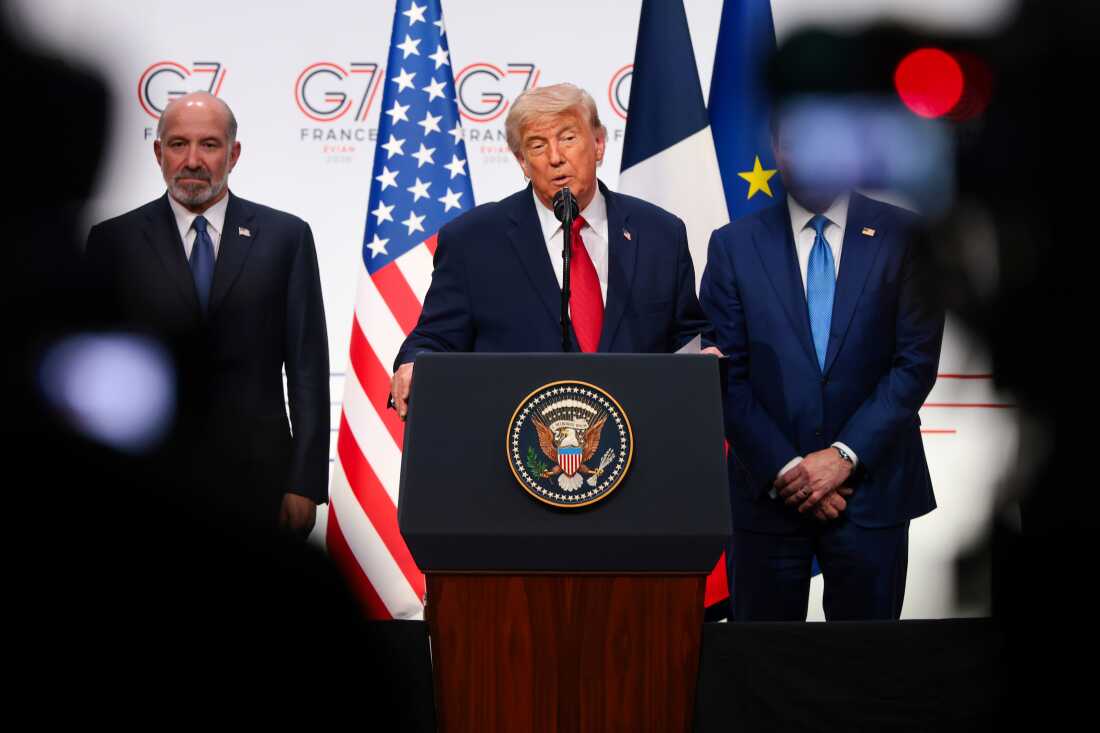
The Trump administration shared details of a preliminary agreement to end the conflict with Iran on Wednesday. President Trump addressed reporters in Evian, France, concluding his visit to the G7 summit. Senior administration officials, speaking anonymously, presented the full agreement. Iran has yet to disclose any details.
Trump announced an agreement on Sunday, but specifics were not made public until Wednesday, creating speculation about the framework. The document is brief and lacks detail, leaving much to be negotiated in future talks. A senior administration official stated that the U.S. and Iran agreed to an “immediate and permanent termination of military operations on all fronts,” including in Lebanon. Both sides also pledge “not to initiate” further conflict.
The deal outlines a 60-day negotiable period to finalize an agreement. Upon signing, which Trump expects soon, the U.S. will start lifting the naval blockade. This will be fully removed within 30 days if a final deal is reached. Iran will work to ensure safe passage for commercial vessels between the Persian Gulf and the Sea of Oman, without charge, for 60 days.
The U.S. plans to collaborate with regional allies to establish a $300 billion fund for Iran’s reconstruction and economic development. Trump indicated that the U.S. would not contribute directly, though other countries might invest. The U.S. will lift sanctions once a final deal is achieved, as stipulated in the agreement.
Iran will refrain from procuring or developing nuclear weapons. The U.S. and Iran will devise a plan for managing Iran’s stockpiled enriched uranium. While sanctions remain until a final deal is struck, the U.S. will issue waivers for Iranian oil, petroleum, and related transactions. Frozen or restricted Iranian funds will become “fully available” when a final deal is concluded.
Further negotiations will address monitoring and compliance. During the press conference, Trump stated Iran would “work closely” with the U.S. to manage enriched material, with surveillance ensuring compliance. Technical discussions on nuclear issues will start immediately, and economic relief will be merit-based.
Trump emphasized the agreement’s economic necessity. Without the deal, further conflict would have harmed the Strait of Hormuz and global markets. The U.S.-Israel-led war since February severely impacted the global economy, increasing oil prices and costs. American public opinion largely disapproved of U.S. actions, negatively affecting Trump’s economic ratings.
Leave a Reply