A recent survey reveals that Americans are nearly evenly split on how to handle relations with Iran. The Reagan Institute Summer Survey found that 39% support a negotiated settlement with Iran that includes verifiable limits on nuclear and missile programs, keeping the current government in place. Meanwhile, 36% favor replacing the current regime with one more aligned with U.S. interests.
An additional 16% support a scenario in which Iran’s government remains but is significantly weakened both militarily and economically. The survey also notes that 8% of respondents were uncertain about their preference.
The poll was conducted before a temporary agreement between President Donald Trump and Iran, which included a 60-day ceasefire and the reopening of the Strait of Hormuz. This finding highlights the complex political landscape President Trump navigates as he engages Iran in negotiations.
The political divide is pronounced, with Republicans preferring regime change by a 2-to-1 margin over a diplomatic solution. Half of Republican respondents wish to see the Iranian government replaced, whereas 25% support a diplomatic settlement.
Democrats show a preference for diplomacy; 52% back a negotiated settlement with the current regime, compared to 25% who desire regime change. Additionally, 14% of Democrats favor a weakened Iranian government without changing the regime.
The survey was conducted from May 26 to June 3, involving 1,555 respondents nationwide, with a margin of error of ±2.5 percentage points. Conducted using a combination of live telephone interviews, online panel, and text-to-web responses, the survey results were weighted according to U.S. Census Bureau benchmarks.
The poll also included an oversample of 331 MAGA Republicans under 30, with a margin of error of ±5 percentage points. This group leaned heavily toward regime change, with 51% supporting it compared to 25% for a negotiated solution.
The Reagan Institute, based in Washington, advocates the foreign-policy tradition of ‘peace through strength.’ The findings emerge as Trump promotes a new memorandum of understanding with Iran aimed at reducing tensions and facilitating negotiations over Tehran’s nuclear agenda.
The memorandum sets a 60-day timeframe for negotiations between the U.S. and Iran for a broader agreement. It also aims to restore commercial activities through the Strait of Hormuz and grants limited sanctions waivers tied to future talks.
Trump describes this arrangement as a means to prevent wider conflict and reach a comprehensive “great settlement” with Tehran. The goal is to stabilize energy markets by reopening critical shipping routes and negotiating further restrictions on Iran’s nuclear program.
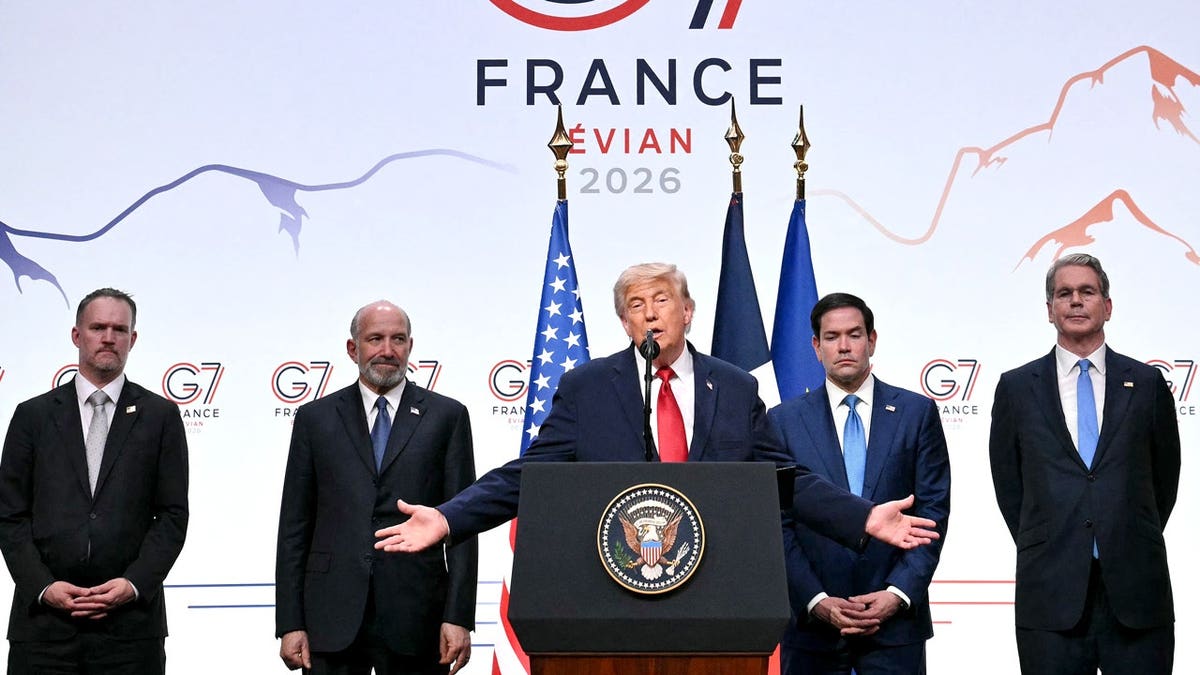
At the G7 Summit in France, Trump emphasized the need to avoid an ‘economic catastrophe’ as a key reason for pursuing the settlement.
Leave a Reply