On Friday, discussions for a long-term peace agreement were expected to begin, but a sudden development altered the plan. Iran withdrew from the talks, citing Israeli airstrikes in Lebanon. However, hours later, diplomats reported that a cease-fire was reached between Israel and Hezbollah to halt the fighting.
Diplomats on Friday were trying to maintain the delicate balance in the agreement between Iran and the United States following Iranian retaliation to Israeli strikes in Lebanon. Following these developments, Israel announced it reached a cease-fire agreement in Lebanon with the support of Hezbollah, an ally of Iran.
Iran’s temporary withdrawal from talks with the United States put a strain on the framework agreement signed by President Trump earlier this week. Negotiations for a more durable peace plan were slated to kick off shortly after in Switzerland.
Despite the strain on the Iran-U.S. truce, it appeared to hold, with no indications of indefinite postponements in negotiations. Shipping activity through the Strait of Hormuz saw an uptick, though still below levels noted before the conflict.
Yechiel Leiter, Israel’s ambassador to the United States, confirmed Israel’s commitment to an immediate cease-fire. President Trump, in an NBC News phone interview, mentioned his request to Israeli leaders to accept a cease-fire in Lebanon, dubbing it as “a little icing on the cake”, but did not disclose if he had communicated with Prime Minister Benjamin Netanyahu. Meanwhile, Hezbollah has not publicly stated its agreement to the cease-fire.
The day’s incidents underscored the fragile nature of the U.S.-Iran deal reached this week, highlighting Lebanon’s significance in the agreement. The first clause of the 14-point agreement mandates both countries and their allies involved in the ongoing conflict to “immediately and permanently cease military operations on all fronts, including in Lebanon”. However, neither Israel, who joined forces with the U.S. against Iran, nor Hezbollah, supported by Iran, has formally signed the agreement.
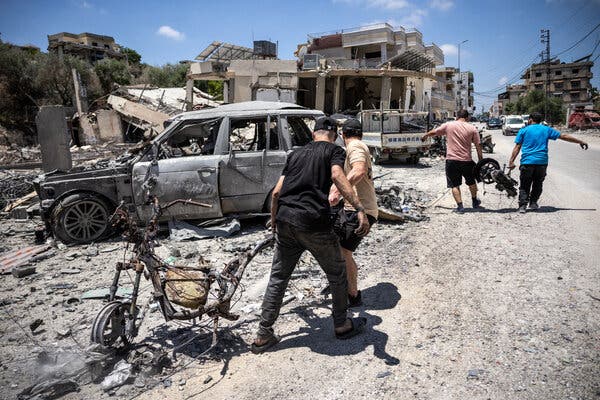
Lebanon stayed relatively calm after the cease-fire was set to begin at 4 p.m. local time. The cease-fire followed a night of intense Israeli bombardment, which, according to Lebanon’s health ministry, resulted in 47 deaths and 97 injuries. Notably, the ministry does not differentiate between civilians and combatants in these statistics. Officials from several countries confirmed the cease-fire, stating it was facilitated by Qatar and the United States. Discussions, including the announcement of Iran’s withdrawal from talks, were conducted in anonymity due to the sensitive nature of the diplomacy.
Leave a Reply