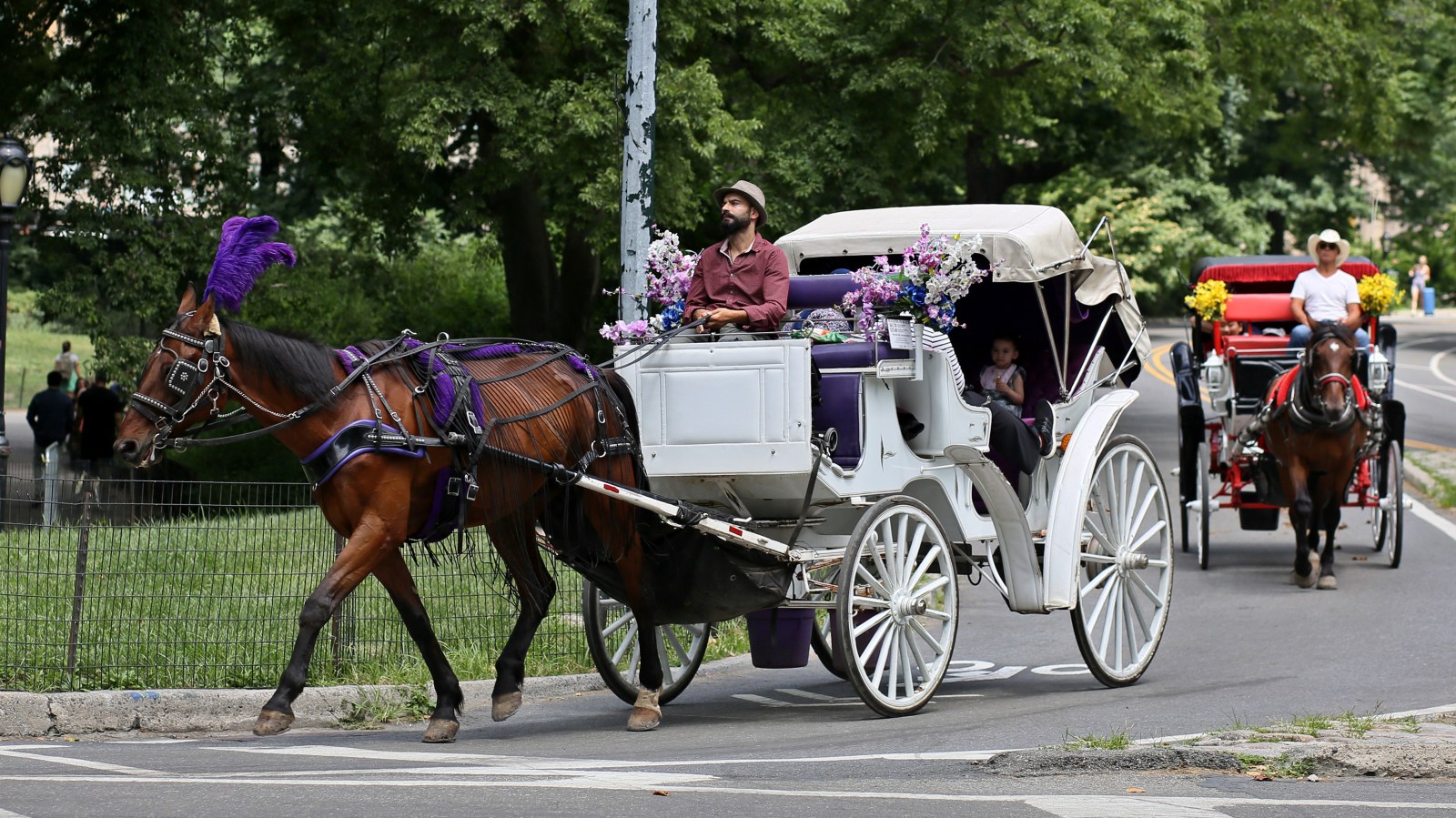
Historical Context of Horse-Drawn Carriage Rides
Horse-drawn carriage rides have been a notable feature of New York City since the mid-1800s. Initially emerging as a practical means of transportation, these rides have evolved into a tourist attraction centered around Central Park.
Commercial carriage rides began around Central Park, which opened in the 1850s. By the late 1860s, these rides were a common sight, establishing a tradition that spans nearly 160 years. Historic images reveal horse-drawn carriages traversing Central Park well before automobiles became widespread.
Today, horse-drawn carriages remain a recognizable part of the park’s landscape, with drivers offering decorated rides near Central Park South. Their enduring presence in media and postcards has solidified their cultural significance in the city.
Safety Concerns and Recent Incidents
Recent tragedies have renewed calls to reassess horse-drawn carriage rides in New York City. An incident involving the death of 18-year-old Romanch Mahajan highlighted safety issues associated with these rides.
On June 17, Mahajan suffered a fatal injury when the horse pulling his carriage bolted, causing the carriage to overturn. This incident, among others, led to scrutiny over the safety and welfare of both passengers and animals.
Reports cite multiple accidents over recent years, such as collisions and horses running into traffic, as signs of systemic risks linked to the industry. Criticism from animal welfare groups, elected officials, and the Central Park Conservancy has intensified following these events.
Legislation: Ryder’s Law
Ryder’s Law aims to phase out the horse-drawn carriage industry in New York City, proposing the replacement of these rides with electric carriages. The bill is named after Ryder, a horse whose 2022 collapse and subsequent death in Manhattan prompted public outrage.
The legislation has seen support from animal welfare advocates and politicians, including former Mayor Eric Adams. Despite past setbacks, recent incidents have revived efforts, with a hearing scheduled for July. Advocates have announced that Ryder’s Law will be renamed Romanch’s Law in Mahajan’s honor.
Current Regulations on Carriage Horses
New York City enforces regulations on carriage horses to ensure their welfare, though critics argue these rules are insufficient. Key restrictions include:
- Carriage horses can work a maximum of nine hours within a 24-hour period.
- Riding horses have an eight-hour work limit in the same duration.
- Carriage horses must receive five weeks of furlough or vacation annually at a stable facility.
- Licensed rental horses require veterinary checks every 4 to 8 months, and at license renewal.
In light of recent events, union officials underline the rule preventing drivers from leaving horses unattended while passengers are aboard. The union endorses an investigation into potential protocol breaches during Mahajan’s accident.
Critics of the industry stress that even with stringent regulations, the risks inherent in maintaining large animals within dense urban settings persist. Advocates for Ryder’s Law argue ending the industry is the only way to preclude future incidents involving horses or passengers.
Horse-drawn carriage rides have been temporarily suspended for additional driver training, with the union placing the suspension in effect until at least Tuesday.
Leave a Reply