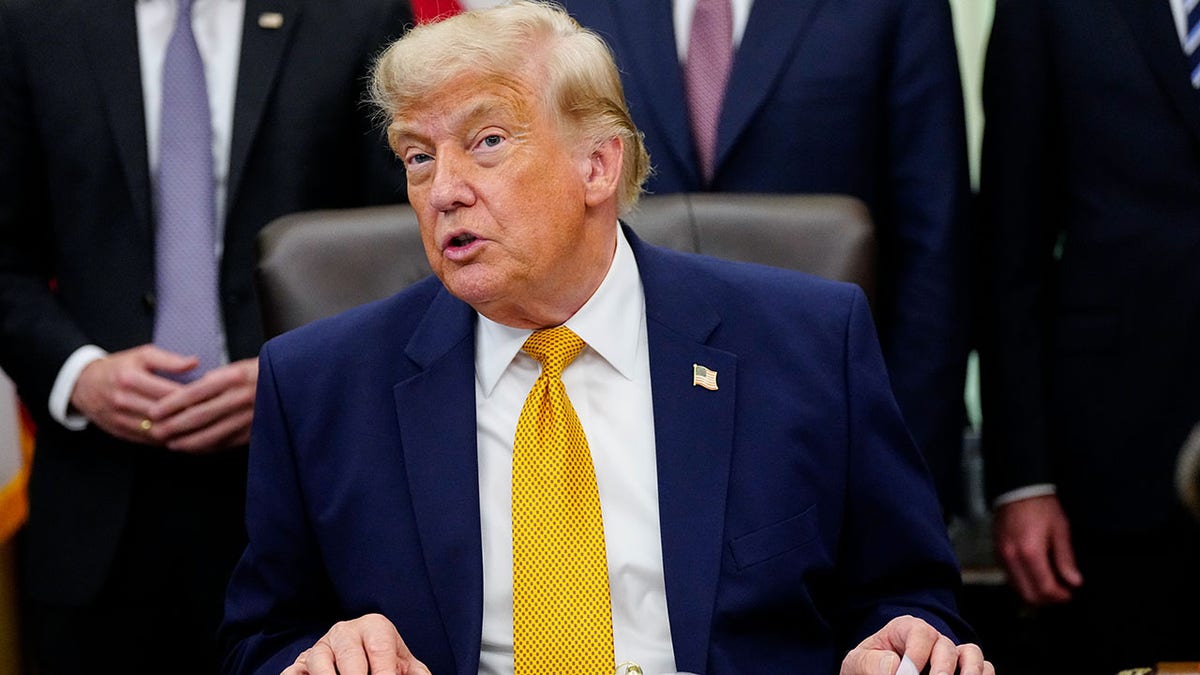
President Donald Trump secured a legislative victory after Congress cleared a comprehensive housing bill aimed at expanding the supply of homes and reducing costs across the nation. The bill was approved by the House with a 358-32 vote on Tuesday, which reflected strong bipartisan support. The opposition came solely from Republicans, while every Democrat present backed the measure.
The 21st Century ROAD to Housing Act stands as one of the most substantial housing bills passed by Congress in decades. It follows Trump’s proposal to prevent large institutional investors from acquiring single-family homes, allowing individual buyers a better chance against private equity firms. The legislation also aims to simplify federal environmental reviews for housing, ease regulations around factory-built homes, and encourage local governments to reform zoning laws for more homebuilding. This bill contains over 45 provisions.
Other sections of the act will allocate federal grants to municipalities that consistently construct new homes and create a pilot program to help redevelop vacant properties. Rep. Mike Haridopolos, R-Fla., stated that the package centers on increasing housing supply, which leads to lower costs and greater opportunities for American citizens. The president is anticipated to sign the bill into law promptly.
The decision on Tuesday took place amid dramatically increased home prices in recent years. Data from Realtor.com showed the median nationwide home price exceeding $400,000 and the median rent surpassing $1,760. This represents increases of 34.4% and 17.9%, respectively, since 2019. The measure was brought to the floor by House Speaker Mike Johnson, R-La., using a fast-track procedure that demanded a two-thirds majority for its passage. Ultimately, more Democrats than Republicans supported the legislation.
Some conservatives opposed the housing bill because the SAVE America Act was not attached. The legislation, which includes voter identification mandates, restrictions on mail-in voting, and prohibitions on men participating in women’s sports, failed to pass the Senate’s legislative filibuster without receiving a House vote. Rep. Anna Paulina Luna, R-Fla., urged her colleagues to remain firm on election integrity matters.
A group of conservatives advocated for the SAVE America Act to be paired with the reauthorization of Section 702 of the Foreign Intelligence Surveillance Act. Despite ongoing intraparty disagreements, this remains unlikely to occur. Some Republicans objected to the package, citing elements provided by progressive Democrats. Rep. Chip Roy, R-Texas, criticized the bill for containing excessive government intervention and spending.
The housing bill emerged after both the House and Senate underwent months of negotiations over how to limit private equity investors and a temporary prohibition on central bank digital currencies (CBDC), a separate proposal from GOP privacy advocates. The chambers ultimately reached a provision limiting large investors with over 350 single-family homes from purchasing more, while exemptions were made for rental property construction. However, investors exceeding the threshold are not required to sell existing assets.
Critics argue that large investors are not the core issue behind supply constraints. According to Parcl Labs, these firms possess less than 1% of the nation’s housing stock. While ownership of single-family rental properties by large investors is slightly higher, it remains concentrated within certain rental markets such as Jacksonville, Fla., (22%) and Phoenix (13%), reports a March Government Accountability Office study.
The passing of the housing bill occurs as Republicans confront challenging electoral conditions, with voter dissatisfaction mounting over the economy and living costs. Nevertheless, the imminent enactment of the bill could offer Republicans tangible evidence of efforts to address housing affordability, a pivotal concern for voters as the midterm elections approach.
A recent Fox News poll indicated that only 31% of voters approve of Trump’s economic handling. This figure represents a slight improvement from May, when it reached a record low of 29%.
Leave a Reply