Escalating Middle East Conflict
Fox News anchor Shannon Bream highlights the rising tension in the Middle East as Trey Yingst reports from Tel Aviv. The U.S. conducted strikes on Iranian missile and drone storage sites following Iran’s targeting of shipping in the Strait of Hormuz. Iran also launched drone attacks on Kuwait and Bahrain, and Israel struck Hezbollah targets in Lebanon. These developments occur alongside a diplomatic framework agreement between Israel and Lebanon.
Shipping Concerns in the Strait of Hormuz
A German shipping company, Hapag-Lloyd, warned of a new era of increased risk and uncertain regulation affecting the Strait of Hormuz. Military strikes have surged, leading to chaos in the waterway’s operational management. Tehran started moving millions of barrels of crude oil from Kharg Island, marking the first such action in days, according to maritime intelligence firm Windward AI. They detailed simultaneous loading at Kharg’s T-Jetty and Western Terminal.
The East Waiting Area holds 28 tankers, 27 dark, indicating the restart of Iranian crude exports.
Analytics firm Vortexa reported the outbound cargo includes approximately 4.12 million barrels of wet cargo, mainly crude oil.
Challenges in Gulf Shipping Operations
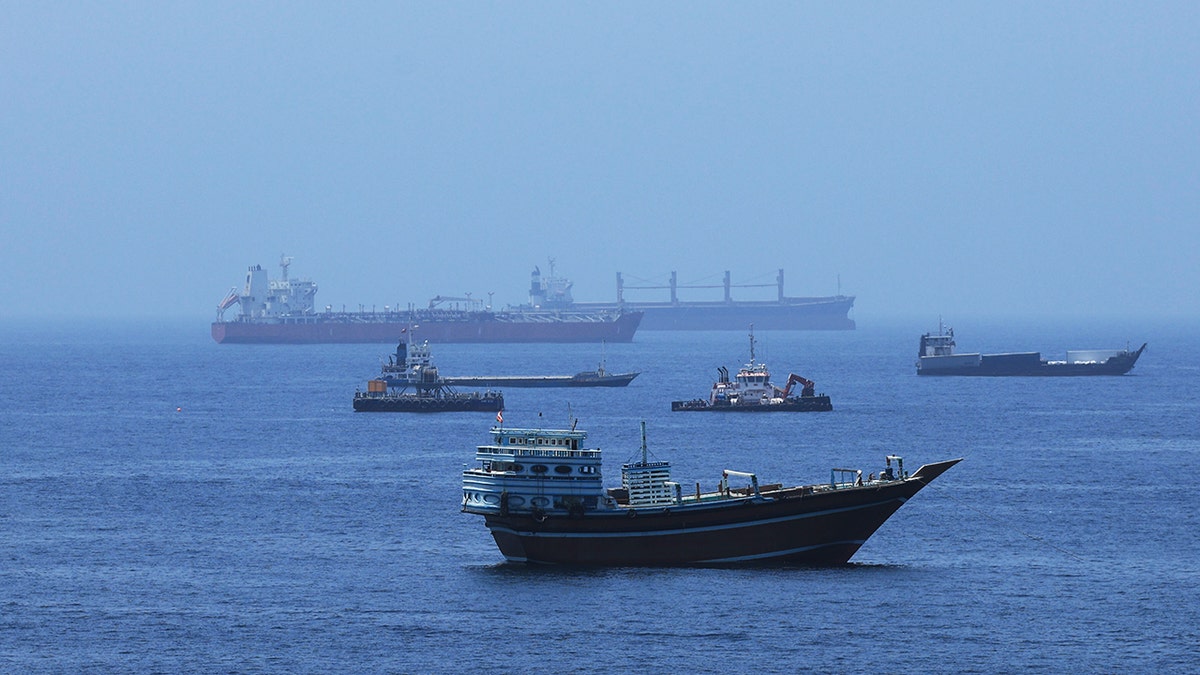
Vessels are anchored in the Gulf of Oman near Muscat, Oman, awaiting transit through the Strait of Hormuz. Hanja Maria Richter from Hapag-Lloyd AG emphasized the fluid situation since the conflict began. Regular risk assessments are done with security partners, authorities, and onboard personnel.
Iran has begun indiscriminate strikes across the Gulf of Oman, targeting a shadow tanker linked to the regime. The U.S. Central Command (CENTCOM) responded with airstrikes on Iranian targets, including Qeshm Island. This action incited retaliation from Iran’s Islamic Revolutionary Guard Corps (IRGC) against U.S. military sites in Kuwait and Bahrain.
Impact on Maritime Traffic
A divided control over transit lanes exists, described by Lloyd’s List as a fractured two-tier system. The strait is split between an Iran-controlled northern route and a U.S.-protected southern highway. Mines have made pre-war routes unsafe.
Iranian Foreign Minister Abbas Araghchi stated Iran’s responsibility in managing and reopening maritime traffic through the strait. Iranian state television mandated coordination with the IRGC for safe passage. Hapag-Lloyd opposes fees for passage through international waters like the Strait of Hormuz.
It would be fundamentally wrong to impose fees for passage through international waters.
Infrastructure fees are accepted for the Suez or Panama Canals due to their significant investments.
Safe Departure and Crew Safety
Hapag-Lloyd shared positive news concerning crew safety. All affected vessels from the temporary Strait of Hormuz closure safely departed the Persian Gulf. Ensuring crew safety remains a priority.
Emma Bussey is a breaking news writer for Fox News Digital, with past roles at The Telegraph.
Leave a Reply