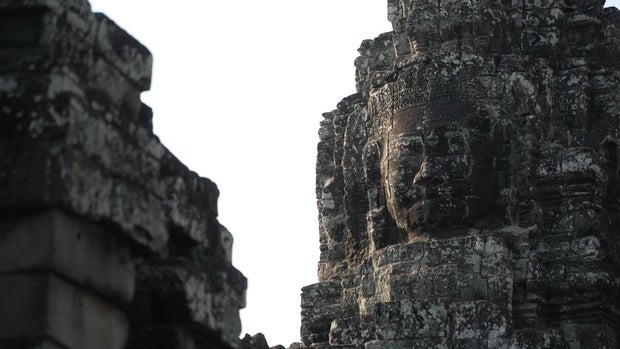
Cambodia’s cultural treasures have been looted for nearly a century. Thousands of sacred artifacts, from stone to bronze and gold, were taken from religious sites. The plundering increased during the 1970s, 80s, and 90s, amid genocide, civil war, and political turmoil. Douglas Latchford, a British man, played a significant role in this looting, selling many stolen pieces to wealthy collectors and major museums worldwide.
In the last 14 years, Cambodia has made substantial efforts to reclaim its stolen heritage. Angkor Wat, one of the world’s largest and most impressive religious temples, is a symbol of Cambodia’s history. Looters have defaced many of its statues, and other temples across the country have also been heavily looted.
Brad Gordon, an American lawyer, has been instrumental in tracking Cambodia’s stolen artifacts. He and his team of investigators, archaeologists, and art scholars work tirelessly to locate these treasures. At Sandak, a remote mountain temple, looters found gold and statues. Gordon describes it as a graveyard of pedestals.
For Cambodians, these statues hold deep spiritual significance, representing sacred deities. Cambodia’s Minister of Culture, Phoeurng Sackona, oversees the government’s retrieval efforts. A warehouse near Angkor Wat now houses more than 6,000 pieces rescued from the black market.
Gordon’s efforts led to crucial breakthroughs. He met Toek Tik, a former Khmer Rouge child soldier turned looter, who provided valuable information on stolen artifacts. Toek Tik, code-named Lion, became a source of redemption, eager to share his knowledge of the looted sites.
The discovery of a 500-pound sandstone warrior in a Sotheby’s catalog in 2011 was pivotal. This statue, missing its feet, was valued at $2-3 million. It initiated U.S. law enforcement investigations into Latchford. In 2019, U.S. authorities indicted Latchford for various charges, but he died before facing trial.
Consequently, Latchford’s family returned his collection to Cambodia. Lion, despite his illness, verified many pieces’ authenticity. His revelations have since continued to aid in returning artifacts to Cambodia.
The Metropolitan Museum of Art in New York and other prestigious institutions house many stolen Cambodian artifacts. At the Met, items procured through Latchford continue to spark discussions about provenance and ethical collection practices.
Cambodia’s struggle to reclaim its history is ongoing. A recent deal resulted in the return of thirty-three stolen treasures from a collection showcased in Architectural Digest. Brad Gordon remains hopeful that more treasures will be returned.
The drive to bring Cambodia’s stolen gods home reflects not only a recovery of cultural heritage but also a restoration of national identity. While the journey to full restitution is long, the work of investigators continues to shed light on the dark history of art smuggling.
Leave a Reply