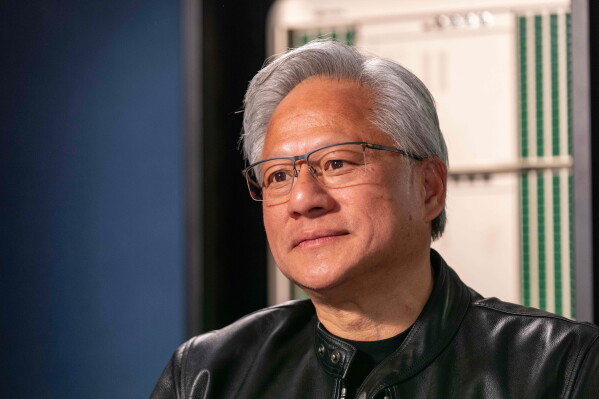
In the ongoing competition between the United States and China for artificial intelligence development, the focus has shifted to hardware and computing power. Chinese companies, such as Huawei, have begun to surpass global leaders like Nvidia in the domestic market. Jensen Huang, CEO of Nvidia, gained attention during his visit to Beijing, coinciding with a summit between U.S. President Donald Trump and Chinese leader Xi Jinping.
Nvidia faced initial setbacks due to U.S. export controls on advanced technology because of national security concerns. Though approval for Nvidia’s H200 AI chips was eventually granted, Beijing had already pivoted to supporting domestic alternatives from companies like Huawei. Huang admitted that U.S. dominance in China’s AI chips market has waned as local competitors have expanded. He emphasized the balance between national security and competing in technology sectors.
Shift to Domestic AI Chips
Following the 2019 exclusion by the U.S. of Huawei from purchasing powerful computer chips, Chinese semiconductor makers accelerated efforts to achieve self-sufficiency. Companies like Huawei have advanced their chip technology, matching Nvidia’s presence in China. Nvidia’s market share in China’s AI sector was around 40% in 2025, projected by Bernstein. Predictions indicate a decline to about 8%, whereas Huawei’s share is anticipated to rise to 50%. Chinese AI enterprises are pursuing enhanced chip performance and cost-efficiency.
Global Supply Chain Dependencies
The semiconductor industry relies on international cooperation, as no country can exclusively create advanced AI chips. Despite high demand in China, Nvidia chips remain essential. Reports of smuggling indicate continued interest in Nvidia’s offerings. The company uses ASML’s lithography machines for production, integrating components from Taiwan’s TSMC. While barred from purchasing Nvidia’s sophisticated chips, China’s technology development relies on partnerships like DeepSeek’s, showcasing continued dependency on Nvidia.
Nvidia’s Global Growth
Nvidia’s revenue projections remain strong amid AI demand growth. The company anticipates $91 billion in revenue for the May-July quarter, up from $82 billion previously, excluding China’s compute revenue. This aligns with a global sales expansion as Nvidia capitalizes on surging AI technology needs. Despite Huawei’s advancements and competitive edge, Nvidia continues to be a significant player in AI chip technology internationally.
Huawei’s International Aspirations
Huawei is broadening its reach beyond telecommunications, with ambitions in the global market for its chips. The company operates across 170 countries, aiming to connect homes, organizations, and individuals digitally. As Chinese semiconductor manufacturing progresses, Huawei could expand market presence in regions like Southeast Asia.
The strategic pursuit of technological independence and potential export plans underscores China’s resolve, irrespective of Nvidia’s sales status in China.
AP journalists Josh Boak in Sherman, Texas, and Kelvin Chan in London contributed to this report.
Leave a Reply