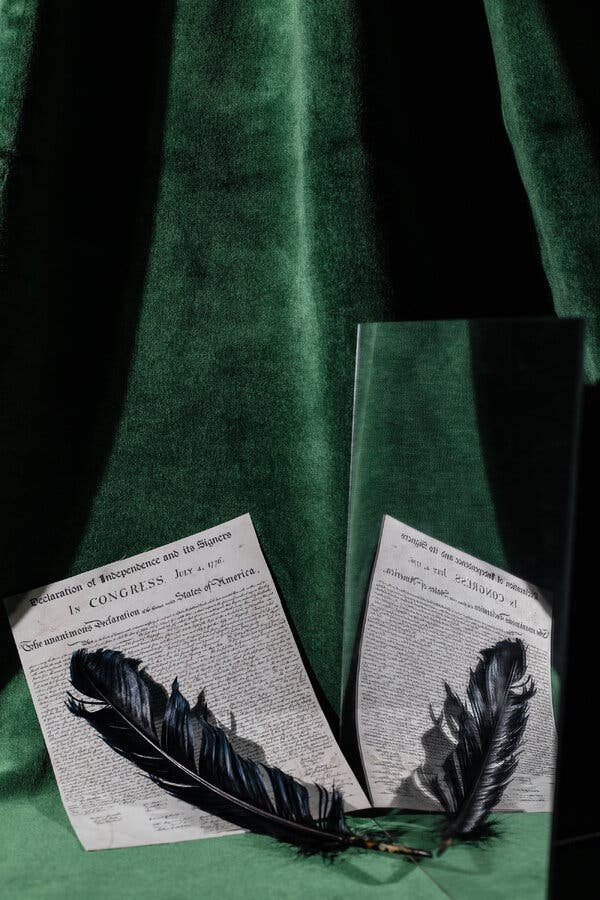
Every American encounters the Declaration of Independence at some point. For many, it serves as a revered text, foundational to the nation’s beliefs. It famously declares that “all men are created equal” and that they possess rights such as life, liberty, and the pursuit of happiness.
This document encapsulates ideals of human freedom. President Gerald Ford called it “the Polaris of our political order,” highlighting its timeless moral truths.
However, the history behind the Declaration is complex. Written by Thomas Jefferson, it was initially a statement on political authority and the right to revolution, influenced by Enlightenment thinkers like John Locke. It was more about the fundamentals of government than a guide for social equality.
Historian Pauline Maier explained that the “self-evident” truths in the Declaration referred to men in a “state of nature” before formal government. The notion of equality meant no one had divine authority over others.
Jefferson reflected a widely held Revolutionary-era belief. This political orthodoxy was accessible through various sources, such as sermons and newspapers, as noted by Maier. Thomas Paine illustrated this sentiment in his work “Common Sense,” rejecting hereditary privilege.
Leave a Reply