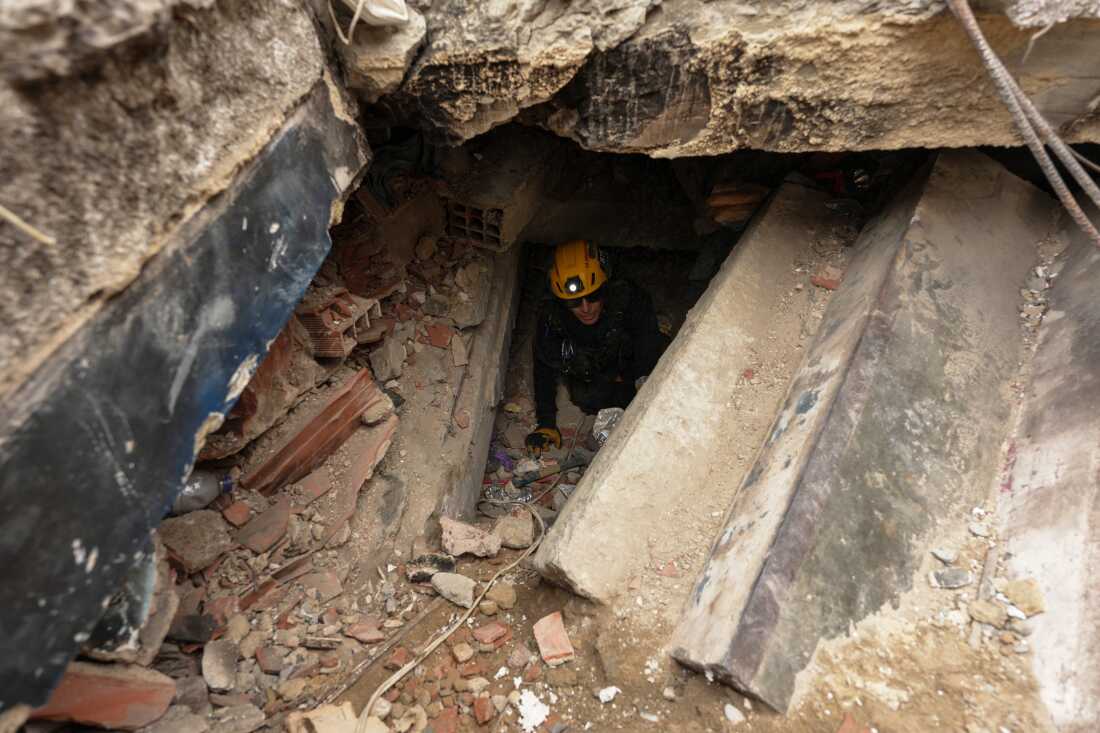
In Caraballeda, Venezuela, an international search-and-rescue team works tirelessly on the roof of a collapsed 12-story building. American rescuers, including members of the Los Angeles County Fire Department, collaborate with Venezuelan volunteers. The volunteers have a personal stake; some are related to three teenage girls trapped in the building’s debris.
Amid ongoing searches, the team encourages constant movement, shouting, “Keep scooping!” to those deeply involved in debris removal. Last week’s twin earthquakes have claimed at least 2,295 lives, with many others missing.
International Response to Disaster
The Venezuelan government’s slow response has placed a heavy burden on international teams. The Los Angeles County Fire Department, experienced in deploying to countries like Nepal and Mexico, has brought advanced equipment, including sniffer dogs, jackhammers, and sonar devices. When these devices are in use, silence is strictly enforced to establish communication with potential survivors.
“If you can hear me, tap or knock twice, or three times,” directs LA Fire Captain Michael Toepfer. Recently, faint knocks were heard, though the last confirmation occurred an hour earlier.
Despite a critical 24-72 hours rescue window, there’s hope for longer survival if victims access food and water. Team doctor Nichole Bosson cites a previous successful rescue in Nepal where a boy survived five days under similar conditions.
Challenges of Collapsed Infrastructure
The girls were last known to be in apartment 908, situated three floors down from the roof in a poorly constructed public housing project. The June 24 earthquakes caused the building to pancake, exposing Styrofoam mixed into the concrete. The structure’s instability and added damage from an adjacent building further complicate rescue operations.
Khaterine Roa, mother of the trapped girls, observes the site. Venezuelan military officers appear, yet Roa remarks on her government’s limited involvement. Conversely, LA firefighters have worked tirelessly since their Monday arrival as part of the U.S. State Department’s disaster response.
U.S. Involvement and Future Prospects
During a Wednesday press conference, John Barrett, chargé d’affaires at the U.S. Embassy in Caracas, highlighted the scale of the U.S. response. With $300 million contributed, the U.S. leads Venezuela’s largest international earthquake response, providing search-and-rescue teams, logistics, and essential supplies.
Despite past structural changes affecting disaster readiness, Orlando Pérez, a Latin America expert, notes the U.S. maintains a vital role in resource-rich Venezuela. Cooperation with acting President Delcy Rodríguez focuses more on restoring the nation’s oil industry than promoting democratic shifts.
Progress Amidst Challenges
At the collapsed Caraballeda building, rescuers continue their painstaking work, revealing family belongings among the rubble. As daylight fades, so do the hopes for hearing more tapping sounds. By midnight, those sounds cease, marking a transition towards body recovery efforts.
Nearby, there is a small triumph. A Jordanian team rescues a 2-year-old boy after six days in the rubble, signifying a glimmer of hope amid despair. There are further rescues reported, showing resilience and determination within the rescue efforts.
Leave a Reply