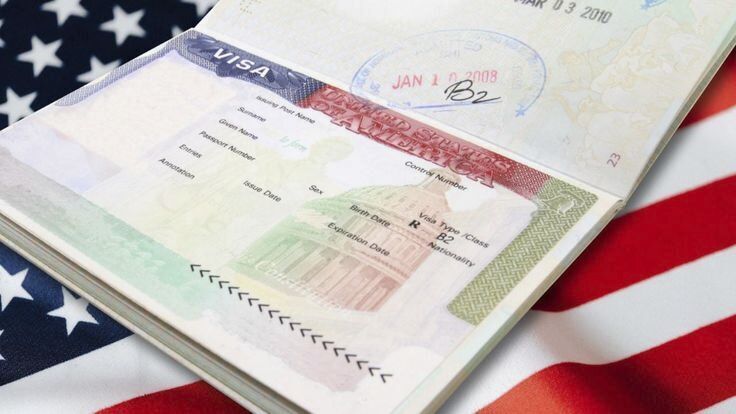
H-1B visa renewals are on track to reach historic levels in fiscal year 2026, according to analysis of U.S. government data. This rise occurs as measures are advocated to tighten aspects of the H-1B program.
LayoffHedge, a firm specializing in workforce analytics, studied U.S. Citizenship and Immigration Services (USCIS) data and found that 273,026 petitions for continuing employment had received approval during the first nine months of fiscal year 2026, spanning October 2025 through September 2026. This number is closing in on the 291,542 renewals approved throughout fiscal year 2025, and there are still three months remaining.
The increase in renewals is happening as restrictions are pursued for the program. Under President Donald Trump’s administration, there were attempts to implement a $100,000 fee on many new H-1B applications filed for workers outside the U.S. However, a federal judge blocked the measure in June. The administration is also aiming to replace the random H-1B lottery with a wage-based selection system that would favor higher-paid candidates.
Understanding H-1B Figures
Some experts suggest these figures indicate the growth of H-1B activity beyond the annual visa cap. Others advocate a cautious interpretation, noting the numbers represent petition approvals rather than distinct worker counts. These figures may include extensions, transfers, and amended filings.
The data focuses on “continuing employment” petitions, which include renewals and extensions for workers already on H-1B visas within the U.S., rather than new approvals via the annual visa lottery. USCIS divides H-1B approvals into “initial employment” petitions, usually capped annually at 85,000 visas, and “continuing employment” petitions, which are uncapped.
LayoffHedge compiled the data using USCIS’s H-1B Employer Data Hub and approval statistics provided by the Pew Research Center, a nonpartisan think tank. Pew’s historical series, covering fiscal years 2000 through 2023, is based on information obtained from USCIS through a Freedom of Information Act request.
According to Pew Research Center, nearly 400,000 H-1B petitions were approved in fiscal year 2024. Of these, 258,196, or roughly 65%, were renewals or extensions for existing H-1B workers.
Sahana Mukherjee, an associate director involved in race and ethnicity research at Pew, explained the analysis’s figures are derived from USCIS petition approvals rather than unique workers and that “renewals” refer to “continuing employment” approvals. This category includes workers renewing an existing H-1B, those changing employers, and those modifying their applications. “The focus is on petitions, not individual workers,” Mukherjee clarified.
The method is debatable among immigration policy experts.
Expert Opinions on H-1B Analysis
Jiaxin He, a research assistant with the Economic Innovation Group, commented that the continuing-employment figures Pew and LayoffHedge discuss aggregate several petition categories. “Out of those, only 118,194 are truly renewals,” He noted, referring to fiscal year 2025 data. “The rest represent workers changing jobs, receiving promotions, transferring employers, or amending their status.” He emphasized the figures shouldn’t be seen as counting unique workers but as petition events for existing H-1B system workers.
Similarly, Kevin Lynn, founder of U.S. Tech Workers, asserted the approval statistics shouldn’t be seen as unique worker figures because an H-1B holder may have several approved petitions over time.
The public knows the 85,000 cap, but the active number of H-1B workers is greatly larger, he added. Lynn explained continuing-employment approvals consist of extensions, amendments, and employer transfers, which should be understood as “continuing-employment petition events,” not labor market additions.
Lynn highlighted the H-1B system largely bypasses the annual cap due to renewals, extensions, transfers, and many cap-exempt petitions not facing the 85,000 limit. “These exemptions let multiple H-1B workers join the labor market outside the annual cap and disrupt the cap’s intention, creating inequitable regulation among employers,” Lynn remarked.
The H-1B Visa Program’s Role
The H-1B visa lets U.S. companies hire foreign professionals specializing in fields demanding specific knowledge and a bachelor’s degree or equivalent experience. While prevalent in the tech sector, it also supports hiring in engineering, healthcare, finance, and research.
With fewer than 19,000 renewal approvals needed, fiscal year 2026 will surpass last year’s record and become the peak year for H-1B renewals, despite ongoing legal and political disputes regarding the visa program’s future.
Leave a Reply