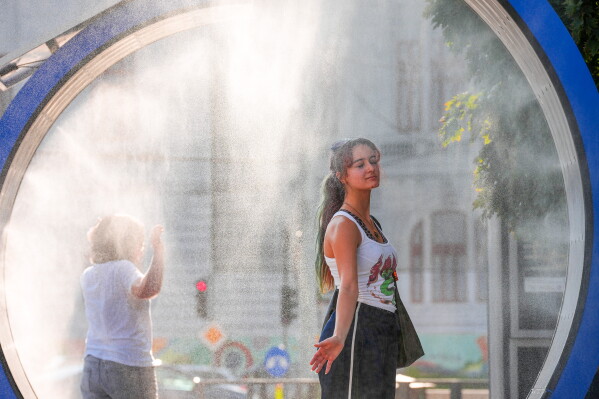
Choosing what to wear when temperatures rise isn’t as straightforward as it might seem. While light and loose clothing might be the first thought, textile experts point out several factors to consider. The fabric, weight, construction, fit, and even color all play a role in staying comfortable in the heat. Your activity level and perspiration are also essential elements.
The Science Behind Staying Cool
With heat becoming a growing health issue, scientists are designing clothing to help keep people cooler. However, clothing is only part of how the body manages heat. George Havenith, a professor of environmental physiology and ergonomics at Loughborough University, stressed the importance of allowing sweat to evaporate. This natural process helps regulate body temperature effectively.
Fabrics and Airflow
Look for lightweight, breathable clothing. Such fabrics allow air to circulate and sweat to evaporate, a property called air permeability. Meredith McQuerry, a professor at Florida State University, explains that breathable fabrics often have an open weave structure. Linen and cellulosic fibers like cotton and flax are preferred for comfort and breathability.
“Open weave and loose knit structures are best,” said McQuerry.
Wicking fabrics, made from synthetic fibers, move moisture away from the skin. This helps in faster evaporation, though not always with direct cooling effects.
The Role of Fit
Fit plays a critical role in heat management. For activities like exercising, tight-fitting garments made from synthetic materials can aid sweat evaporation. However, looser fits allow more airflow, suitable for casual settings.
Cotton vs. Polyester
Cotton absorbs sweat and feels comfortable for short periods. However, it can become heavy when saturated. Polyester, used widely in athletic wear due to its moisture-wicking properties, evaporates sweat quickly. Jonathan Chen of the University of Texas notes that not all polyester garments perform equally in heat unless engineered for breathability.
Sunlight and Innovative Clothing
In prolonged sunlight exposure, cover your skin to reduce UV damage. Light-colored fabrics reflect sunlight, minimizing heat absorption. Po-Chun Hsu from the University of Chicago highlights ongoing research in fabric engineering to enhance reflectivity.
Consider innovative solutions like fan-equipped clothing. Popular among outdoor workers in Japan, these garments enhance sweat evaporation. However, they do not significantly lower core body temperature. Battery weight can also be a concern, though future advancements may address this.
Key Considerations
When choosing clothing for hot weather, consider these factors:
- Lightweight materials
- Air permeability
- Moisture management
- Appropriate fit for the activity
- Sun and UV protection
No single fabric is optimal for all conditions. Prioritize garments that complement the body’s natural cooling system.
The Associated Press’ climate coverage is financially supported by various foundations but remains editorially independent.
Leave a Reply