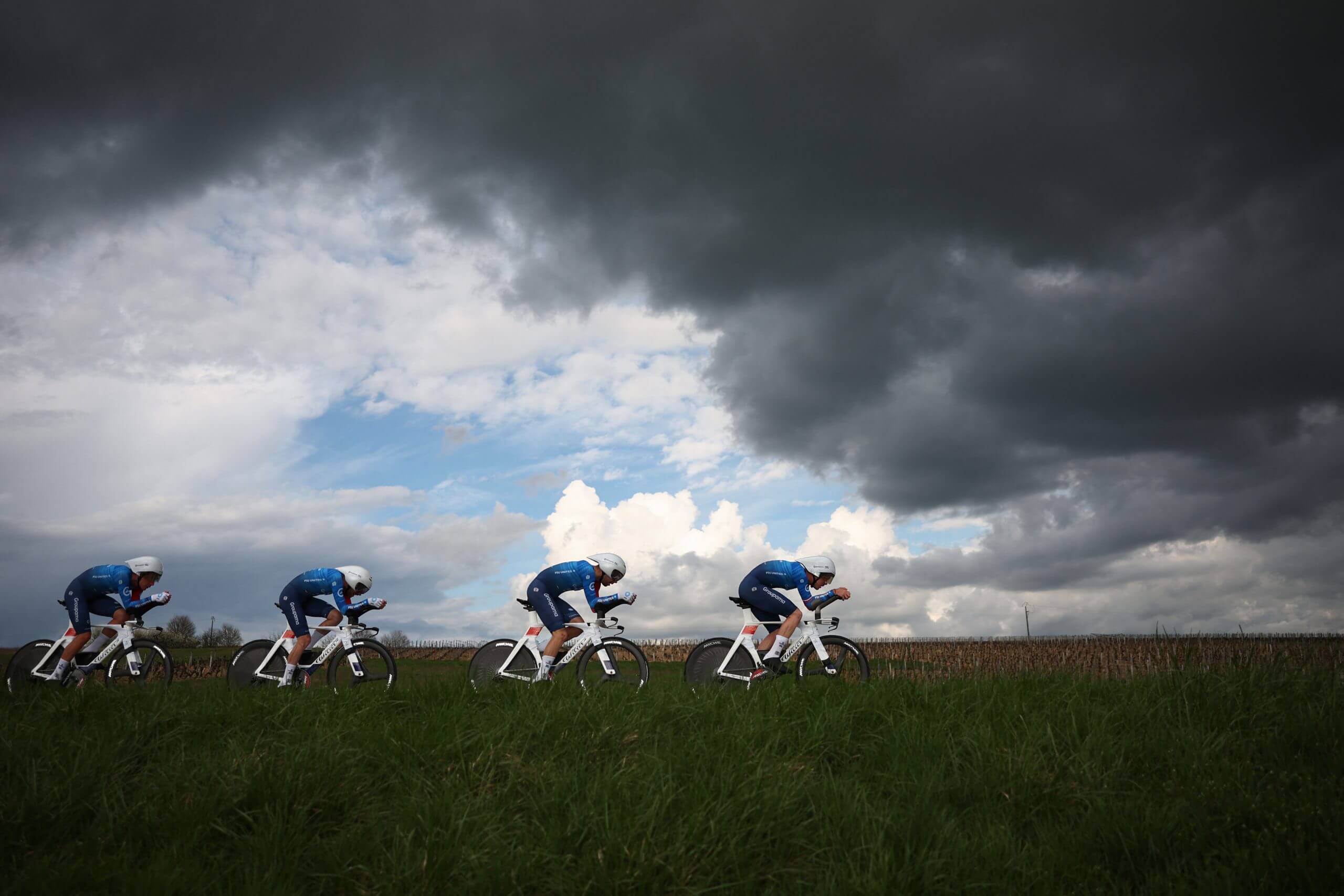
The spectacle of a team time trial (TTT) in action is visually striking. Helicopter cameras capture the rhythmic motion of cyclists as they work in unison, each rider taking turns at the front to maximize speed. Jacob Tipper, performance coach for EF Pro Cycling, describes it as “the truest team element” in cycling. Beneath the surface, there is unseen effort and precise strategy involved, resembling the cliché of a swan—serene above water, paddling furiously underneath.
The Tour de France’s first stage, a 19.6-kilometer TTT around Barcelona, presents a challenge of physics and physiology. Riders only take brief turns at the front, hoping to recover in the slipstream. As Tipper puts it, “You don’t stop when you’re tired, you stop when the bear is tired.” This return of the TTT, absent for seven years, introduces a fresh rule where the clock stops when the first rider crosses the line, rather than the fourth.
In this intricate cycling discipline, success relies on power, cohesion, and aerodynamics, with significant input from team management and specialists. While many teams invest heavily in preparation, EF Education-EasyPost has limitations. “We’ve not got the ability to do buckets worth of aero tests on every single rider,” says Tipper. Some teams even train on racing circuits to simulate race conditions and test new technology.
In the context of team performance, variables like micro-surges, drafting inefficiencies, and temperature affect the accuracy of traditional performance models. The real art of TTT, Tipper suggests, is in the riders’ intuitive feel for pacing and speed adjustments.
Communication within the team is critical during the race, using hand signals and brief words due to the noise of riding close to 60 kilometers per hour. Team directors use radios to guide strategy, adjusting positions when necessary. On race day, thorough planning includes warm-ups, deciding turn lengths, and managing power distribution in high temperatures.
The competition is technical, and every rider’s intense effort, whether leading or slotting back into the line, tests their endurance and skill. Teams seek to operate as a cohesive unit, overcoming individual egos for the collective benefit. The Barcelona course starts flat, with a final climb that can be decisive.
The fine margins in this discipline mean that small errors or placing riders incorrectly can cost crucial seconds. Tipper states, “The best team on paper is likely to get the best result, as long as they don’t mess it up.” As teams approach the final climb, leaders are positioned to unleash remaining energy, aiming for the yellow jersey.
The culmination of strategy and effort brings immense satisfaction, more so when shared among teammates. The cyclists know that every rider’s contribution is measurable, and starting the Tour on a strong note is vital for momentum. Despite EF Education-EasyPost’s past successes, Tipper acknowledges the difficulty of winning in Barcelona, focusing instead on the importance of demonstrating value right from the start.
Leave a Reply