On July 6, 1776, John Hancock, then president of the Continental Congress, sent a letter to General George Washington who was stationed with his army in New York. The letter included the new Declaration of Independence. Hancock noted that the Congress had been engaged with one of the most significant issues they could address.
He stated that the declaration of independence from Britain was a duty owed to themselves and future generations. Hancock requested Washington to have the declaration proclaimed to the army in a manner he thought most suitable.
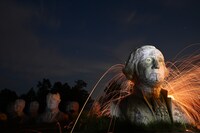
These events tied Washington to the nation’s founding and solidified his role as a historical figure, celebrated to this day. Photographer Matt McClain captured images depicting how Washington’s influence continues to resonate leading to the nation’s 250th anniversary.
Doug Thomas represented Washington during Revolutionary War Weekend at Mount Vernon, Virginia, recreating key moments from the first president’s life.
On July 9, 1776, Washington ordered the Continental Army to gather around Manhattan to hear the declaration read by officers. He hoped it would inspire his troops, reminding them their country’s peace and safety depended on their efforts.
The reading was impactful, as recorded in historical documents. Samuel Blachley Webb, an aide, noted the troops responded enthusiastically.
Washington reported to Hancock that his men positively received the declaration. Meanwhile, Britain sent a massive force to New York, preparing for conflict.
Re-enactors and historical interpreters, like John Williams and Peter Peterson, bring these moments to life, portraying both American and British perspectives during events at Mount Vernon.
Sneff, a historian, highlighted Washington’s role as crucial in achieving independence. Despite a document declaring independence, it was Washington’s duty to lead the effort that would ensure this goal.
It was not until the victory at Yorktown in 1781 that the declaration was fully realized. The Yorktown Battlefield stands as a testament to this pivotal moment.
Despite not knowing his future legacy, Washington’s contributions have endured. His leadership led to cities, monuments, and historical sites dedicated to him, like Mount Vernon.
Artifacts of his life, such as his dentures, are part of the rich history that people continue to explore. Many of his relatives are buried at key historical sites, which draw interest from visitors intrigued by his life and times.
Leave a Reply