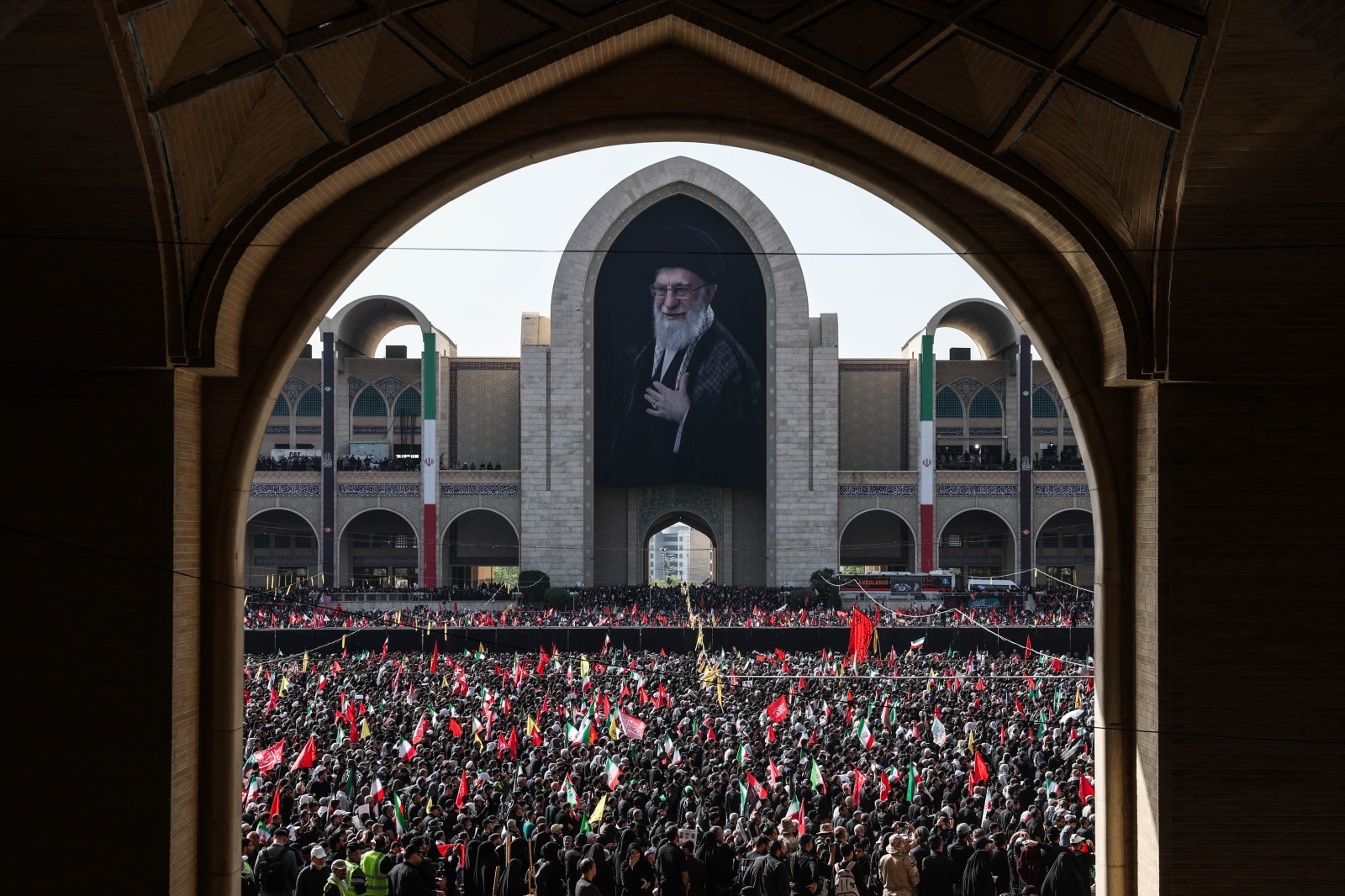
Iran has started extended funeral ceremonies for Supreme Leader Ayatollah Ali Khamenei, which are now a focal point for both mourning and escalated tensions involving Tehran, Washington, and Israel. President Donald Trump has addressed the funeral during a major holiday speech and in comments to the media, while Iranian authorities have issued warnings against any military action during the events and have established enhanced security measures.
The U.S.-Iran negotiations are set to resume after the funeral ends, raising questions about how the mourning period might influence the next phase of talks following the formal peace deal signed last month.
Trump’s Comments on Khamenei Funeral
Khamenei died in airstrikes at the start of the U.S.-Israel conflict with Iran on February 28, and Iranian authorities have scheduled funeral ceremonies from July 4 to July 9. These ceremonies are predicted to attract foreign delegations and millions of mourners, making them some of the largest gatherings in the Islamic Republic since Ayatollah Ruhollah Khomeini’s death in 1989. Safety concerns delayed these events initially.
During an America 250 celebration at Mount Rushmore in South Dakota, President Trump remarked on the funeral: “We knocked the hell out of Iran. They’re dying to settle. They want to settle so badly. We gave them a week off for a funeral because we’re nice.”
Further comments from Trump emerged in discussions reported by Axios, where he mentioned the concentration of senior Iranian officials attending the ceremonies. He stated: “They are all there. One shot [and we can take them all out], but we are not going to do that because then we would have nobody to negotiate with.” These remarks underline the gathering’s significance and the administration’s preference for preserving future negotiation possibilities.
Iran Issues Warning to the U.S. and Israel
Iranian authorities have consistently cautioned the U.S. and Israel against any military moves during the funeral ceremonies. Ali Abdollahi, commander of Iran’s Khatam al-Anbiya Central Headquarters, warned against any “miscalculation” by Washington and Jerusalem as Iran prepared for the processions. According to Iranian state media, Abdollahi stated: “We warn the enemies of Iran, especially the U.S. and the Zionist regime (Israel), to avoid any miscalculation and to think about the harsh retaliation our armed forces would make to any threat and aggression against our country.”
On July 1, Iranian Foreign Minister Abbas Aragchi issued similar cautions after Israeli Defense Minister Israel Katz reportedly threatened Mojtaba Khamenei, Iran’s current supreme leader. In response, Iranian authorities have implemented increased security protocols and limited airspace over several cities, including Tehran and Mashhad, locations of key funeral events.
International Participation in Khamenei’s Funeral
Iranian officials report that over 70 countries have sent representatives for the funeral, with millions expected to attend over several days. The funeral begins in Tehran and concludes with Khamenei’s burial in Mashhad on July 9. This event serves as a showcase of unity and strength for Tehran after months of conflict. Additionally, the ceremonies offer Washington perspective on whether diplomatic ties can continue following the death of a leader who defined Iran’s political and religious systems for over three decades.
The large-scale gatherings have caught international interest because of the senior political, military, and diplomatic figures attending, creating a unique assembly of Iran’s leadership amidst ongoing tensions with the U.S. and Israel.
Post-Funeral Developments
Additional ceremonies for Khamenei are planned in Tehran, Qom, and Mashhad. Diplomatic talks between the U.S. and Iran are projected to resume after these events conclude, though a comprehensive agreement remains pending.
Leave a Reply