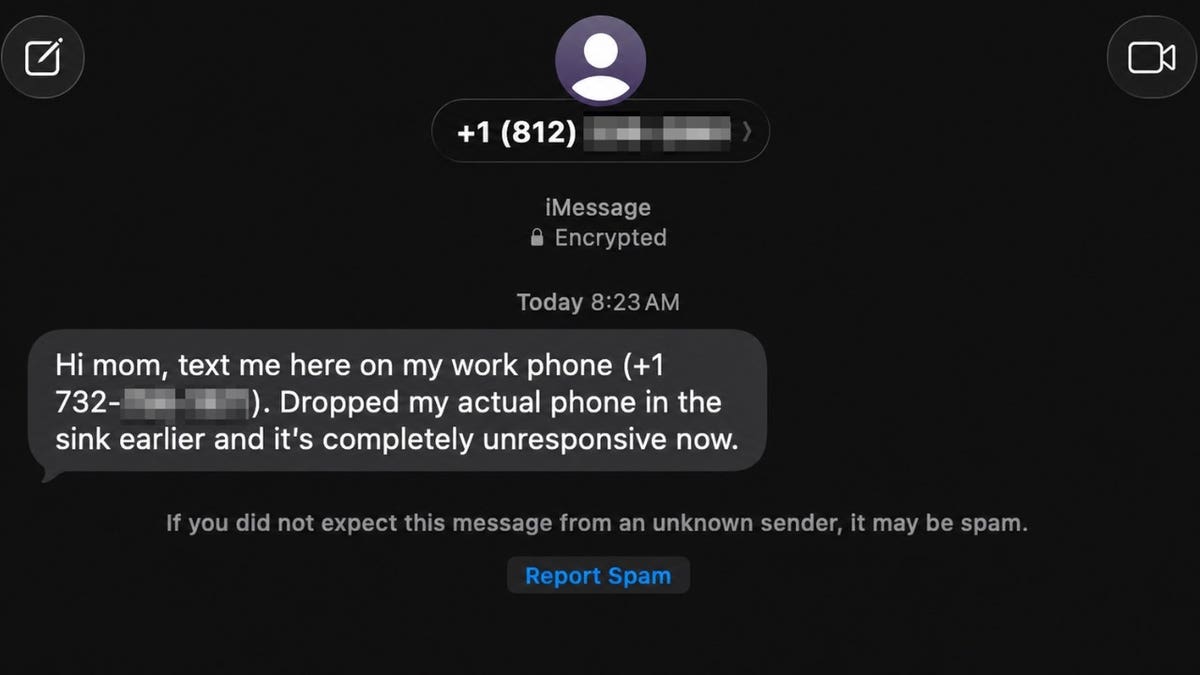
A recent text scam targets parents by pretending to be a child. The message seems innocent at first: Hi mom, text me here on my work phone. Dropped my actual phone in the sink earlier and it’s completely unresponsive now.
The number you receive the message from is unknown, and it asks you to reply to yet another unfamiliar number.
How the Scam Works
This scam is effective because it sounds believable. The story appears ordinary as it suggests a child is using a work phone after a minor accident. Scammers capitalize on a parent’s instinct to help their child instantly.
The Crafted Message
- “Hi mom”: This message avoids specific names, yet it feels personal, especially for mothers, creating an emotional link.
- “Text me here”: It traps recipients into responding under the scammer’s terms, allowing time for manipulation.
- “On my work phone”: Justifies the unusual number and lessens doubt.
- “Dropped my actual phone in the sink”: This normal situation makes the story plausible.
- “Earlier”: Adds urgency without verifiable specifics.
- “Completely unresponsive now”: Pre-empts a verification call, encouraging you to text the new number.
Possible Scams After Initial Contact
Once you reply, the scammer can heighten their demands. Requests might include asking for money via Zelle, Venmo, or gift cards. Some scams might ask for a one-time security code under false pretenses, risking account breaches.
Why Parents Are Prime Targets
Scammers exploit natural parental concern and a child’s perceived emergency to prevent verification. Brief messages are common in real family conversations, making this scam feel familiar.
How to Protect Against This Scam
- Do not reply: Avoid validating your number by responding.
- Directly contact the real person: Use stored contacts and trusted communication channels.
- Ask a verification question: Confirm identity with unique questions.
- Refrain from sending money: Be cautious about urgent requests, especially via fast, irreversible methods.
- Never share verification codes: Keep private security details confidential.
- Employ antivirus software: Protect devices from potential threats.
- Use data removal services: Reduce your personal data exposure online.
- Report and block scams: Use phone features to block and report as spam.
Actions if You Responded
If you’ve already replied, stop communicating immediately. Save any conversations as evidence and contact your family to confirm their safety. Modify any potentially compromised accounts and notify financial institutions if necessary.
Key Takeaways
The ‘Hi Mom’ scam works by appearing genuine. It plays on the urgency and simplicity of family emergencies. Taking a moment to verify details can prevent becoming a victim. Using trusted methods to confirm stories can keep your financial and personal information safe.
Leave a Reply