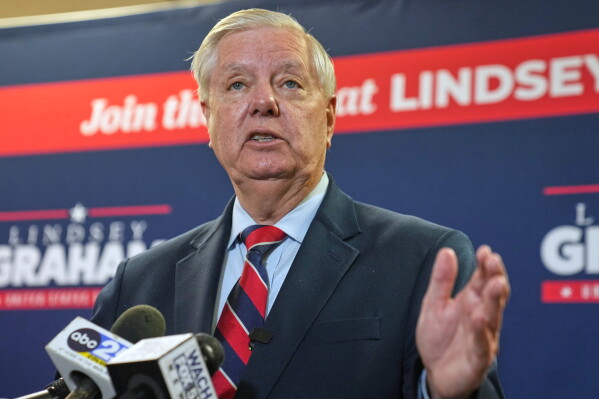
The passing of Sen. Lindsey Graham marks a significant moment in South Carolina’s political landscape. Known for his role as a senior senator and ally of President Donald Trump, Graham was anticipated to secure reelection with ease. His death raises pivotal questions about succession and political dynamics within the state.
Temporary Replacement and Special Primary
Governor Henry McMaster faces the task of appointing a temporary replacement until January. The state must also organize a special primary allowing voters to select a new Republican nominee for the upcoming general election. This unexpected open Senate seat has incited activity among ambitious conservatives in South Carolina.
Recently, the Republican Party finalized a contentious race to nominate a successor for McMaster, who is finishing his second term. State Attorney General Alan Wilson emerged victorious over competitors such as Lt. Gov. Pamela Evette, Rep. Nancy Mace, and Ralph Norman, all of whom now aim for Graham’s Senate seat.
Special Primary Procedures
South Carolina law stipulates a one-week filing period for a special primary, starting the second Tuesday following the candidate’s death, which falls on July 21. The special primary is set for August 11, with a runoff, if needed, two weeks later on August 25. This timeline poses challenges under federal law, which mandates military and overseas ballots be distributed 45 days before federal elections, impacting the June 27 deadline for the general election primary.
Potential Replacements
Graham’s cause of death was an aortic dissection.
Speculation about potential appointees began immediately after his passing. Due to the proximity of the election, the individual McMaster chooses could have an advantage in the special primary. Pamela Evette, having collaborated with McMaster for eight years, garners consideration, bolstered by encouragement from across the state.
It’s considered unlikely that any current House member will fill Graham’s term due to the Republican party’s fragile majority. However, candidates like Rep. Joe Wilson have expressed their intent to remain in the House. At the same time, former House representatives, including Nancy Mace, are contemplating running. Rep. Russell Fry, a prominent Trump supporter, arises as a potential choice.
Democratic Perspective
The Democratic party in South Carolina historically struggles against Republicans, who typically win statewide elections by substantial margins. In the previous election, Graham had a clear victory over Democrat Jaime Harrison. Charleston pediatrician Annie Andrews is the current Democratic nominee, having raised over $8 million for her campaign.
In response to Graham’s death, Andrews expressed respect for his service and encouraged a non-partisan acknowledgment of his contributions. Former Democratic contender Harrison acknowledged their political differences yet appreciated Graham’s commitment to South Carolina.
Impact on Republican Influence
Graham’s departure leaves a gap in the Senate due to the influence seniority can wield. Serving over 20 years, Graham occupied significant roles and guided pivotal discussions. With Sen. Tim Scott, in office since 2012, the state leadership relies on less tenured representation compared to long-serving predecessors like Fritz Hollings and Strom Thurmond.
Senator Scott reflected on Graham’s influence and their close relationship, describing the former senator as ‘irreplaceable.’
For further insights, Associated Press journalist Meg Kinnard can be contacted.
Leave a Reply