Medical Breakthrough in Remote Surgery by Humanoid Robots
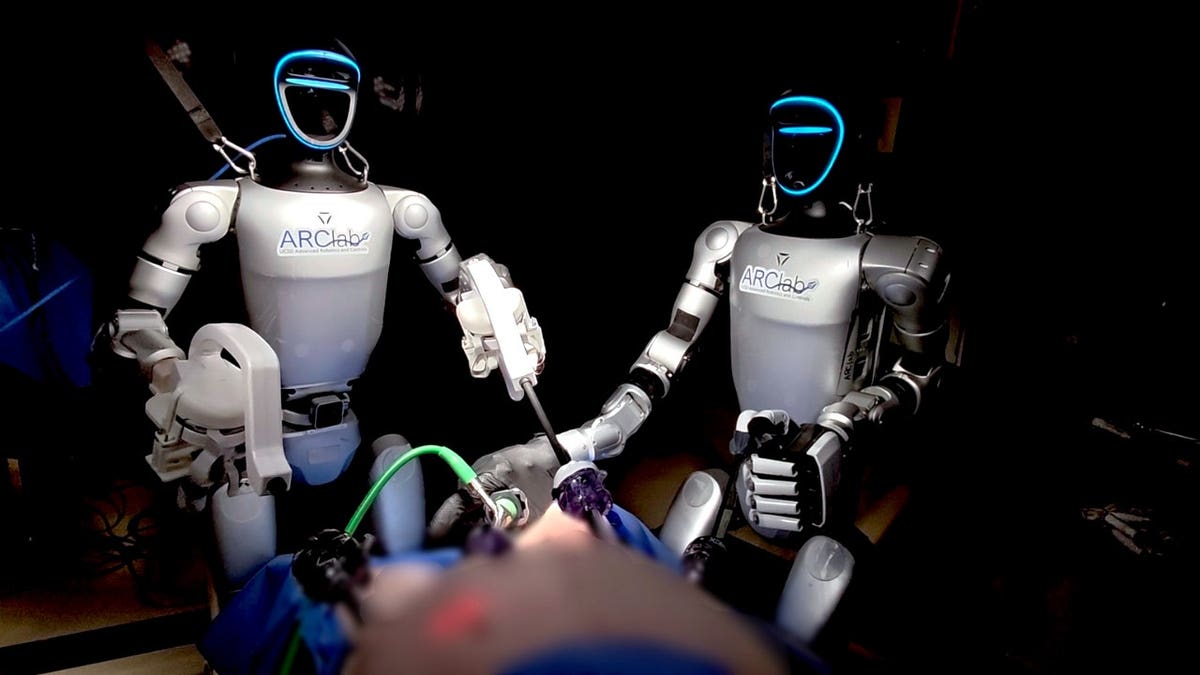
Researchers at UC San Diego have achieved a significant medical milestone by using humanoid robots to perform remote surgeries. With a price tag of $20,000, these robots successfully conducted a remote gallbladder surgery on a pig. The event showcases the potential benefits of artificial intelligence in addressing the shortage of surgeons and improving healthcare access globally.
Unlike traditional bulky robotic systems, these five-foot machines use standard surgical instruments and operate in rooms designed for human surgeons. This experiment offers insight into the possibility of specialists performing operations in underserved areas through mobile robots.
Trial Overview and Outcomes
The trial involved two separate laparoscopic gallbladder removal procedures on pigs. In the first procedure, a humanoid robot assisted a human surgeon. In the second, two humanoid robots worked collaboratively. Surgeons remotely controlled the robots, which mimicked their movements, handling delicate tasks like moving tissue and dissecting around the gallbladder.
This trial marked the first time general-purpose humanoid robots successfully completed live gallbladder surgeries. Though robotic gallbladder procedures have been done before, this experiment uniquely used humanoid machines, building on UC San Diego’s prior research.
Integration of Humanoid Robots in Operating Rooms
UC San Diego researchers modified commercially available Unitree G1 humanoids to create the robot named Surgie. Despite its size and weight, Surgie can fit seamlessly into standard operating rooms without needing extensive retrofitting.
The humanoid robot’s design allows it to use tools meant for human hands, potentially offering more flexibility than stationary surgical robots. This adaptability makes the technology promising for use in areas with limited surgical access.
The Unitree G1 base model lists at $13,500, excluding additional equipment needed for surgery. In comparison, specialized surgical robots can cost from $700,000 to over $3 million.
Benefits of Humanoid Robots Over Traditional Surgical Robots
Humanoid robots provide advantages over traditional robotic systems by being more adaptable to human-designed spaces and tools. This flexibility could someday allow specialists to work remotely in regions where surgeons are scarce.
Researchers aim to retain human supervision in surgical decision-making while leveraging technology to extend access to surgical care in remote or understaffed regions.
Challenges and Future Development
The success of these procedures does not yet mean humanoid robots are ready for human operations. Challenges like latency, robot response accuracy, and operational reliability need addressing. Researchers also emphasize the necessity of having trained medical staff as backups in case the robot fails to operate as planned.
Future developments may lead to autonomous surgical assistants that perform limited tasks under a surgeon’s supervision, although robotic autonomy raises questions around accountability and safety.
Public Reception and Implications
The use of humanoid robots in surgery remains a nascent technology with much to prove before integration into human healthcare. While robotic assistance could significantly reduce wait times for specialized surgery, safety and control measures are paramount.
For those concerned about privacy, researchers must ensure secure communication channels and safeguard against unauthorized access to robotic systems.
Ultimately, whether one would opt for robot-assisted surgery depends on personal comfort with the technology and the potential reduction in wait times for care.
Leave a Reply