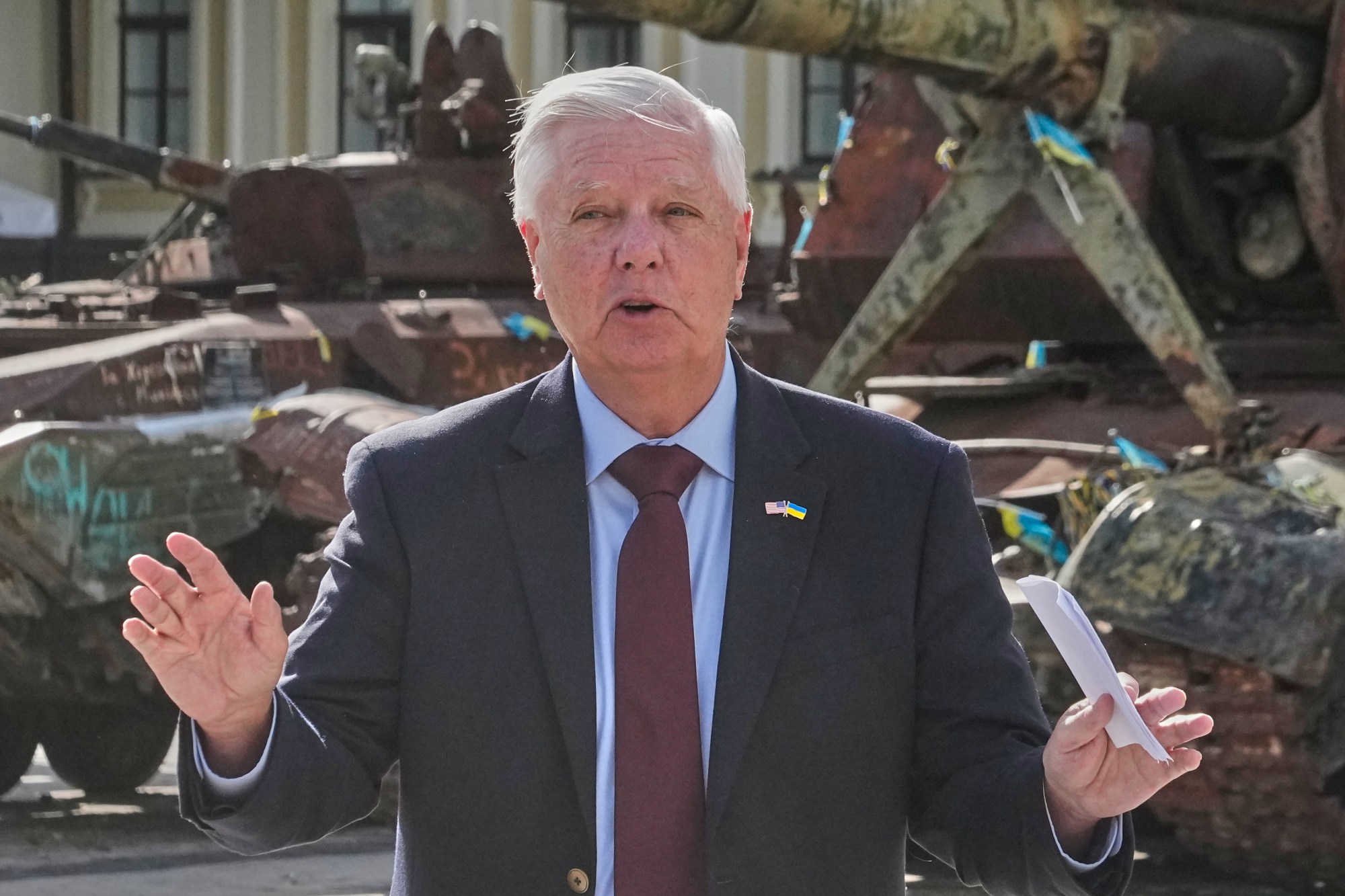
U.S. Senator Lindsey Graham visited Kyiv, Ukraine, marking a significant moment amid the shifting geopolitical landscape. His presence near the damaged Russian vehicles displayed in central Kyiv highlighted the ongoing conflict’s tangible impacts.
During a previous White House meeting, President Trump had communicated his disapproval directly to Ukraine’s President Volodymyr Zelensky. Vice President JD Vance also expressed critical views, attacking Zelensky alongside Trump. The diplomatic tensions prevalent at that time contrast starkly with the recent NATO summit in Ankara, Turkey, where Trump praised the gathering for the unity and camaraderie among allies.
Trump’s remarks emphasized newfound mutual respect, particularly between him and Zelensky, indicating shifting perceptions. Trump’s admiration might be linked to the perception of winners, acknowledging Ukraine’s military successes against Russia.
Ukraine’s achievements on the battlefield, with Zelensky and his citizens at the forefront, have caught global attention. The Western support through weapon supplies has also played a crucial role. Such developments may have influenced Trump’s evolving stance on Ukraine.
The geopolitical events took a somber turn with the unexpected passing of Senator Lindsey Graham. His support was crucial for Ukraine within the U.S. government. Graham’s political connections with Trump contributed to shaping U.S. foreign policy signaling towards Ukraine and against Russia.
Graham had actively pushed for sanctioning countries purchasing Russian oil and gas, making his death potentially impactful on these legislative efforts. If stalled, Russia and its supportive countries, including China, North Korea, and Iran, might perceive it as a strategic victory.
In the wake of Graham’s departure, Trump faces the task of fortifying U.S.-Ukraine policies, especially concerning military and technological support like the Patriot systems. A clear declaration of the United States’ commitment to Ukraine’s sovereignty may serve as a pivotal point against Putin’s aggressive strategies.
The broader geopolitical strategy extends to countering distractions from China and Russia by aligning military objectives with countries like Taiwan and engaging in efforts for regime change in Iran, recognizing historical parallels in overcoming past global threats, albeit with current complexities.
Joseph Bosco, with his extensive experience from defense roles, emphasizes this strategic necessity, noting the importance of preventing nuclear capabilities in Iran and reflecting on Graham’s steadfast views against the nuclear ambitions of antagonistic regimes.
His insights underscore the significance of robust, strategic international engagement to thwart threats, commemorate Graham’s contributions, and ensure the legacy of determined global security advocacy.
Leave a Reply