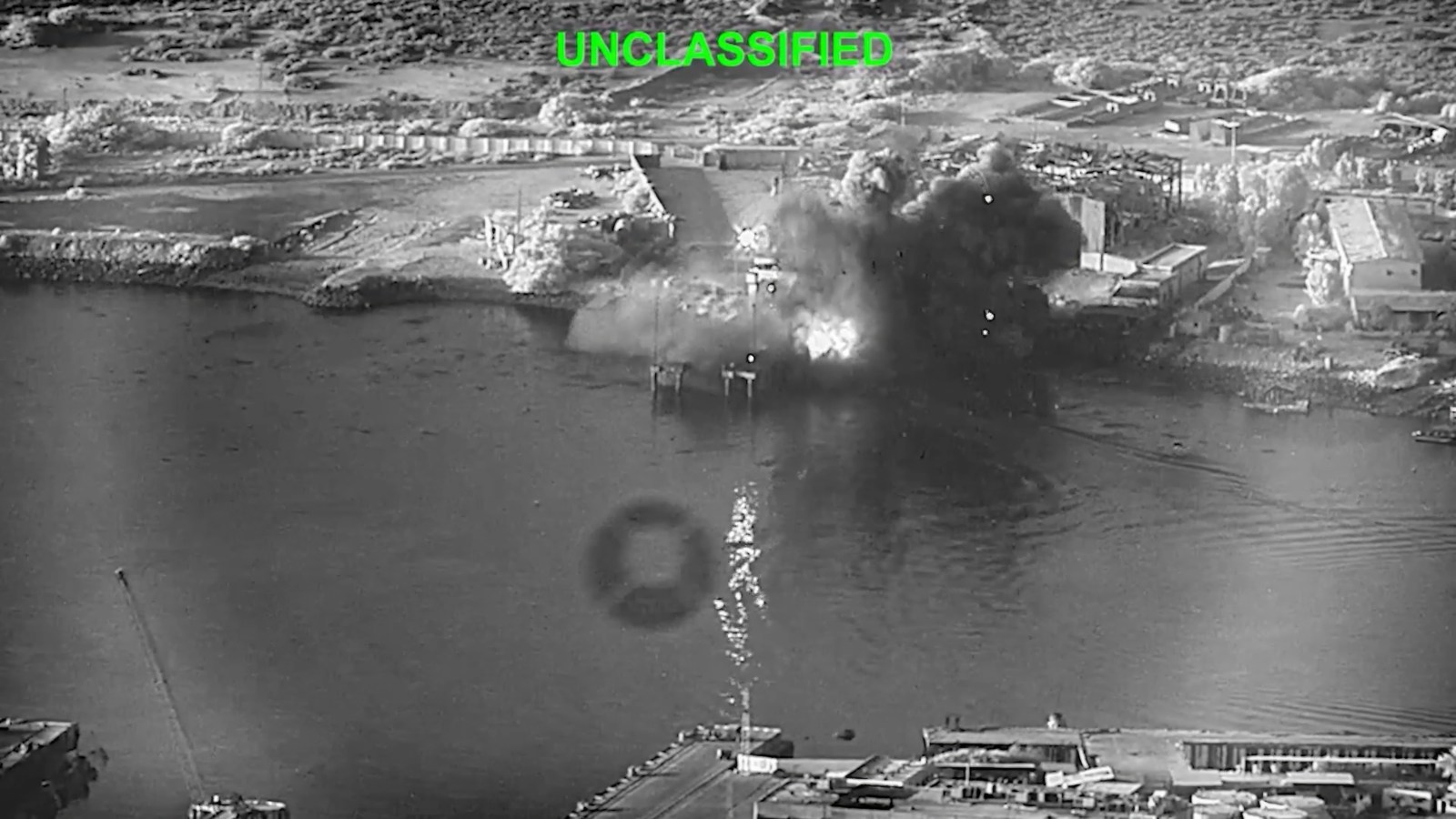
While American citizens rested last night, U.S. missiles were hitting targets across Iran without pause. President Donald Trump is now threatening to extend this campaign to crucial infrastructure like bridges and power plants after five days of consecutive strikes. As a result, the average Iranian citizen faces significant hardship.
For the hard-line leaders of Iran’s Revolutionary Guard Corps (IRGC), these developments are advantageous. During his presidential campaign, Trump asserted he could end foreign conflicts and criticized previous costly wars in Iraq and Afghanistan. Yet, his actions risk igniting a third extended conflict.
Impact on the IRGC
Understanding Tehran’s resistance to U.S. pressure requires recognizing a critical fact: the interests of the Iranian people differ from those of the IRGC. A prolonged conflict benefits the IRGC by reinforcing its political model, according to Dr. Andreas Krieg, a Middle East security expert at King’s College London. It maintains Iran in a constant state of emergency, justifies societal repression, marginalizes civilian institutions, and allows the IRGC to appear as the nation’s protector.
This dynamic also secures Iran’s tactical power, as it retains the capability to disrupt the Strait of Hormuz and affect global economies significantly. Iran’s military strength, mostly missile and drone-based, cannot match U.S. power directly. However, these assets enable control over vital waterways, influencing global trade and conveying a high cost to Gulf States allied with the U.S.
Strategic Implications and International Dynamics
If the IRGC maneuvers carefully, Iran may strike trade deals with other nations, offering passage through Hormuz and access to petroleum for economic advantages. Peiman Salehi, a Tehran political analyst, views the conflict not merely as an Iran-U.S. confrontation but as a struggle between existing and emerging global powers.
The IRGC believes Iran can withstand adversity better than Trump can handle rising energy costs, military casualties, domestic political pressure, and global trade interruptions.
Despite this belief, the IRGC must avoid overextending. If Tehran’s grip over Hormuz fails to prevent severe economic repercussions, the population might only endure so much hardship. Dr. Burcu Ozcelik, a Middle Eastern security expert, warns that U.S. strikes may bolster the IRGC symbolically but stresses Iran’s genuine pain. Targeting infrastructure like petroleum facilities marks a new escalation level.
Economic Challenges
The Iranian government requires cash flow, oil revenue, and sufficient economic activity to sustain its operations. Should these falter, the IRGC would face vulnerabilities more significant than any external threat. An economically deprived population with limited prospects might not remain passive indefinitely.
China, a major purchaser of Iranian oil, currently offers diplomatic and financial backing. However, this support could vanish if China perceives Iran as unwilling to compromise to prevent long-term disruption in energy supply. This dependency risks Iran’s strategic autonomy.
Political Implications for the U.S. and Iran
Politically, both Trump and the IRGC need narratives of success to end the conflict. Trump could potentially shift his stance if he can present it as a strategic victory, claiming effective pressure led to Iran’s pledge against nuclear armament. This outcome aligns with his America First doctrine but only if politically advantageous.
Tehran also requires a narrative suggesting it resisted and achieved strategic advantages over Hormuz without submitting its sovereignty. However, there remains no clear path to lasting peace.
Dr. Ozcelik emphasizes that ambiguities in the existing Memorandum of Understanding (MOU) prevent effective peace negotiations. Differing interpretations of navigation rights through Hormuz and lack of dispute resolution mechanisms compound the issue.
Krieg summarizes the situation simply: neither side seeks a full war, leading to cycles of negotiations and conflict. This state is anticipated to persist for the foreseeable future.
Leave a Reply