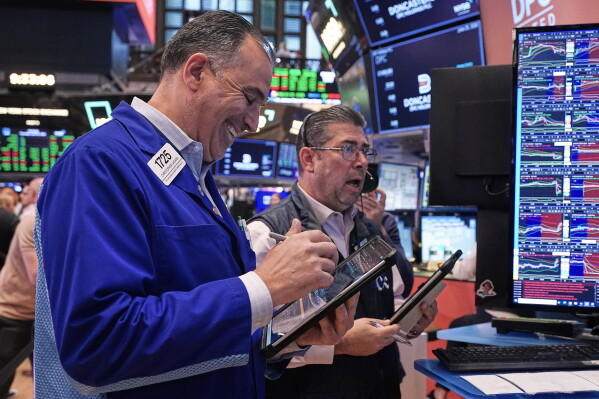
Computer chipmakers and companies benefiting from the artificial intelligence surge are experiencing a decline, impacting stock markets globally. Despite overall strength in Wall Street, U.S. stock indexes showed mixed results. The S&P 500 dipped 0.2%, trailing its all-time high reached last month. Meanwhile, the Dow Jones Industrial Average had a slight increase of 102 points or 0.2%, and the Nasdaq composite dropped by 0.7%.
Although most stocks on Wall Street rose, several leading firms reported higher-than-expected profits for the latest quarter. However, AI stocks continued to overshadow these gains. Abbott soared by 11.1% after posting better-than-anticipated profits and boosted its full-year earnings forecast. Similarly, UnitedHealth Group rose 3.5% following positive quarterly results. Nevertheless, Nvidia, with greater influence on the S&P 500 due to its massive market value, fell by 2.5%.
Other AI-related companies faced losses, surrendering part of their impressive gains. Micron Technology dropped by 5.7%, lowering its year-to-date gains below 200%. Sandisk fell 10.6%, yet remains up by 500% for the year, while Western Digital declined by 9%, still experiencing a 170% year-to-date increase.
Concerns persist that the rapid rise in chip stock prices may not be sustainable if AI does not generate the expected profits and productivity. Despite Taiwan Semiconductor Manufacturing Co.’s reported stronger quarterly profits, its stock fell in U.S. markets. In South Korea, companies like Samsung Electronics and SK Hynix influenced the Kospi index’s 6.4% slide, illustrating the volatility in markets heavily reliant on AI firms.
The Kospi index experienced drastic fluctuations in recent weeks, including daily declines of up to 8.9%. Meanwhile, the Bank of Korea’s interest rate hike also contributed to market pressures in Seoul. Higher rates, while curbing inflation, slow economic growth and lower investment prices.
Oil prices added to economic concerns. Tensions involving Iran led to fears regarding oil transport via the Strait of Hormuz, lifting Brent crude prices temporarily above $86 per barrel. Subsequently, prices fell to $84.75, marking a 0.2% decrease from the previous day.
In the bond market, the 10-year Treasury yield increased to 4.57%, climbing from 4.55% on Wednesday. Since the onset of conflicts involving Iran, yields have risen from a prior level of 3.97%. Mixed reports on U.S. economic performance further contributed to market volatility.
Consumer spending declined more than economists anticipated, excluding gasoline station sales, yet remained robust. Additionally, unemployment benefit applications showed a healthy job market, and manufacturing activity in the mid-Atlantic region exceeded expectations.
Internationally, stock indexes fell across Europe and Asia, with declines in Shanghai (1.8%) and Tokyo (2.8%). However, Hong Kong’s Hang Seng index rose by 1.3%, as Alibaba gained following approval for the Apple Intelligence AI tool by China’s cyberspace regulator. This integration of Alibaba’s Qwen model into Apple Intelligence further strengthened the Hang Seng.
AP Business Writers Chan Ho-him and Matt Ott contributed to this report.
Leave a Reply