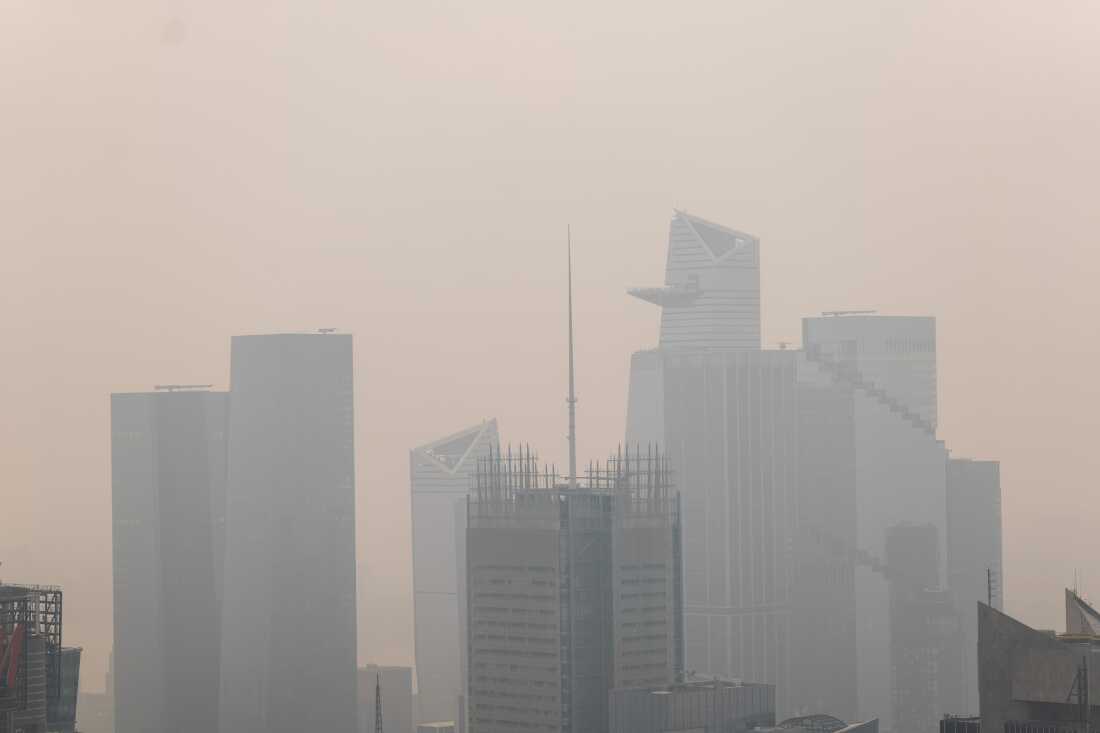
Wildfire smoke originating from Canada is affecting areas across the United States. This has resulted in poor air quality from the Great Lakes region into New England and extending south to Maryland. Conditions have become unsafe, with smoke levels reaching unhealthy and hazardous levels in several states.
Wildfires in Ontario and northern Minnesota expanded significantly on July 13 due to extreme heat and dry conditions. The Canadian Wildland Fire Information System reports over 800 active wildfires burning across Canada. A heat dome over western Ontario and Minnesota has pushed temperatures beyond 100 degrees, contributing to the rapid spread of the fires. Derek Mallia, an atmospheric sciences professor at the University of Utah, remarked on the unprecedented fire spread.
Social media displays dramatic footage of the fires in Ontario, showing smoke-filled skies. Air Quality Ontario has deemed air risk levels “very high,” leading to evacuations for thousands. Unhealthy air quality affects parts of Minnesota, Wisconsin, and Michigan and is impacting northeastern cities like Philadelphia, New York City, and Baltimore, according to AirNow.
“You have a firehose of smoke coming right now,”Mallia noted, highlighting the current severity.
Climate change has worsened these conditions, with increased frequency and intensity of wildfires. Extended droughts and heat waves dry out vegetation, enabling more fires. Dan Westervelt, a research professor at Columbia University, emphasized that these events are becoming annual, at times even more frequent.
The Health Impacts of Wildfire Smoke
Wildfire smoke comprises particles that penetrate deeply into the lungs, even entering the bloodstream. Health studies reveal links to heart attacks, strokes, respiratory illnesses, pregnancy complications, and potential developmental disorders in children. Dr. David Eisenman from UCLA warns that air pollution ranks among top causes of premature deaths globally.
Eisenman advises checking air quality monitors regularly, as smoke can remain toxic without visible signs. “Even if the sky is not brown, it still might be toxic for you,” he cautions. He notes the increased public health risk from both smoke and heat, with temperatures exceeding 100 degrees.
The Environmental Protection Agency suggests guidelines for handling wildfire smoke. Recommendations include staying informed on air quality, using air purifiers, and creating a “cleaner air room” at home. Accumulating food and medications minimizes the need to go outdoors during smoky conditions. It is advised to limit outdoor activities based on air quality and wear an N95 mask if necessary.
Leave a Reply