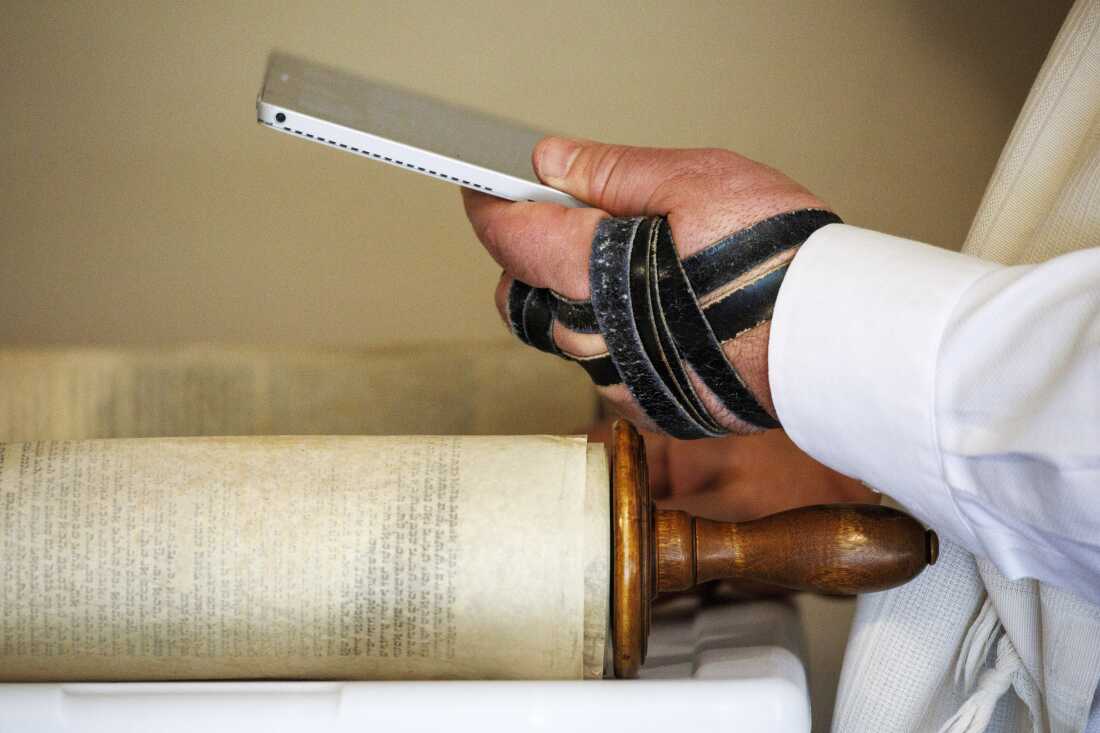
In 2020, Rabbi Haim Ovadia conducted a Torah reading from his home in Maryland during a virtual minyan on Zoom, captured by Jacquelyn Martin/AP. Recently, the House of Representatives voted to eliminate the biannual clock change, moving towards permanent daylight saving time. This measure, known as the Sunshine Protection Act, passed with overwhelming support in a 308-117 vote. It now faces uncertainty in the Senate.
President Trump described the regular time shifts as a ‘ridiculous, twice yearly production’ on his social media. While this change would add an hour of daylight in winter evenings, it would delay winter sunrises by an hour, causing concern among Orthodox Jews. Their daily morning prayer service, Shacharit, which cannot start in the dark, faces disruption.
Rabbi A.D. Motzen from Agudath Israel of America, representing Orthodox Jews, highlighted the impact on work and school schedules if prayer times shift. Various Orthodox groups, such as the Orthodox Union and the Coalition for Jewish Values, are against the measure. Jewish law requires communal prayer, especially in the morning, with a minyan, a quorum of ten Jewish adults. This tradition means visiting synagogues each morning before work or school for prayers, including the Shema.
The morning service normally lasts about 35 minutes but can extend to an hour. Synagogues may struggle to gather a minyan if services start later due to daylight saving. Motzen emphasized such communal issues, particularly where longstanding morning services might falter.
Even though Orthodox Jews comprise only 9% of the 5.8 million Jewish adults in the U.S., larger Jewish organizations have not publicly opposed the measure. Historical attempts to stop clock-switching in 1974 were reversed after public backlash. In 2022, the Senate passed a similar measure, but it failed in the House.
Concerns extend beyond religious groups. Medical experts and health advocates argue standard time aligns better with natural human circadian rhythms. Schools and parents fear for children’s safety in darkness during winter mornings. This aligns with Orthodox Jews’ concerns; sunrise could occur post-8 a.m. nationwide, and post-9 a.m. in certain regions. For example, South Bend, Indiana, may see sunrise after 9 a.m. for 55 days a year, Detroit for 23 days.
Currently, Hawaii, most of Arizona, and U.S. territories such as Puerto Rico and Guam maintain standard time year-round. This article was a collaboration between NPR and Religion News Service.
Leave a Reply