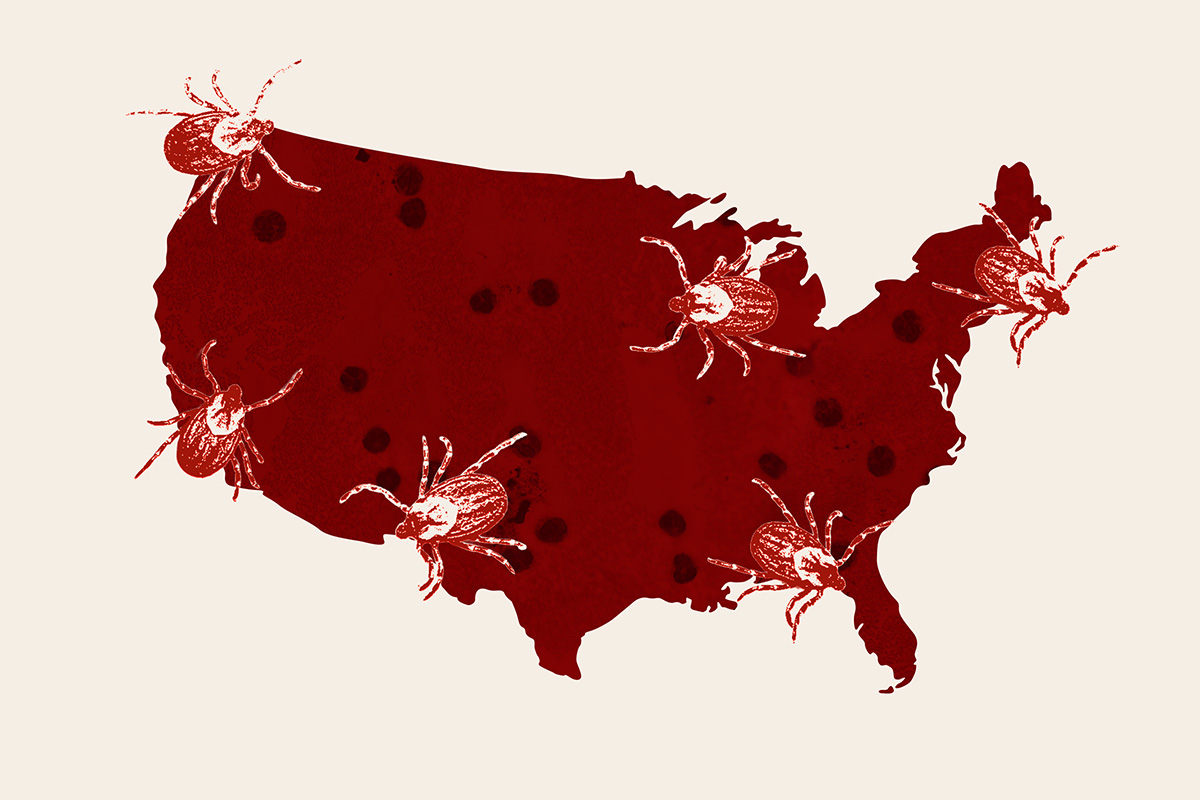
As temperatures rise during the summer, ticks are actively spreading diseases previously unknown to many Americans. Some experts suggest these illnesses could pose a public health risk comparable to Lyme disease.
Dr. Natasha Wyndham Hanners from Children’s Health and UT Southwestern Medical Center remarked on the increase in vector-borne illnesses, often attributed to climate change and habitat expansion. The ease of global travel and advanced diagnostic tools have also unveiled new organisms.
Recently, discoveries have been made regarding orthonairoviruses, a group of tick-borne viruses known to evade the human immune system. Public health officials are closely monitoring ticks carrying these viruses across North America. These findings indicate an evolving map of tick-borne diseases in the U.S.
Three Tick-Borne Threats to Know
Anaplasmosis: This bacterial infection, spread by the blacklegged deer tick, causes fever, headache, chills, and muscle aches. Unlike Lyme disease, it lacks a bull’s-eye rash, often making it harder to detect without a blood test.
Orthonairoviruses: This family of viruses includes Crimean-Congo hemorrhagic fever, a dangerous virus causing severe hemorrhagic illnesses. New studies show these viruses carry proteins that remove immune system signals, helping them avoid detection.
Nairoviruses: Broader than orthonairoviruses, these tick-borne pathogens include newly identified viruses like PCTNV in the Pacific Coast tick. While not confirmed in humans, laboratory tests show its enzymes are effective at evading immune detection, raising concerns about human exposure.
The Virus That Hides From the Immune System
Researchers at the University of California, Riverside explored how orthonairoviruses suppress immune detection. They focused on viral proteins called OTUs, which strip immune-signaling molecules ubiquitin and ISG15 from cells. These molecules typically alert the immune system, but OTUs remove them, preventing an immune response.
Tests on nairovirus species enzymes, including those found in Asia and the Pacific Coast tick, showed PCTNV’s enzyme most effectively removed immune signals. As this tick bites humans and spreads Rocky Mountain spotted fever, concerns about human exposure in the Western U.S. remain. Scott Pegan, the study’s author, emphasized the need for vigilance regarding tick bites and species.
Newsweek sought comments from the CDC, University of California, Riverside, and American Chemical Society.
An Old Disease Spreading to New Places
Anaplasmosis, carried by the blacklegged deer tick, is spreading to new areas. Craig Bober from Inspira Health in New Jersey highlighted its growing concern. Without the Lyme disease bull’s-eye rash, anaplasmosis and other infections require blood tests for proper treatment.
The spread of the Asian longhorned tick, noted for reproducing without mating, also warrants attention. This tick, spreading in states like New Jersey and Pennsylvania, carries SFTS. Although human infections are rare, its rapid spread calls for increased public awareness.
How to Protect Yourself
Experts advise those outdoors to wear long sleeves, tuck pants into socks, use repellents containing DEET, picaridin, or IR3535, and treat clothing with permethrin. It is recommended to shower within two hours of coming indoors, check the body for ticks, and remove attached ticks with tweezers, cleaning the bite site afterward. Consulting a physician is advisable, especially if symptoms appear.
Citation: Gonzalez, D. S., et al. (2026). Insights into the Structure and Function of the OTU Protease Virulence Factors from Emerging Human Nairoviruses. ACS Infectious Diseases. https://doi.org/10.1021/acsinfecdis.6c00320. Contact Newsweek editors: Kara Dolman and Emma Lee-Sang.
Leave a Reply