Mike Russell checks the weather before work. As co-owner of J&M Dog Walking, weather influences how much time his clients spend outdoors. When he saw the poor air quality advisory on Thursday morning, he wasn’t sure what to expect. He advised walkers to keep dog outings brief and spend more time indoors.
Russell, 43, soon noticed a larger issue. Many of his North Side clients canceled dog walks, concerned about their pets breathing polluted air. The news comparisons between the outside air and smoking cigarettes worried him. “A dog has never smoked a cigarette,” he noted.
Experts report that the week’s hazardous air quality affected more than humans. Fine particles called PM2.5, primarily from wildfires in Minnesota and Canada, worsened air quality. These particles concern animal caretakers overseeing animals with wings or tails. PM2.5 can be harmful and even deadly. Initially causing eye and nose irritation, its small size allows it to reach deep in the lungs and enter the bloodstream.
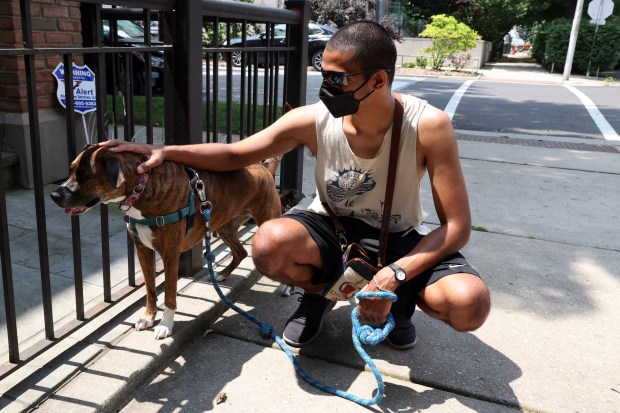
Shravan Raghuram of J&M Dog Walking took a dog named Roo for a walk in Chicago’s Bucktown neighborhood on July 17, 2026. Raghuram wore a face mask against the wildfire smoke.
Dave Bernier, Lincoln Park Zoo’s general curator, commented that zoo staff monitor animals for labored breathing, changes in activity, or reduced movement to assess discomfort in the environment. “It would be pretty similar to what’s recommended for people,” he said. Despite Thursday’s poor air quality, no zoo animals lost outdoor access. Bernier added, “Keeping certain susceptible animals solely indoors would have been more stressful.” The main alteration was in feeding practices. Ordinarily, zoo staff make feeding challenging for animals to simulate foraging. On Thursday, they minimized activity and made feeding simpler. Indoor feeding increased for animals like great apes to limit outdoor time.
Bernier advised animal owners to monitor their pets closely for subtle signs like altered breathing or activity levels. On Thursday, PM2.5 levels quadrupled the previous Cook County air quality record, according to the U.S. Environmental Protection Agency. AirNow classified levels as “emergency conditions more likely to affect everyone.” Conditions improved by Friday, but a National Weather Service air quality alert persisted through Saturday night.
Some caretakers struggled with environmental challenges. Jana Kinsman, 40, a beekeeper from Back of the Yards, faced difficulties bringing products to market. “I can’t manage my hives outside due to smoke and heat,” she said. Despite being managed colonies, she highlighted the challenges of manual labor in such weather.
Kinsman expressed concerns about bees’ stress levels from environmental conditions. “I wonder how efficiently they’re operating with such pressure,” she said. Jessica Helgen, University of Minnesota’s Bee Squad program director, noted that bees can endure smoky conditions, yet more research is needed on long-term air pollution impacts. She emphasized differentiating honeybees, managed livestock, from native bees. “Beekeepers can relocate honeybee colonies. Native bees lack that protection,” Helgen said. Despite smoke in Minnesota, bees continued foraging.
Leave a Reply