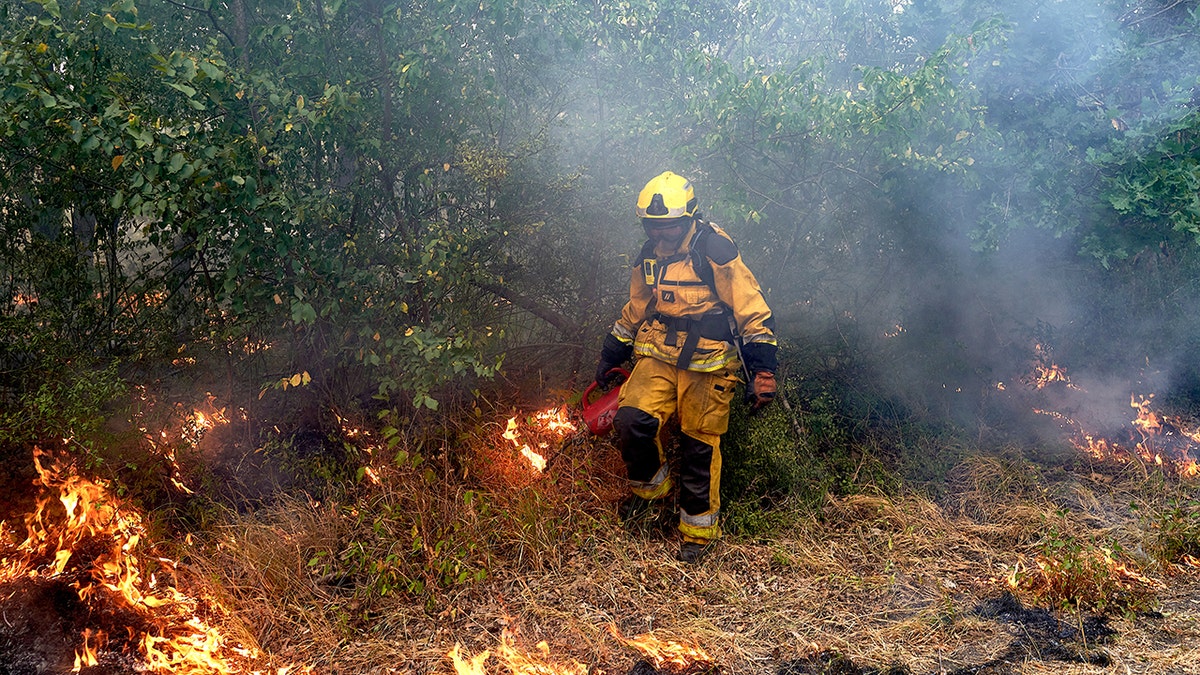
Since the start of the month, massive wildfires have ravaged France and Spain. Some have described these fires as apocalyptic. The blazes have destroyed buildings and forests, intensified by Europe’s record-breaking heat wave. This extreme heat has already resulted in thousands of deaths.
Last week, the Fontainebleau Forest near Paris caught fire, consuming 2,000 hectares (4,942 acres) of woodland. About 1,000 residents were evacuated, and 850 firefighters were dispatched. Containing the fire might take weeks.
According to France’s Ministry of Agriculture, human activity causes nine out of ten wildfires. Negligence, such as campfires or discarded cigarettes, often sparks them. The recent heat has turned grassy areas into tinderboxes. Both France and Spain have protected lands where clearing is restricted, adding to the fire risk.
“Policies of nature restoration and building have made it hard in some cases to clear the brush that piles up,” Daniel Lacalle, chief economist at Madrid-based Tressis, explained.
Fires caused by human actions in the U.S. resemble those in France. Data from the National Interagency Fire Center indicates that 85% of U.S. wildfires originate from human activities. However, lightning-related fires often burn larger areas due to their remote locations.
France’s Interior Minister, Laurent Nuñez, noted that experts discovered ignition points around a small radius in the Fontainebleau Forest. This pattern indicates a deliberate cause. French President Emmanuel Macron, during a visit to the site, emphasized zero tolerance for arson, stating that fires threaten the nation.
Spain faces its fire challenges, with three separate fires, one of which has been contained. In Zaragoza, a fire destroyed 12,000 hectares (29,653 acres) and prompted evacuations. Fires in Madrid and Guadalajara affected 2,000 people.
“The speed of these fires is something that even the most experienced firefighters are saying they have never seen anything like this,” Lacalle said.
A fire in Spain’s Andalusia region resulted in at least 13 deaths, including that of a 93-year-old woman. Spain’s vast unused lands can become fire hazards when scrub is not cleared.
Research by the University of East Anglia found that from 2002 to 2021, human exposure to wildfires increased by 40%, primarily due to population growth and migration. During this period, the amount of land burned decreased by 26%.
France’s recent extreme heat has caused significant mortality, with 2,000 deaths reported at the end of June. The intense heat has led to the cancellation of many outdoor events, especially in the southern regions.
Shawn Hackett, president of Hackett Financial Advisors, attributes Europe’s unique climate situation to warm Mediterranean and cold Atlantic waters. The warm, dry weather is expected to persist.
Simon Constable, a writer for leading publications, is a fellow at Johns Hopkins Institute for Applied Economics, Global Health, and the Study of Business Enterprise.
Leave a Reply