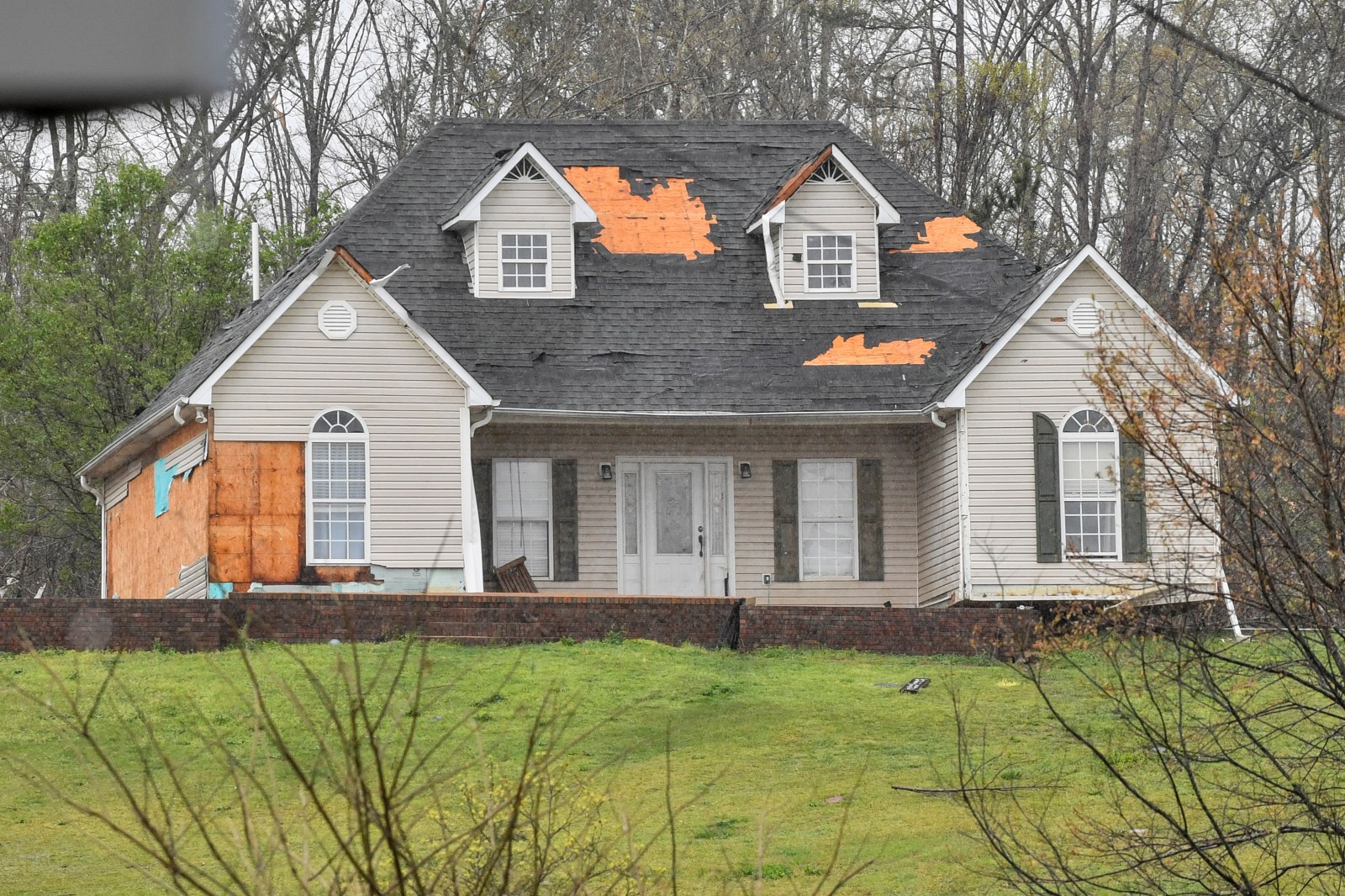
Republican leaders nationwide are focusing on reducing property taxes. However, for many homeowners, home insurance premiums represent a much heavier financial burden, as recent data shows. In Tennessee, the average homeowner pays approximately $284 per month for coverage. This amount is nearly double the state’s estimated monthly property tax of $143, according to a LendingTree study.
This pattern is similar in Alabama, where homeowners spend about $182 monthly on home insurance but only $93 on property taxes.
Property tax bills are significantly higher for homeowners in New Jersey and New York. LendingTree reports that these states have the highest estimated monthly property tax bills, at $863 and $626, respectively.
In these Northeastern states, property taxes constitute a notable portion of total housing costs: 23.4% in New Jersey and 19.5% in New York. In contrast, in states like Tennessee and Alabama, property taxes account for a much smaller percentage of housing costs (6.8% and 6.3% respectively).
However, New Jersey and New York residents spend less on home insurance, with estimated monthly costs of $159 and $168, respectively. In both states, home insurance only forms a minor portion of housing expenses (4.3% and 5.2%). In contrast, in Tennessee and Alabama, home insurance covers a larger share of costs (13.4% and 12.3%).
States with Higher Home Insurance Costs
Nationally, homeowners spend around $200 monthly on insurance and $311 on property taxes. Yet, in 15 states, residents pay more for home insurance than taxes. This includes:
- Tennessee ($284 vs. $143)
- Alabama ($182 vs. $93)
- Colorado ($463 vs. $241)
- South Carolina ($259 vs. $135)
- Arkansas ($200 vs. $115)
- Oklahoma ($278 vs. $178)
- Arizona ($238 vs. $162)
- New Mexico ($244 vs. $189)
- Idaho ($200 vs. $163)
- Nebraska ($413 vs. $350)
- Mississippi ($149 vs. $131)
- West Virginia ($113 vs. $101)
- Kentucky ($186 vs. $167)
- North Carolina ($214 vs. $196)
- Louisiana ($132 vs. $125)
In Virginia and Montana, costs are almost equal: Virginia ($234 vs. $276) and Montana ($268 vs. $267). Many states with high insurance costs face severe weather threats, including hurricanes, floods, tornadoes, and wildfires.
Impact of Insurance and Property Taxes
The housing affordability crisis is exacerbated by increasing property taxes and home insurance premiums. Research from Harvard University’s Joint Center for Housing Studies notes property taxes surged over 30% between 2019 and 2025. During this period, home values rose 54% since 2020. Insurance premiums have climbed 46% since 2021, driven by severe natural disasters and rebuilding costs, as reported by Insurify. This increase is about triple the inflation rate. Insurify predicts further premium rises in 2026.
High housing costs make homeownership unattainable for millions. The Federal Reserve Bank of Atlanta’s Home Ownership Affordability Monitor indicates that a median-income household would need to allocate 66.38% of income to own a median-priced home. Spending over 30% of income on housing burdens a household.
To address housing challenges, Congress passed a housing package to combat the inventory shortage. Blue states like California and New York aim to loosen construction regulations. Meanwhile, GOP-led states such as Florida and Texas focus on reducing property taxes.
Regarding insurance, disaster-prone states like California and Florida are implementing reforms to retain insurers and protect consumers. Yet, despite measures such as Florida’s tort reform, premiums continue to rise.
The U.S. government is exploring federal solutions, including a federal reinsurance backstop to aid insurers, funding of home retrofits for disaster resilience, and expanding the Treasury’s role in risk and coverage gap analysis through the National Catastrophe Risk Consortium.
Leave a Reply