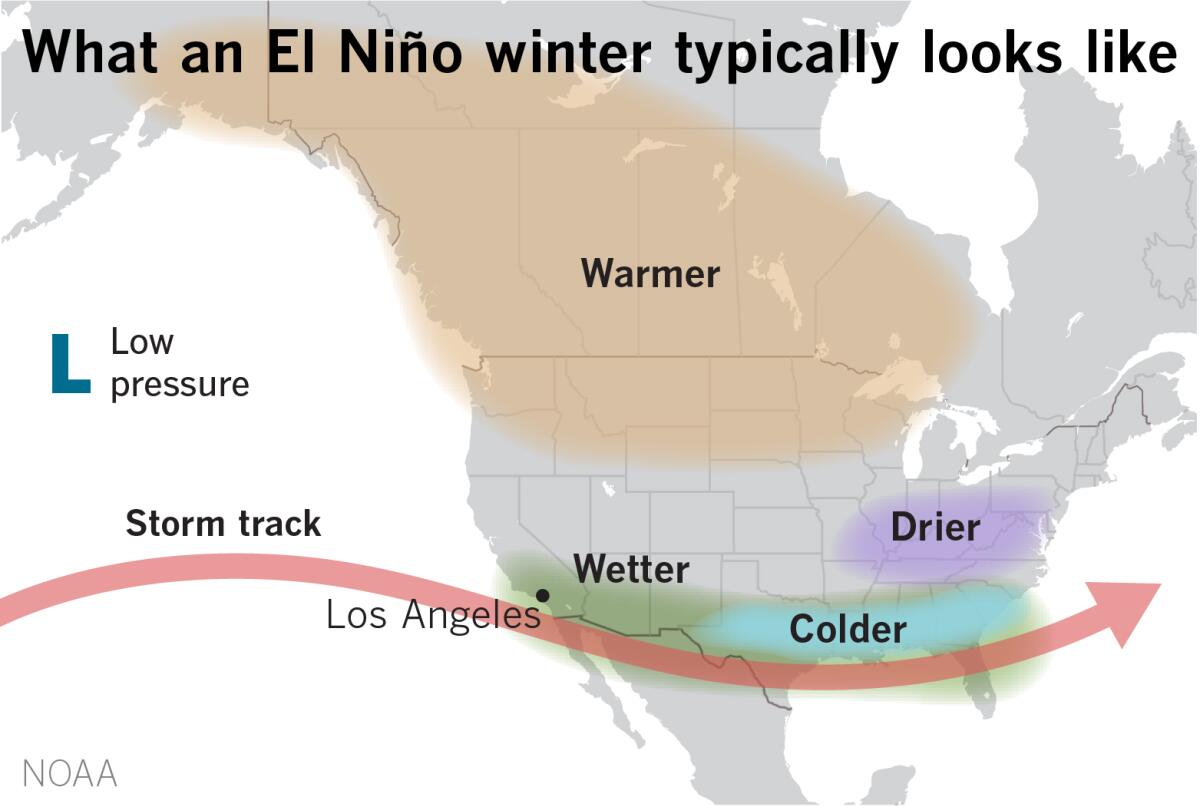
El Niño’s recent arrival heralds a potentially intense winter in California. Recent shifts in oceanic conditions signal the possibility of a strong or very strong El Niño later in the year. The National Oceanic and Atmospheric Administration’s Climate Prediction Center reports a 97% probability of a significant El Niño before the year ends.
Understanding El Niño
El Niño, a climatic pattern emerging every two to seven years, typically lasts nine to 12 months. This phenomenon influences global weather, particularly affecting rainfall and drought patterns. The event is characterized by warmer waters in the central and eastern tropical Pacific and may exacerbate heatwaves on both land and sea.
Impacts on California’s Weather
Historically, El Niño has coincided with severe winter seasons in California. The 2023-24 El Niño is linked to increased rainfall in coastal Southern California and slightly higher precipitation in coastal Northern California. Past events have resulted in downtown Los Angeles receiving more than double its average annual rainfall during very strong El Niños.
Potential Impacts Worldwide
El Niño affects global weather differently depending on the season. For Southern California, it increases the likelihood of heavy rainfall, with associated risks like landslides and high-tide flooding. The strong El Niño of 2015-16 saw record coastal erosion along many California beaches.
Effects on Marine Life
This year’s El Niño might extend an ongoing marine heatwave in Southern California. Warmer ocean waters could alter the distribution of marine species. Experts predict a rise in tropical or subtropical species and potential shark sightings along the Southern California coast. Marine mammals may migrate closer to shores in search of food.
Previous El Niños have led to decreased plankton levels and increased harmful algal blooms. California sea lions have shown reduced productivity during past strong El Niños.
Looking Ahead
This year’s El Niño has the potential to be one of the strongest on record. As such, preparation for its effects on weather and marine environments is crucial.
Leave a Reply